On this page
A house in Florida and a house in Minnesota need different things in September, and a house in Texas or the Carolinas needs both at different times of year. The tasks are not complicated. The failure mode is timing: hurricane shutters ordered the week a storm is named, pipes insulated the morning after the freeze. This post lays out the pre-season list for each kind of region, drawn from FEMA, the Red Cross, and the guides on this site, so it can be done before the season instead of during it.
Use the section for your climate. If you live where both apply, you have two seasons and two lists.
Hurricane country: prepare in spring
- Season runs June through November, peaking in late summer
- Insurance and documents first; a new flood policy takes 30 days
- Roof, gutters, shutters, and garage door bracing
- Drainage, trees, generator, supplies, the go bag
Freeze country: prepare in October
- Before the first night in the teens
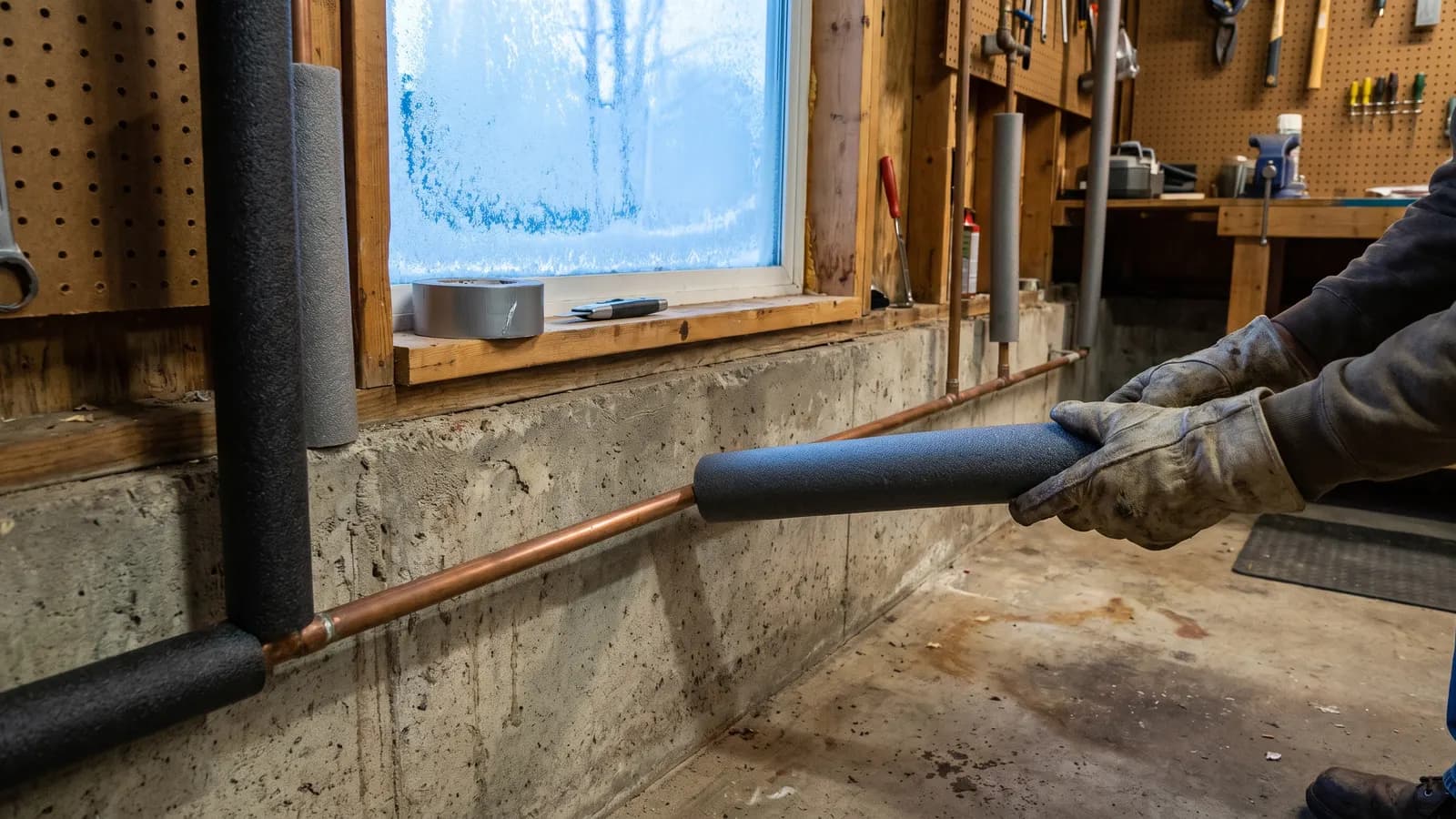
- Hoses off, outdoor faucets drained, exposed pipes insulated
- Irrigation blown out, fall HVAC service, alarms tested
- Gutters clear after leaf drop; roof rake and shovel ready
What does a house in hurricane country need?
The Gulf and Atlantic coasts, and further inland than most people think. Season runs from June through November with the peak in late summer and early fall; the preparation happens in spring.
Ready.gov's hurricane page says hurricanes are not just a coastal problem, and lists the preparation: know your evacuation zone and routes; have several ways to receive alerts; keep insurance policies and personal documents up to date with copies in a secure password-protected digital space; strengthen the home by clearing drains and gutters, bringing in outside furniture, and considering hurricane shutters; keep phones charged with backup power; and gather supplies for days or weeks. FEMA's preparation guide adds: install a water alarm and a battery-backup sump pump, install check valves in sewer lines, stockpile plywood, plastic sheeting, and sandbags, elevate the furnace, water heater, and electric panel if they could flood, and buy flood insurance separately, since most property insurance does not cover flood and a new policy takes 30 days to take effect.
The house list, in the order to do it:
- Insurance and documents, in spring. Confirm the policy is current and what it covers; buy flood insurance if you do not have it, well before the 30-day wait would matter. Put the declarations page, the policy, and photos of every room and every piece of equipment in the home record so the inventory exists before a loss. The Document Vault is built for this.
- Roof and gutters, before June. Inspect the roof from the ground and the attic, fix lifted shingles and flashing now, and clear the gutters and downspouts so the roof sheds water instead of holding it.
- Openings. Shutters, panels, or impact-rated windows and doors, with the hardware installed and the panels labeled by opening and stored where they can be reached. Check garage door bracing; a garage door is the largest opening in most houses and the first to fail in wind.
- Drainage. Walk the grading and downspouts after a heavy rain. Water that pools at the foundation in a normal storm floods in a hurricane.
- Trees and loose items. Trim branches over the roof and near lines. Know what goes inside or gets tied down when a storm is named: furniture, grills, planters, trampolines, trash cans.
- Power and water. A generator, if you have one, serviced in spring and run monthly, with fuel stored safely and the carbon monoxide rules understood: outdoors only, far from windows. A battery-backup sump pump if you have a sump. Water stored, and the water heater's tank as a reserve.
- Supplies and the go bag. Per Ready.gov, enough for days to weeks: water, food, medication, batteries, chargers, cash, copies of documents, pet supplies.
What does a house in freeze country need?
In the North, the Mountain West, and the high plains, where hard freezes are the normal winter, the preparation is mostly about water: drain and insulate the pipes, winterize the irrigation, service the heating and test the alarms, clear the gutters, seal the envelope, and be ready for snow load. The preparation happens in October, before the first night in the teens.
The work is mostly water. Water in a pipe, a hose, a backflow preventer, a hose bib, or a gutter expands when it freezes, and the pipe loses.
- Pipes. The freeze guide covers it: disconnect hoses, drain and shut off outdoor faucets, insulate exposed runs in the garage, crawlspace, and attic, seal the air leaks near pipes, and know where the main shutoff is. On the coldest nights, hold the thermostat, open cabinet doors, and let the vulnerable faucets drip. The Red Cross's guidance, cited in that guide, is the standard.
- Irrigation. Winterize the system: shut off, drain the backflow preventer, blow out the lines. Book it early.
- Heating. The fall HVAC service in September or October, a new filter, and for fuel-burning equipment the CDC's yearly service rule. Test the smoke and CO alarms; winter is when CO incidents rise, because everything burns and the windows are closed.
- Gutters and ice dams. Clean the gutters after leaf drop so meltwater has somewhere to go. Ice dams form when heat leaking into the attic melts snow that refreezes at the cold eave; the durable fix is attic air sealing and insulation, and the caulk-and-weatherstrip walk is the start of it.
- Envelope. Weatherstrip the doors and the attic hatch, caulk the exterior joints, and check that the crawlspace vents are closed for winter if the design calls for it.
- Snow load and access. Know the roof's condition (a sagging roof under snow is an emergency), have the roof rake and the shovel before the first storm, and keep a path to the gas meter and the dryer and furnace vents clear of snow; a blocked vent shuts down the furnace or, worse, sends exhaust indoors.
- Travel. Heat on at 55°F or above, someone checking the house, and the water shut off at the main if you will be gone for weeks; preparing a home for an extended absence is the full list.
What if you live where both seasons happen?
Texas, the Carolinas, Georgia, Tennessee, Virginia, much of the mid-South and mid-Atlantic get tropical storms in late summer and hard freezes in winter, and their houses are often built for neither. The 2021 Texas freeze is the case study: houses with pipes in unconditioned attics and exterior walls, no history of freeze protection, and a week below freezing.
Do the hurricane list in spring and the freeze list in fall. The items that overlap are the ones to do first because they serve both seasons: the roof, the gutters, the grading, the caulk, the generator, the documents. The items unique to freeze protection in a warm-climate house deserve special attention because they were often not designed in: pipes in the attic (insulate them, and know the shutoff), hose bibs without interior shutoffs (frost-free replacements are cheap), a heat pump that has never run its backup heat (test it in fall), and a household that has never dripped a faucet.
What about wildfire and other seasons?
The West has a fire season, and its home list is different in kind: defensible space, ember-resistant vents, a clear roof and gutters (again), and evacuation planning. The wildfire post covers the zones; the gutter and roof guides above still apply. Tornado country's list is shorter and mostly about a safe room and alerts, per Ready.gov.
What should you keep in the record?
Photos of every room and every piece of equipment, taken in spring, filed with the insurance policy. The dates the seasonal tasks were done. Where the shutters are stored and which panel fits which window. The location of the main water shutoff, the gas shutoff, and the generator transfer switch. The generator's service date. After a storm or a freeze, photos of any damage before cleanup, and the dates you reported it.
In Property Station the Seasonal Checklist's Storm Prep and Winterize packs load most of these tasks with one click, and the maintenance schedule brings them back each year; the reason to keep the record in one place is explained in why every home needs one, and a storm is the moment that argument stops being abstract.
What should you do next?
Find your section, put the dated tasks on the calendar for the month before the season, and do the documents-and-photos step this week whatever the season; it is the one task that helps in every region and every disaster.