On this page
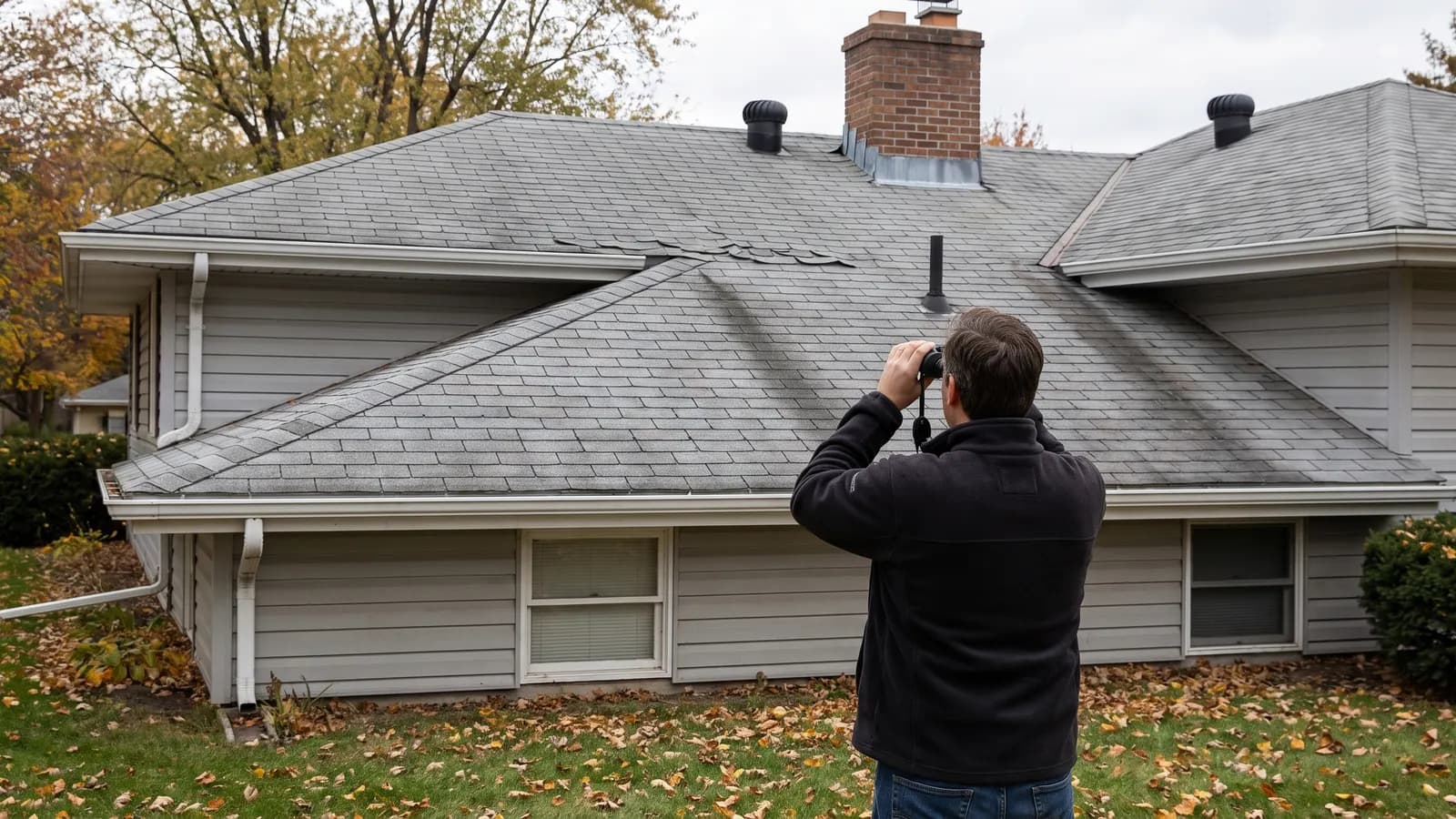
Inspect the roof once a year, from the ground and from the attic, and again after any storm with high wind or hail. You do not need to walk on it. A pair of binoculars, a ladder set at the eave, and a flashlight in the attic will show you nearly every problem that matters, and the ones they will not show are the ones a roofer should find anyway.
The point of the annual check is to catch problems while they are a repair and not a replacement: a lifted shingle, a cracked pipe boot, a rusted flashing seam. Each of those is a small fix while it is dry and a rotted deck once it has leaked for a season.
When should you inspect the roof?
Spring, after winter has done its worst, is the primary check. Fall, before the wet season, is the second. In hurricane and hail country, add a walk around the house after each event. Pick a bright day; low sun early or late in the day throws shadows that reveal lifted shingles and dips in the deck that midday light hides.
What do you need?
Binoculars, a ladder with a stabilizer set at the eave, a bright flashlight for the attic, and a phone for photos, plus last year's photos taken from the same spots. No roof shoes, no harness, no walking on the shingles: every item on this list keeps your feet on the ground, the ladder, or the attic joists.
- Binoculars
- A ladder with a stabilizer, set at the eave (see the gutter guide for placement)
- A bright flashlight for the attic
- A phone for photos, and last year's photos for comparison
What are the steps from the ground?
From the ground, walk the whole perimeter slowly with the binoculars and look at each roof plane for curled, cracked, missing, or bare shingles, granule piles below the downspouts, lifted or rusted flashing at every chimney, wall, vent, and valley, cracked vent boots, any sag along the ridge or eaves, moss or debris, and the chimney's mortar and cap. Photograph every plane from the same spots each year.
- Shingle condition. Look for shingles that are curling at the edges, cracked, missing, or lifted. Look for bare patches where the granules are gone and the black asphalt shows. On a tile or metal roof, look for cracked or slipped tiles and lifted panel edges.
- Granule loss. Check the gutters and the ground below downspouts for piles of sand-like granules. A new roof sheds some; a roof shedding heavily is aging fast or was hit by hail.
- Flashing. Look at every place the roof meets something: chimneys, walls, vent pipes, skylights, valleys where two planes meet. Flashing that is lifted, rusted, or pulling away from the wall is the source of most leaks. Look at the rubber boot around each plumbing vent for cracks; they dry out and split.
- Sagging. Sight along the ridge and the eaves. A dip in the ridge line or a wave in a plane means a deck or framing problem underneath.
- Moss, algae, and debris. Dark streaks are algae and mostly cosmetic. Moss and lichen hold water against the shingles and lift them; they need to come off, gently, and the reason they grew (shade, debris) needs attention. Branches touching the roof abrade it and drop debris; trim them back.
- Chimney and cap. Look for cracked mortar, a missing or rusted cap, and staining below the chimney on the roof.
Done when: you have a photo of each roof plane and each flashing point, taken from the same spots as last year.
What are the steps from the attic?
From the attic, on a bright day and ideally once during a heavy rain, turn the flashlight off and look for daylight through the deck, then turn it on and look for dark stains, wet spots, mold, and frost on the nails, check the insulation for stained or wet patches, confirm the soffit and ridge vents are open, and look for animal signs. A dry deck with open vents is the goal.
- Turn off the flashlight first and look for daylight through the roof. Any point of light is a hole.
- Turn it on and look at the underside of the deck for dark stains, wet spots, or mold, especially around the same places you checked outside: chimneys, vent pipes, valleys, and the eaves.
- Look at the insulation for compressed, stained, or wet areas, which show where water has come in and where.
- Check the ventilation. Soffit vents should be open (not blocked by insulation) and the ridge or roof vents should be clear. A hot, stuffy attic in summer or frost on the nails in winter means the ventilation is not working, and poor ventilation shortens the roof's life.
- Look for animal signs: droppings, nests, chewed wiring. An animal in the attic came through the roof or the soffit somewhere.
Done when: you can say the deck is dry and the vents are open, or you have a photo of the problem and its location.
When should you stop and call a pro?
Call a roofer if you find missing or lifted shingles you cannot see the full extent of, any sagging in the ridge or deck, damaged flashing, cracked vent boots, active staining or dampness in the attic, or storm damage of any kind. Call before the next rain, not after. Do not go on the roof to look closer; a roofer with a harness can walk it in ten minutes and will see things you would not.
For a new-construction home, report anything you find to the builder in writing with photos before anyone repairs it. Roof workmanship is a common warranty item and the record of when you found it matters.
What should you record?
The date, the photos, and a short note per plane and flashing point. Year over year, the photos are the inspection: a shingle that has curled a little more, a stain that has spread. If a roofer repairs anything, keep the invoice with the roof's install date and the shingle product name. Set the spring and fall checks as recurring tasks.
Common questions
Should I walk on the roof to inspect it?
No. Walking on shingles scuffs the granules, a fall is the most common serious injury in home maintenance, and nearly everything you need to see is visible from the ground with binoculars, from a ladder at the eave, or from inside the attic. Leave roof walking to roofers with harnesses.
How long does a roof last?
It depends on the material, the installation, the climate, and the ventilation, and the manufacturer's warranty for the specific product is the source to trust. Rather than counting years, watch the roof: granule loss, curling, and bare spots say more than the calendar.
What should you do next?
Do the gutter cleaning and the roof check in the same weekend each spring and fall; the ladder is already out and the gutter line is where the roof shows its age first. If the exterior below the roofline is streaked and green, washing it is the next job, and it is one where the wrong pressure can undo a roof's good condition.