On this page
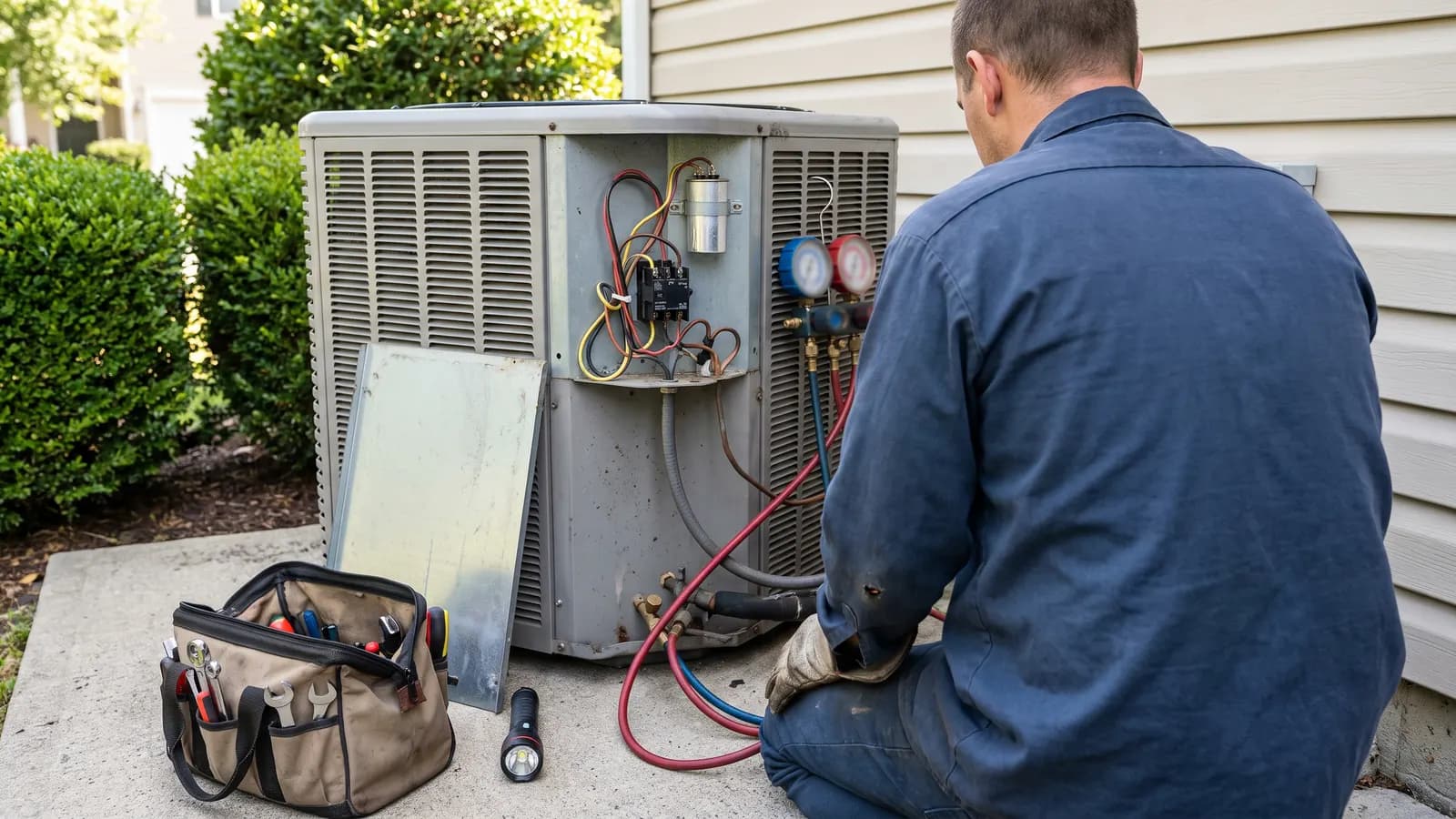
Book a professional HVAC tune-up twice a year: the cooling system in spring, the heating system in fall. That is the schedule ENERGY STAR recommends, and the timing matters as much as the visit. Contractors are booked solid once the first heat wave or cold snap arrives, and a system that fails in July waits longer for a repair than one that was checked in April.
This guide is about what you should expect from that visit and what you should do around it, because a tune-up is only as good as the checklist the technician actually works through.
Why is a tune-up not optional on a new system?
New equipment fails less often, but it does not fail never, and most manufacturer warranties on compressors and heat exchangers expect documented annual service. A missed year can be the reason a claim is questioned later. Keep the invoice from every visit with the rest of the home's paperwork so that the question never comes up.
ENERGY STAR's maintenance checklist says to have a contractor do pre-season check-ups, checking the cooling system in the spring and the heating system in the fall, because contractors get busy once summer and winter come.
The CDC adds a safety reason for fuel-burning equipment: its carbon monoxide prevention guidance says to have the heating system, water heater, and any other gas, oil, or coal burning appliances serviced by a qualified technician every year.
What does a real tune-up cover?
Ask for the checklist before you book. A visit that takes twenty minutes and ends with a filter change is a filter change, not a tune-up. Here is what a thorough service includes, in the technician's words, so you can recognize it on the invoice.
| System | Task | Why it matters |
|---|---|---|
| Both | Check thermostat calibration and settings | A thermostat reading two degrees off runs the system more than it should |
| Both | Tighten electrical connections, measure voltage and current on motors | Loose connections are a common cause of failures and a fire risk |
| Both | Lubricate moving parts where the design calls for it | Friction wears motors early |
| Both | Check and clear the condensate drain | A blocked drain leaks water into the house or shuts the system down |
| Both | Check system controls (start, operate, shut off in sequence) | Confirms safe operation |
| Cooling | Clean the evaporator and condenser coils | Dirty coils cut capacity and raise run time |
| Cooling | Check refrigerant charge | Too much or too little shortens compressor life; charge work is licensed only |
| Cooling | Clean and adjust blower components | Airflow problems cause most comfort complaints |
| Heating | Check gas connections, gas pressure, burner combustion, and heat exchanger | A cracked exchanger or a leaking connection is a carbon monoxide and fire hazard |
| Heating | Inspect the flue and venting | Blocked or disconnected vents push exhaust indoors |
How do you get the most from the visit?
Book early, prepare the equipment, and be there at the end. The technician's time is the expensive part of a tune-up, so the visit pays best when the filter is already changed, the units are clear of shrubs and clutter, your questions are written down, and you ask for the actual readings before they leave. The invoice with those readings is also the warranty record for the equipment.
- Book early. Call in March for cooling and in September for heating, before the rush. Done when: you have a date on the calendar.
- Change the filter yourself the week before, or ask the technician to show you how. The filter swap is your job between visits; do not pay a service rate for it.
- Clear two feet around the outdoor condenser and the indoor equipment. Move the bikes, cut back the shrubs, and pick up the leaves so the technician can work and the unit can breathe.
- Write down your questions. Good ones: "What MERV rating can this system handle?", "How old is the capacitor?", "Is the refrigerant charge in range?", "Did you see anything that will need attention in the next year?"
- Be there for the last ten minutes. Ask for the readings, not just "it's fine". Static pressure, refrigerant pressures, temperature split across the coil, and combustion readings for a furnace are numbers a good technician will happily explain.
- Replace the thermostat batteries while you are thinking about it, if yours takes them. Done when: the display shows full battery.
- File the invoice. Done when: the visit date, the readings, and any parts replaced are in the record for the house.
When should you stop and call a pro?
This whole task is the pro's job. Anything involving refrigerant, gas pressure, the heat exchanger, the burner, or wiring inside the cabinet is licensed work in most jurisdictions and dangerous without the instruments. Your part is the filter, the clearance around the equipment, the thermostat batteries, and keeping the outdoor unit free of debris. If you smell gas at any time, leave the house and call the gas utility from outside.
If the technician reports a cracked heat exchanger, do not run the furnace until it is repaired or replaced, whatever the outdoor temperature is.
What should you record?
The date, the company, the technician's name, the readings, the parts replaced, and the recommendations. If the visit is under a builder or manufacturer warranty, note that on the record too. Set the next two visits as recurring tasks so the spring and fall dates arrive as reminders instead of as a memory; the maintenance schedule handles the repeat.
What should you do next?
Between visits, the two things you control are the filter and the detectors. Read how to test smoke and carbon monoxide alarms if you have a fuel-burning furnace, and when duct cleaning is worth it if the technician mentioned dust in the system.