On this page
Most homes do not need their air ducts cleaned, and the EPA says so. Routine duct cleaning is not recommended; cleaning is worth considering only when there is visible mold inside the ducts or on other parts of the system, when the ducts are infested with vermin, or when they are clogged with enough dust and debris that it is being blown into the rooms.
That puts duct cleaning in a different class from the filter change and the annual tune-up. Those are calendar tasks. This one is a diagnosis. The job of this guide is to help you make the diagnosis honestly, because the service is marketed far more often than it is needed, and a poor cleaning can do damage (torn duct liners, disturbed insulation, a mess in the house) that a skipped one never would.
What does the EPA actually say?
The EPA's page on whether to have your air ducts cleaned says it does not recommend routine cleaning, and that cleaning may be worth considering if there is substantial visible mold growth inside the ducts or on other components of the system, if ducts are infested with vermin, or if ducts are clogged with excessive amounts of dust and debris that are released into the home from the supply registers.
Two details in that guidance matter. Mold on a duct is not always a duct problem; on a new house it can be a sign that the condensate drain or the coil is wet, and cleaning the duct without fixing the moisture just schedules the next cleaning. And "visible" is doing work in that sentence: a technician holding up a photo of dust inside a duct is showing you something every duct has.
How do you check your own ducts?
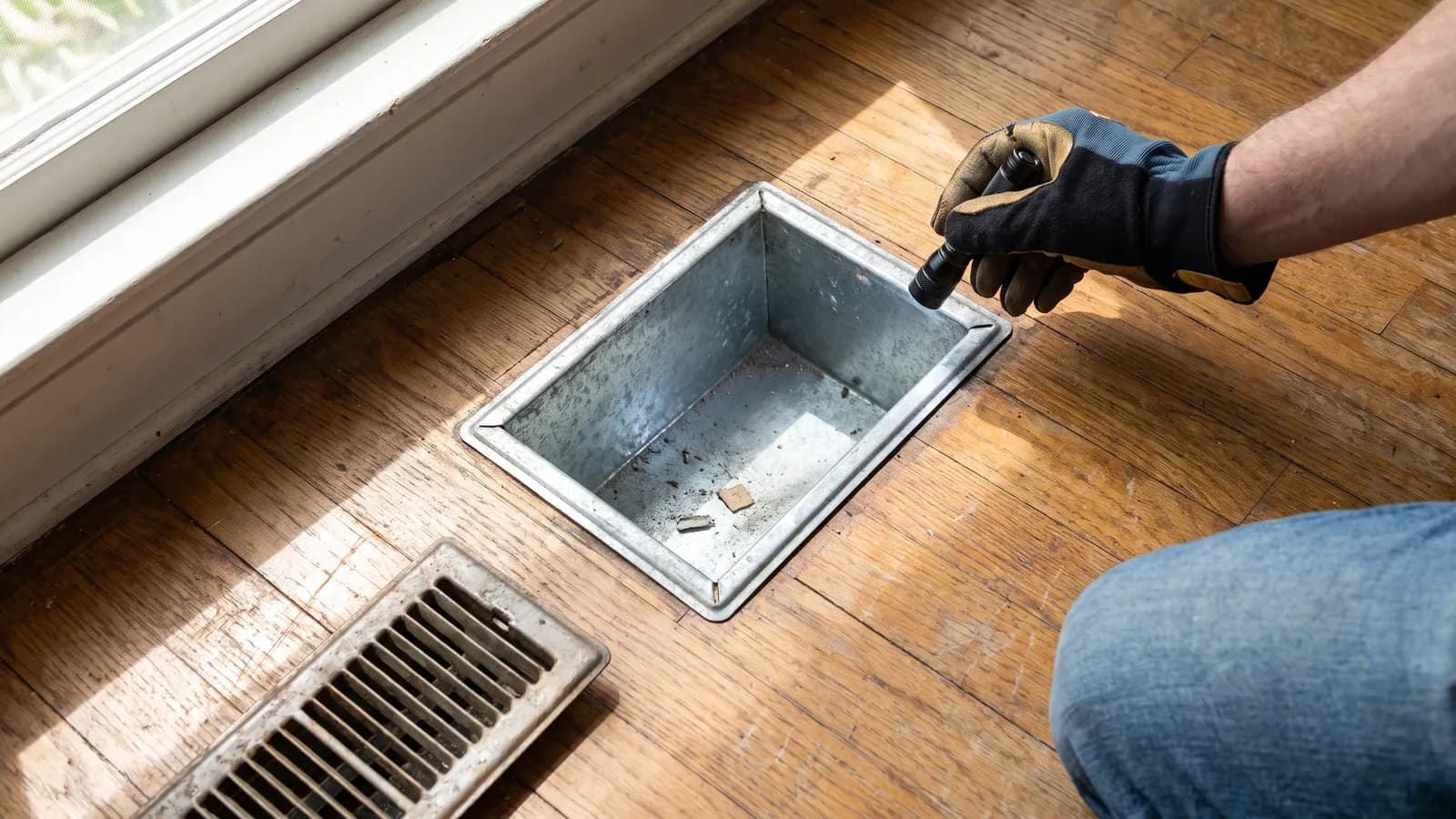
You can make the EPA's three-part diagnosis yourself in half an hour with a flashlight: pull a supply register and a return grille and look for clumps, debris, or anything fuzzy or slimy; watch how fast the filter grays; smell the air at startup; and look for droppings or chewed insulation. The goal is a clear answer to one question: does one of the three conditions apply, or not?
- Pull a supply register (the vents that blow air into rooms). Most lift out or unscrew. Look inside with a flashlight. A thin, even film of dust is normal. Clumps, debris, or anything with a fuzzy or slimy look is not.
- Pull the return grille (the large vent that pulls air back to the equipment). Returns collect more dust than supplies; the question is whether the dust is being redistributed, not whether it exists.
- Look at the filter. If it is loading up in weeks instead of months, something is feeding the system more dust than the rooms supply, which usually means a return duct leak in an attic, crawlspace, or wall cavity. How fast the filter grays is the best single clue you have.
- Smell the air when the system first starts. A musty smell at startup that fades is often a wet coil or drain pan, which is a service call, not a duct cleaning.
- Look for evidence of animals: droppings at the registers, chewed insulation, noises in the ducts at night.
Done when: you can say which of the three EPA conditions applies, or that none does.
If none of the three conditions applies, spend the money on a better-fitting filter and on sealing duct leaks at the next tune-up. Both change what comes out of the registers more than a cleaning does.
What if you do need it done?
Duct cleaning is professional work. The equipment (negative-air machines, agitation tools, and for mold, containment) is not something to improvise, and a cleaning that pushes debris further into the system or tears flexible duct is worse than none.
- Ask what method they use and whether the whole system is included: supply and return ducts, registers, the blower, the coil, the drain pan. Cleaning only the ducts and leaving a dirty blower is half a job.
- Ask them to show you the condition before and after, at more than one location.
- If mold is the reason, ask what they will do about the moisture source. If the answer is nothing, the mold will return.
- Refuse chemical biocides or sealants inside the ducts unless you understand exactly what is being applied and why. The EPA's page covers this; read it before agreeing.
- For a new-construction home still under the builder warranty, report construction debris in the ducts to the builder first. Drywall dust and sawdust in a new duct system is a construction cleanup issue, and many builders will handle it.
When should you stop and call a pro?
Beyond pulling a register to look, everything here is a pro's job. Do not climb into an attic or crawlspace to inspect ducts unless you are comfortable moving on joists with a light and someone knows you are up there. If you find animal droppings in quantity, stop, close the register, and call a pest professional before anyone disturbs it further.
What should you record?
Write down what you found at each register and the date. If you hire the work, keep the invoice, the method, the before and after photos, and any note about the moisture or pest source. Then set a reminder a year out to repeat the five-step check; add it to the maintenance schedule so it does not depend on memory.
Common questions
How often should ducts be cleaned?
There is no interval. The EPA does not recommend routine duct cleaning; it recommends cleaning when there is visible mold, a vermin infestation, or ducts clogged with debris that is being released into the home. Check for those conditions instead of following a calendar.
Will duct cleaning fix dust in the house?
Rarely on its own. Household dust mostly comes from the rooms, not the ducts, and a leaky return or a low-grade filter lets more in than a cleaning takes out. Fix the filter and the leaks first.
What should you do next?
Do the five-step check this weekend. If the filter is the real problem, the filter guide covers sizing and ratings. If the smell at startup is the problem, book the tune-up and mention the condensate drain when you call.