On this page
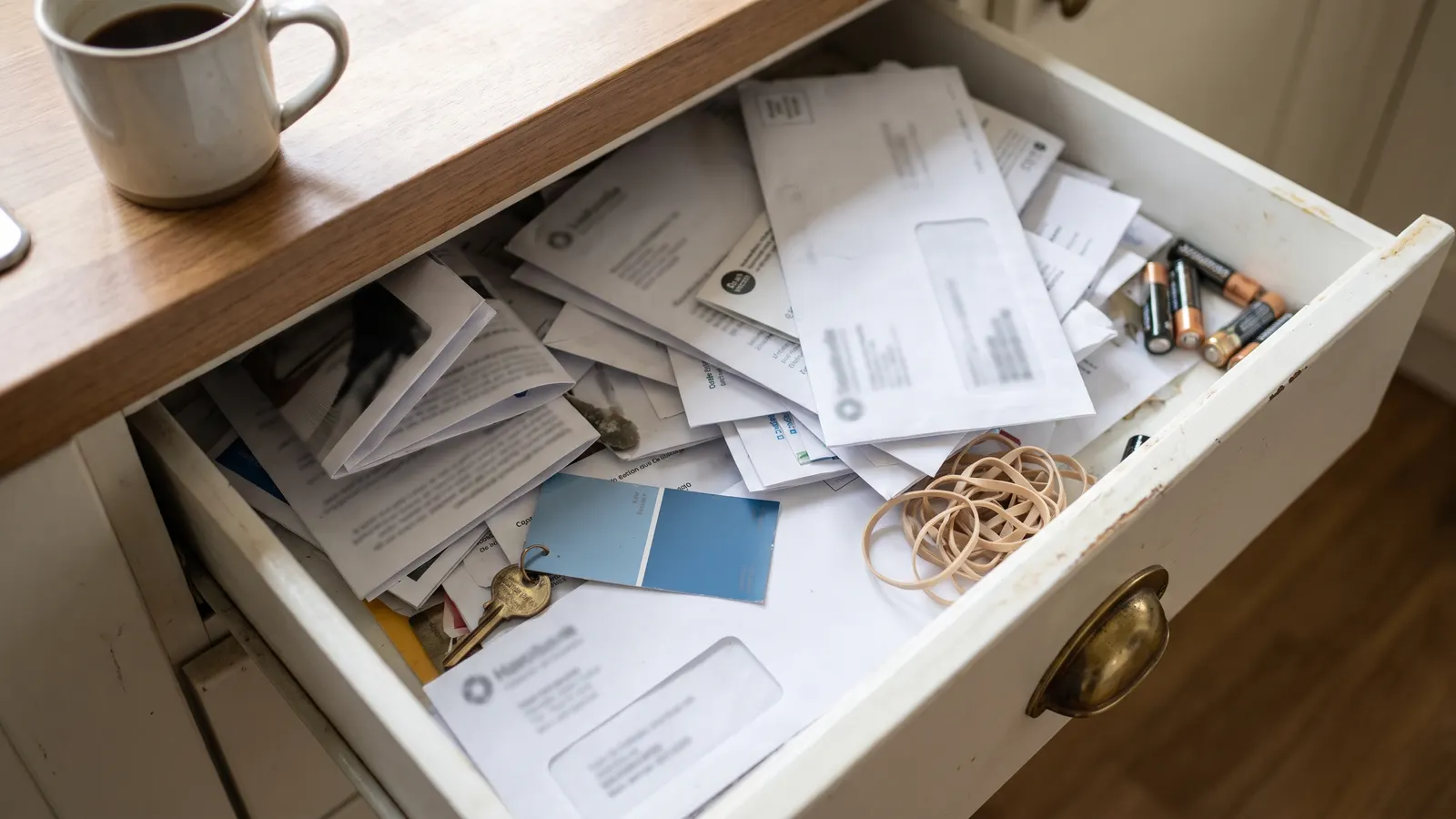
A home record is one place that holds what the house is, what has been done to it, what covers it, and who worked on it. Most homes do not have one. They have pieces: the closing folder in a drawer, the warranty emails in an inbox, the furnace model on a sticker in a dark closet, the name of the good plumber in someone's phone. Each piece is findable, in theory, by the person who put it there, on the day they put it there. Every year after that, less of it is.
The case for a single record is not organization for its own sake. It is that the four moments when the record matters (a warranty claim, a repair, an insurance claim, a sale) are exactly the moments when there is no time to reconstruct it, and when a missing date or a lost receipt costs real money.
When does the record actually matter?
The record matters at four moments, and they are exactly the moments when there is no time to build it: a warranty claim, which is decided on dates; a repair, when the technician needs the model, serial, and service history; an insurance claim, which needs an inventory made before the loss; and a sale, when a buyer discounts anything answered from memory.
A warranty claim. Warranties are contracts with dates, and claims are decided on dates. When was it installed? When did the problem start? When did you report it? Was the equipment serviced? A builder warranty for a new home closes in windows, and the timeline of those windows is only useful to an owner who knows the closing date and has the report dates written down. A manufacturer warranty on a water heater often expects the tank to have been flushed; the flush that was done but never logged is, for warranty purposes, a flush that never happened.
A repair. The technician at the door asks the model and serial number, when it was installed, and what was done last time. The answer is either on a sticker behind the unit, in a drawer, or nowhere. A record that has the model, the serial, the install date, and the last service invoice turns a diagnostic visit into a repair visit, and it stops the second technician from redoing what the first one did.
An insurance claim. After a fire, a flood, or a theft, the adjuster asks what was there and what it was worth. An inventory with photos and receipts, made before the loss, is the difference between a claim that is paid and one that is argued. Nobody makes that inventory after the loss.
A sale. A buyer, an inspector, and an appraiser all ask the same questions: how old is the roof, when was the HVAC replaced, has the water heater been serviced, what was the kitchen remodel and who did it. The seller with a record answers in minutes with documents. The seller without one answers from memory, and the buyer discounts the memory. Selling with a complete record is the packet that makes the difference. The IRS also has an interest: Publication 523 says to keep records of improvements to the home for figuring its adjusted basis when you sell, and a receipt for a roof or an addition from years ago is worth exactly what it says on it, if it can be found.
Why does the binder fail?
The binder was the right idea and the wrong container: it holds paper when half the record now arrives as email and PDF, it has no dates attached to the doing, it has no reminders, it lives in one drawer in one house, and it is only as complete as the most organized person in the household on their best day. A spreadsheet fixes the first problem and none of the others. It fails in predictable ways:
- It holds paper, and half the record now arrives as email, PDF, and photo.
- It has no dates attached to the doing. The manual for the furnace is in the binder; the fact that the filter was changed on the twelfth is not.
- It has no reminders. It records the past and says nothing about the next task.
- It does not travel. It is in one house, in one drawer, and it goes with whoever remembers it at the move.
- It is only as complete as the most organized person in the household on their most organized day.
A spreadsheet fixes the first problem and none of the others. A folder of PDFs fixes the first two. What the four moments need is a record that takes documents and dates together, reminds you of the next date, and can be handed to another person whole.
The drawer
- Paper only; the emails, PDFs and photos live somewhere else
- The manual is there, but not the date the filter was changed
- No reminders; it records the past and says nothing about the next task
- Stays in one house, in one drawer, with whoever remembers it
- As complete as the most organized person's most organized day
One record
- Documents, photos and dates in the same place
- Every task logged the day it is done
- A reminder before the next due date
- Handed over whole, to a technician, a buyer or the next owner
- Built one dated entry at a time, by whoever did the task
What does a working record look like?
A working record has four parts: what the house is (systems, appliances, finishes, shutoffs, with models and serials), what has been done to it (every task, repair, and project with dates and costs), what covers it (warranties, insurance, receipts), and who worked on it (builder, subcontractors, vendors). The test for any item is whether it will matter at a claim, a repair, or a sale.
| Part | What it holds | Where it comes from |
|---|---|---|
| What the house is | Each system and appliance with brand, model, serial, install date, location; finishes with product names and paint codes; shutoff locations | Equipment labels, the builder's finish schedule, the walkthrough |
| What has been done | Every maintenance task with its date, cost, and note; every repair; every project with its budget, contractor, permits, and photos | Doing the work, and logging it the same day |
| What covers it | Every warranty with start and end dates and the document; the insurance policy and its renewal; receipts for anything that could be claimed | Closing day, every purchase, every renewal |
| Who worked on it | The builder and their support contact; the subcontractors by trade; the vendors you would call again | The builder's handoff, every invoice |
The test for any item is simple: will this matter at a claim, a repair, or a sale? If yes, it goes in the record with a date.
Log the task the day it is done, not at the end of the month. A record built from memory is a record with the dates wrong, and the dates are the part that matters.
Why is the handoff where records die?
The largest loss of home knowledge happens at a change of hands. A builder finishes a house knowing every product in it, every subcontractor, every shutoff location, and hands the buyer a folder that has a fraction of it. Years later that owner sells, and the next buyer gets the folder minus whatever was lost in the move, plus nothing from the years between. Each handoff resets the record to nearly zero.
This is why the builder-to-owner transfer matters more than any other. A builder who records the house as it is built (systems, finishes, shutoffs, documents) and hands the whole record to the buyer gives the owner a complete starting point instead of a folder; the handoff from the builder's side describes how. In Property Station that handoff is the claim link: the buyer receives everything the builder entered, and the builder's team stops seeing it. The owner then adds the years of maintenance and repairs on top, and at resale the share link or the printed Home Snapshot hands the essentials to the next buyer without handing over the private paperwork.
How do you start a record on a house you already own?
Most people are not at a handoff. They are ten years into a house with a drawer. The way in is not to reconstruct the past; it is to record from today forward and backfill only what is cheap to find.
- Walk the house with your phone and photograph every equipment label: furnace, air handler, condenser, water heater, water softener, panel, garage opener, every appliance. Enter the brand, model, and serial from the photos. That is an hour, and it is the part a technician needs.
- Find the closing folder and file what is in it: deed, closing statement, survey, inspection report, any warranties. The closing-day list says what each is for.
- Enter the warranty and policy end dates you can find. Skip the ones you cannot.
- Set up the maintenance tasks you actually do, with the dates you actually do them, and start logging from the next one. The history builds itself from here.
- Add the vendors you would call again, from your phone and your email.
The past you cannot find is gone; that is the cost of the drawer. Everything from today is recoverable.
Common questions
What should a home record contain?
Four things. What the house is (systems, appliances, finishes, with models and serials), what has been done to it (maintenance, repairs, projects, with dates and costs), what covers it (warranties, insurance, receipts), and who worked on it (builder, subcontractors, vendors). If a fact will matter at a claim, a repair, or a sale, it belongs in the record.
Is a spreadsheet enough?
A spreadsheet is far better than nothing and better than a binder. It falls down on files (the receipt, the manual, the photo), on reminders, and on handoff. The question to ask is whether the next person who needs the record, including you in five years, can find it and read it.
What should you do next?
Do step one this weekend: photograph the labels. Then file the closing folder into the Document Vault, with expiry dates on the warranties, and let the reminders take over from there.