On this page
- What are the windows, and what does each one usually cover?
- What happens before closing: the walkthrough and the punch list?
- What should you inspect in the first weeks?
- What is normal during the settling period, and what is not?
- Why does the end-of-first-year inspection matter most?
- What is covered through the second year?
- What does the long structural window cover?
- How do you send a claim so it counts?
- Common questions
- What should you do next?
A builder warranty is not one promise but several, each with its own end date, and the dates are the whole game. The common shape is short coverage for workmanship and materials, longer coverage for the major systems, and the longest for the structure, often described as one-two-ten; only your contract gives the real numbers. Whatever they are, the method is the same: know each window, inspect before it closes, and send claims in writing before the date.
This post is about that calendar. It is written for the owner of a newly built home in the first two years, and it assumes you have the warranty document. If you do not, get it from the builder today; it is the most important piece of paper you will not be able to find later.
- Before closingThe walkthrough and the punch list. Cosmetic items that are not on the list are often treated as owner damage later.
- First weeksWater, HVAC, doors and windows, and the first heavy rain. Send each item in writing, dated, with photos.
- Settling periodHairline cracks, nail pops, doors that rub. Note them; many builders address them in one visit near the end of year one.
- End of year oneThe inspection that matters most. The full list goes in before the workmanship window closes.
- Year twoSystems: the pipes, wires and ducts. Equipment warranties start expiring on their own clocks.
- The long tailStructural only. Keep water away from the foundation and keep dated photos.
What are the windows, and what does each one usually cover?
Most builder warranties have three windows that narrow as they lengthen: the shortest, often the first year, covers workmanship and materials (doors, drywall, flooring, tile, fixtures, roofing installation); a middle window, often the second year, covers the delivery systems (pipes, wiring, ducts) but not the equipment; and the longest, often ten years, covers load-bearing structure only when a defect makes the home unsafe or unlivable.
Everything in this table describes what is common in builder warranties in the United States. Your document may differ in every respect. Read it, and where it disagrees with this post, the document wins.
| Window | Often called | Commonly covers | Commonly excludes |
|---|---|---|---|
| The shortest, often the first year | Workmanship and materials | Defects in how things were built or installed: doors, windows, drywall, trim, paint, flooring, tile, cabinets, plumbing fixtures, roofing installation | Normal wear, settling within stated limits, cosmetic issues not reported at the walkthrough, owner damage, appliances |
| A middle window, often the second year | Systems | Plumbing supply and drain lines, electrical wiring, ductwork; the delivery systems rather than the equipment | The equipment itself (HVAC units, water heater), which is under manufacturer warranty |
| The longest, often ten years | Structural | Load-bearing elements: foundation, framing, beams, roof structure, when a defect makes the home unsafe or unlivable | Cracks and movement within the document's tolerances, non-structural elements, damage from soil or drainage the owner controls |
Two things about this table matter more than the numbers. The first is that coverage narrows as it lengthens: the ten-year window covers far less than the first-year window. The second is that "systems" in the middle window means the pipes and wires, not the machines at the end of them. The furnace has a manufacturer warranty of its own, and entering its dates is a separate task.
What happens before closing: the walkthrough and the punch list?
The warranty clock starts at closing, but the most valuable inspection happens before it. The punch list is the written list of defects and unfinished items the builder agrees to correct, made during the pre-closing walkthrough. Anything cosmetic (a scratched counter, a chipped tile, a paint run) that is not on the punch list is often treated as owner damage after closing.
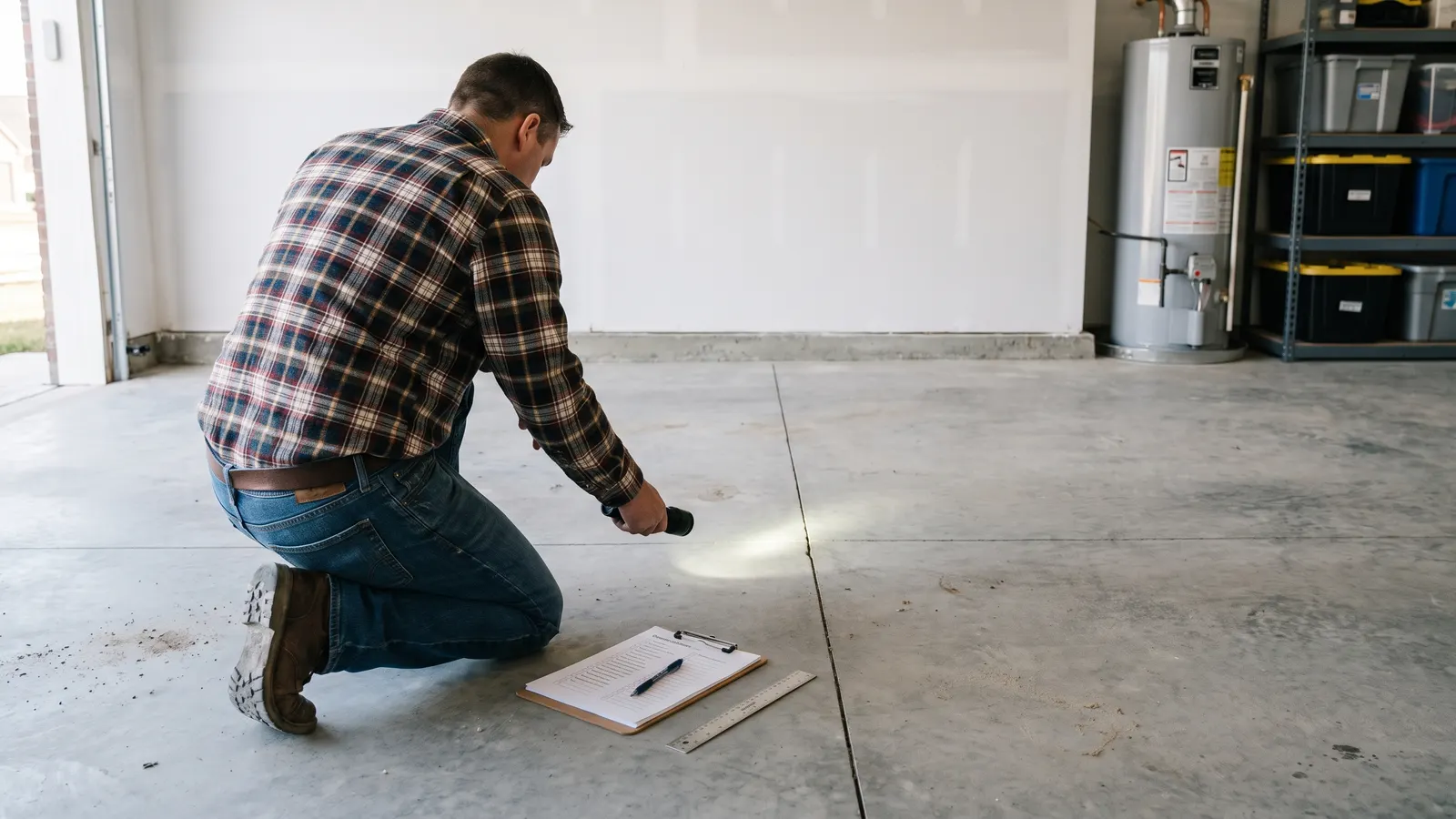
Walk every room with the builder's representative and write everything down, with photos. Open every window, run every faucet, flush every toilet, run the dishwasher and the disposal, test every outlet with a plug-in tester, open and close every door, look at every surface in raking light. Check the exterior: grading that slopes toward the house, downspouts that discharge at the foundation, siding gaps, and the roof from the ground. Get a signed copy of the list.
What should you inspect in the first weeks?
Most builder warranty documents ask that some categories of defect be reported within a short period or at a specific inspection. The first weeks are for the things that only show up under real use:
- Water: every drain, every supply connection under sinks, the water heater's relief valve discharge, the washing machine connections. Put a dry paper towel under each trap and check it the next day.
- HVAC: does every room get air? Is the thermostat reading believable? Is the condensate line draining outside or to a drain rather than onto the floor?
- Doors and windows: do they latch, lock, and seal? Is there daylight at any edge?
- Exterior drainage in the first heavy rain: where does the water go? Photograph puddles against the foundation and downspouts dumping at the wall. Grading and drainage problems are the root cause of many later structural claims, and they are far cheaper to fix in month one.
Send every item you find as its own written request, dated, with photos, even the small ones. A list of ten small items sent in month two is ten dated records. The same ten items mentioned to a site super in the driveway are nothing.
What is normal during the settling period, and what is not?
New homes move as lumber dries and the foundation takes load. Hairline cracks in drywall at the corners of doors and windows, nail pops, a door that starts to rub, a small gap opening between trim and wall, and slight cracking in concrete flatwork are common in the first year and are often addressed once, late in the workmanship window, in a single visit. Many warranty documents state tolerances for these (a crack under a certain width, a floor out of level within a certain amount) and exclude movement inside those limits.
What is not normal: cracks that are wide, stepped, or growing; doors and windows that stop opening; floors that slope noticeably; water in the basement or crawlspace; a foundation crack that lets water through. Those get reported immediately and in writing, and they are the items you want dated inside the workmanship window even if they might later be structural claims.
Why does the end-of-first-year inspection matter most?
A few weeks before the workmanship window closes, do a full inspection or hire an independent inspector to do one. This is the last time the widest coverage applies, and it is the single highest-value hour of the whole warranty.
Walk the house the way you did at the walkthrough, but now with a year of use behind it. Add the things a year reveals: the roof from the ground and the attic after a winter and a summer, the gutters and downspouts after the leaves, grout and caulk in every wet area, the exterior caulk and paint, the garage door and opener, every exhaust fan. Then send the list, item by item, before the date.
What is covered through the second year?
With the workmanship window closed, the remaining coverage in the middle window is for the delivery systems. Watch for slow drains that a snake does not fix, a breaker that trips with no clear cause, outlets that stop working, rooms that never heat or cool, water hammer, and any sign of a leak inside a wall or ceiling. Report them the same way: written, dated, with photos and a description of when it happens.
This is also the year the equipment warranties start expiring on their own schedules. The water heater, the HVAC, the range, the dishwasher: each has a start date and a term in its own paperwork. Put every one of them on the Warranties list with an end date, and get the documented maintenance those warranties expect, which usually means the annual HVAC service and the record of it.
What does the long structural window cover?
The structural window is long and narrow: it exists for the rare, serious defect such as a foundation that fails or framing that cannot carry its load, and claims under it are usually reviewed by an engineer and often administered by a third party named in the document. Your job over those years is to keep water away from the foundation and to keep the record.
That record is photos of the foundation and the exterior each year, dated, from the same spots. If a structural claim ever happens, the series is the evidence of when the problem began.
How do you send a claim so it counts?
Send every claim in writing through the channel the warranty document names, one problem per request, with photos and the date you noticed it, before the window closes, and keep your copy. The send date is what counts, not the visit date. If there is no response within the time the document states, follow up in writing and keep that too.
- In writing, through whatever channel the warranty document names. If your builder uses Property Station, that is the Request Service page, which dates and records every message.
- One problem per request, with photos, the date you noticed it, and what you have observed since.
- Before the window closes. The send date is what matters; the visit can come later.
- Keep your copy. A claim you cannot prove you sent is a claim you did not send.
- Follow up in writing if there is no response within the time the document states, and keep those messages too.
Common questions
Does the builder warranty cover appliances?
Usually not. Appliances and most equipment (the water heater, the HVAC units, the garage door opener) carry their own manufacturer warranties, which start on the install date and run on their own clocks. The builder's warranty covers the builder's work. Read both documents; they are different contracts.
What if the builder does not respond to a claim?
Send it again in writing, with the date of the first request, and keep copies. Many warranty documents describe an escalation path or a third-party administrator; that path is in the document, not in a phone call. The record of what you sent and when is what an administrator or a mediator will ask for first.
Does maintenance affect the warranty?
It can. Warranty documents commonly exclude damage from neglected maintenance, and manufacturer warranties on equipment often expect documented service. Keeping the maintenance log is part of keeping the warranty.
What should you do next?
Find the warranty document and write down the three end dates. Put the first-year inspection on the calendar a month before the first one. Then set up the maintenance that keeps the equipment warranties alive; the first-year schedule for a new build is the companion to this post, and the closing-day document list is where the warranty document itself should already be filed.