On this page
- What should you do before the storm arrives?
- How do you heat safely when the power is out?
- What happens to the food, the medicine, and the pipes?
- What should you unplug, and why?
- Which documents and numbers should be reachable without power?
- What should you do when the power comes back?
- Common questions
- What should you do next?
Prepare for a winter storm in two layers: before it arrives, seal the drafts, protect the pipes, test the alarms, stock several days of supplies including medication, and charge everything; during the outage, heat only with equipment that is safe indoors, keep the refrigerator and freezer shut, drip the vulnerable faucets, and unplug what a power surge could damage. Ready.gov and the CPSC supply the rules and the numbers; the house record supplies the shutoff locations and the phone numbers you will need in the dark.
The freeze itself has a shorter list, in freeze warning: what to do tonight. This post is for the storm that takes the power with it, which is the version that damages houses.
What should you do before the storm arrives?
Before the storm, get the house ready to hold heat and the household ready to go without power for several days. Ready.gov's winter weather page says to prepare the home to keep out the cold with insulation, caulking, and weather stripping, to learn how to keep pipes from freezing, to install and test smoke alarms and carbon monoxide detectors with battery backups, and to gather supplies to stay home for several days without power, including medication.
Before the storm
- Drafts sealed at doors, windows, and the attic hatch, so the house holds its heat longer when the furnace stops
- Exposed pipes insulated and outdoor faucets drained, per the frozen pipes guide
- Smoke and CO alarms tested, with fresh batteries in the ones that take them
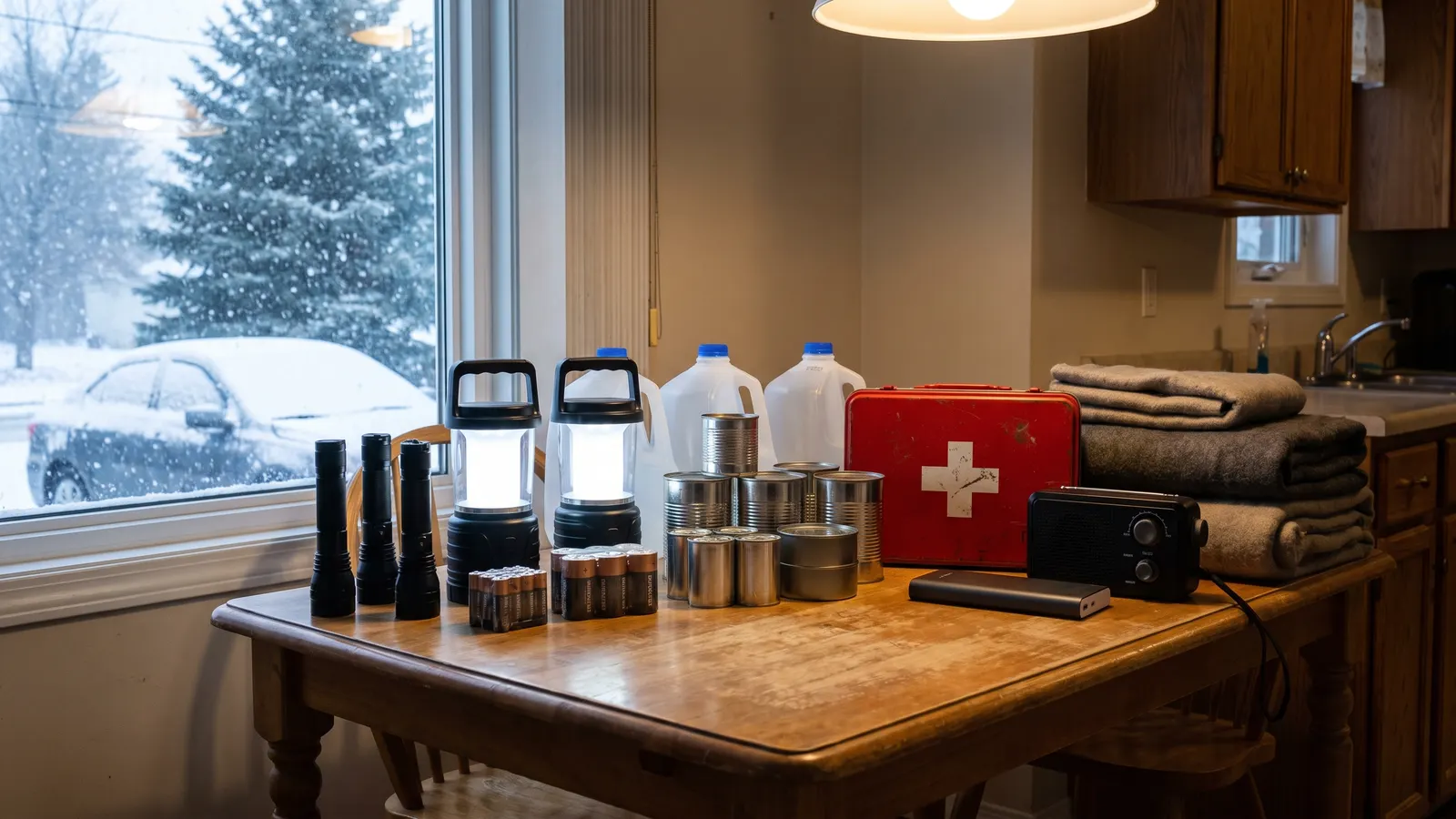
- Several days of water, food that needs no cooking, and every prescription filled
- Flashlights for every person, batteries, a battery or hand crank radio, chargers, and a backup battery
- Phones and laptops charged, the car fueled, and cash on hand
- The main water shutoff located and the wrench beside it
- The furnace serviced in fall, per getting your HVAC ready for winter, so it restarts cleanly when the power returns
Ready.gov's kit page is the full supply list, and building a home emergency kit turns it into a bin by the door. The item people forget is the medication, because the pharmacy is closed for the same storm. Ready.gov also says to stay off the roads if at all possible.
How do you heat safely when the power is out?
Heat safely by using only equipment designed to burn indoors, keeping the burning things three feet from anything that can burn, and never bringing a generator or a grill inside. Ready.gov's winter page says to use generators and grills outdoors only and away from windows, and never to heat the home with a gas stovetop or oven; the NFPA's heating tip sheet says to keep anything that can burn at least three feet from heating equipment and to turn portable heaters off when leaving the room or going to bed.
A gas fireplace or a wood stove that works without power is the heat source many houses already have; keep the screen up and the ashes cold before they go in a metal container. A portable heater on a generator or a battery bank follows the space heater rules: a flat surface, plugged straight into the outlet, off when you leave the room. The generator itself follows portable generator safety, including the transfer switch that keeps it from backfeeding the lines a utility crew is working on. If the house cannot be kept warm, Ready.gov's advice is to go to a community location with power; a cold house is not worth a CO alarm at 3 a.m.
What happens to the food, the medicine, and the pipes?
Food, medicine, and pipes are the three things an outage quietly ruins, and each has a rule. Ready.gov's power outage page says to keep freezers and refrigerators closed: the refrigerator keeps food cold for about four hours, a full freezer holds for about 48 hours, and anything exposed to 40 degrees or higher for two hours or more gets thrown away. Refrigerated medicines and power-dependent medical devices need an alternate plan made before the storm, not during it.
The pipes are the house's problem. Once the heat is off, the supply lines in exterior walls, the garage, and the crawlspace start cooling toward the outdoor temperature, and the Red Cross's frozen pipe guidance applies: let cold water drip from a faucet served by exposed pipes, and open kitchen and bathroom cabinet doors so warmer air reaches them. If the outage will last days and the house will drop below freezing, we recommend shutting off the main, opening the faucets to drain the lines, and knowing what to do if a pipe bursts anyway, because a burst that goes unnoticed in an empty, cold house is the expensive version of this storm.
What should you unplug, and why?
Unplug or switch off the appliances and electronics you care about while the power is out, because the return is the dangerous moment. Ready.gov's power outage page says to turn off or disconnect appliances, equipment, or electronics, since power may return with momentary surges or spikes that can cause damage. Leave one lamp on so you know when the power is back.
The ESFI's surge protection page adds that no surge protection can handle a direct lightning strike, that point-of-use protectors only protect what is plugged into them and wear out over time, and that a whole-home surge device installed by a qualified electrician protects the entire electrical system including large appliances. Whole-home surge protection basics explains what that device is and where it goes. When the power returns, bring things back one at a time, starting with the furnace and the refrigerator.
Which documents and numbers should be reachable without power?
The documents and numbers you need in an outage are the ones that live on a screen you cannot charge: the utility's outage line and your account number, the insurance policy and claim number, the furnace and generator service contacts, the pharmacy, and the neighbor who has a wood stove. Ready.gov's financial preparedness page says to gather contact information for banks, insurance agents, health professionals, and service providers, and to store important documents where they are easy to access during a disaster.
Print one card and keep it with the flashlights. Keep the digital copy where a phone with a backup battery can reach it. In Property Station, the policy sits on the Documents page as an Insurance document, the utility account numbers can go in a document's Notes, and the Emergency Contacts page under Repairs & Pros holds the phone numbers; documenting your utilities and account numbers is the fuller method, and the features page shows the rest of the record.
What should you do when the power comes back?
When the power comes back, check the food with a thermometer, restart the equipment in order, walk the house for water, and write down what happened. The furnace first, then the refrigerator and freezer, then everything else, one at a time. Then walk every room with plumbing, the basement, and the garage looking for the leak a frozen pipe left behind.
What to do after a power outage is the fuller checklist, including the reset of anything with a clock and the food decisions. For the record, note when the power went out and came back, what you threw away, and any damage, with photos, because a spoiled-food or frozen-pipe claim starts with those dates. Then add what failed to the winter maintenance checklist for next year: the flashlight that was dead, the faucet you could not find in the dark, the door that let the cold in.
Common questions
How long does food last in the fridge without power?
Ready.gov says the refrigerator keeps food cold for about four hours if you keep the door closed, and a full freezer holds its temperature for about 48 hours. Use a thermometer, and throw away anything that has been at 40 degrees or higher for two hours or more, or that has an unusual odor, color, or texture.
Can you run a generator in the garage with the door open?
No. The CPSC says never to use a portable generator inside a home or garage, even if doors and windows are open. Run it outside only, at least 20 feet from the house, with the exhaust facing away, and have battery-backed carbon monoxide alarms inside.
Should you let faucets drip when the heat is out?
Yes, on the lines that run through cold spaces. The Red Cross says to let cold water drip from a faucet served by exposed pipes and to open kitchen and bathroom cabinet doors so warmer air reaches the plumbing. If the house is going to stay cold for days, shutting off the main and draining the lines is the safer choice.
Is it safe to use the gas oven for heat?
No. Ready.gov's winter weather page and the NFPA's heating tip sheet both say never to heat the home with a gas stovetop or oven. The carbon monoxide risk is the reason. Use a listed portable heater by the rules, or go somewhere with heat.
What should you do next?
Fill the prescriptions and the flashlight drawer this week, and find the main water shutoff before you need it in the dark. Then print the contact card, put it with the flashlights, and put the digital copy where a phone can reach it.