On this page
Record eight things for every utility serving the house: the provider's name, the account number, the service address exactly as the provider lists it, the meter number and where the meter is, where the shutoff is, the emergency line, the billing date, and where the login lives (the name of the password manager entry, never the password itself). Keep the list with the shutoff locations, where anyone in the household can reach it during an outage or a leak, and where a house-sitter or a buyer can be handed it whole.
The list is short and dull, and it gets used at the worst moments: an outage to report, a leak to stop, a move to arrange, a bill that jumped. Each of those starts with "what is the account number?" and the answer should take seconds.
Which utilities and services belong on the list?
Every service with a meter, a bill, or an emergency line belongs on the list: electric, gas or propane or heating oil, water, sewer, trash and recycling, internet, and any landline. Then the services that keep the house running and that another person would need to reach: the HOA, alarm monitoring, the pool or lawn or pest contract, irrigation water if it is metered separately, the well or septic service, and a solar lease or an EV charging plan if you have one.
| Service | What is different about it |
|---|---|
| Electric | The outage line and the account number are what you report an outage with; the meter number is on the meter face |
| Natural gas | The emergency line is the one to call for a smell of gas after leaving the house; the meter shutoff needs a wrench |
| Propane or heating oil | Delivered, not metered by a utility; record the tank size, the supplier, and the delivery schedule or the auto-fill arrangement |
| Water | The emergency line for a main break or a meter leak; the meter is at the street and the house shutoff is inside |
| Sewer or septic | Sewer may be billed with water or by a separate district; a septic system has a pumping company instead of a utility |
| Trash and recycling | Pickup day, what is accepted, and the number to call for a missed pickup or a bulk item |
| Internet and phone | The account number and the equipment the provider owns, which has to go back at a move |
| HOA | Dues amount and due date, the management company, and the architectural approval contact |
| Alarm monitoring | The monitoring company, the account, and the passcode's location (a password manager, not the list) |
| Solar lease or EV plan | The company, the account, and what transfers at a sale |
What should you record for each one?
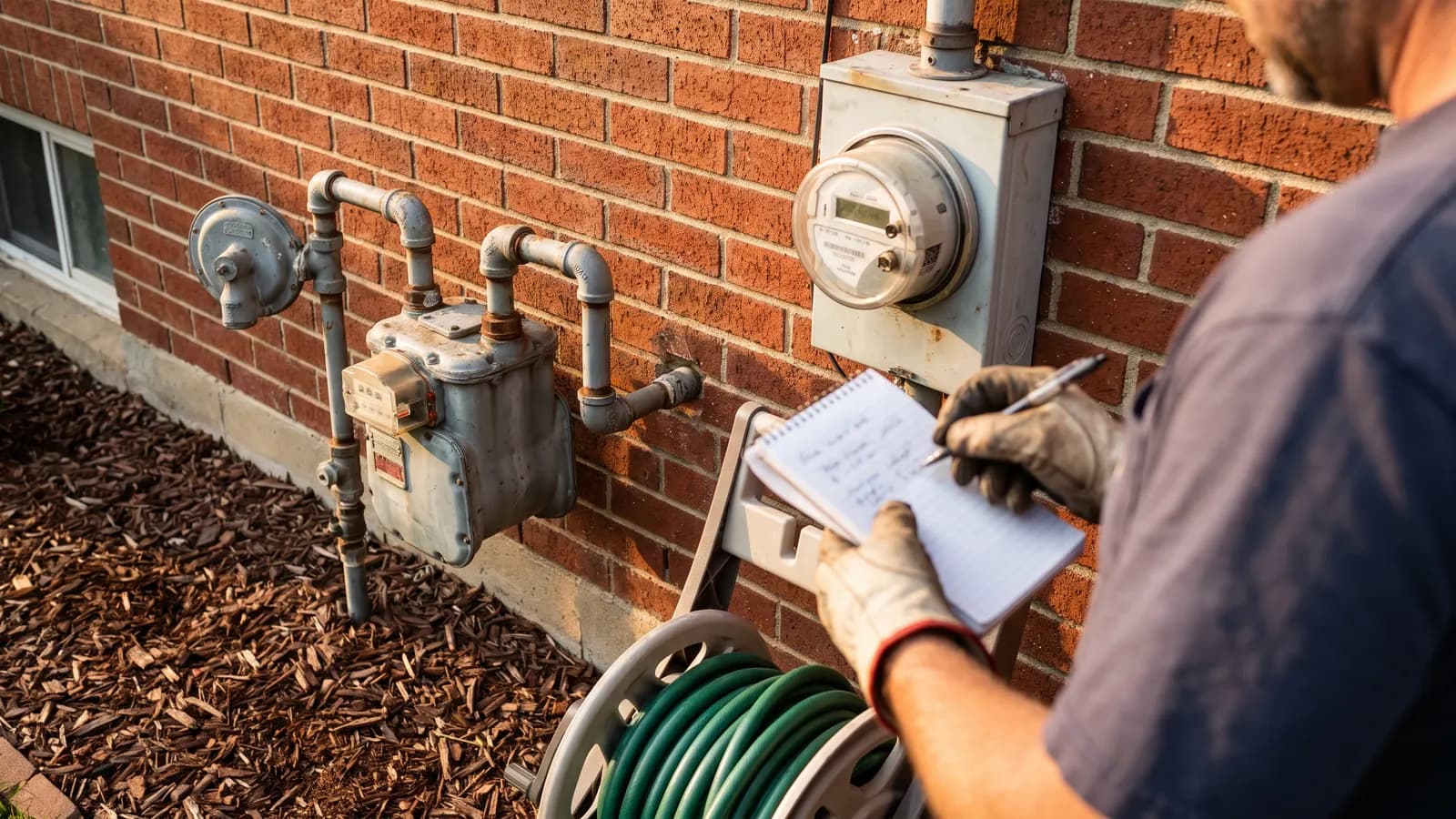
Record the same eight fields for each service, and add a photo of the meter and of the shutoff. The account number and service address come from a bill. The meter number is on the meter. The emergency line is on the provider's site, and it is often different from the customer service number. The billing date tells you when to expect the charge and when a missing bill means something is wrong.
Per utility
- Provider name, and the name of the account holder as the provider has it
- Account number, and the customer number if they are different
- Service address exactly as the provider spells it, including the unit or lot number
- Meter number, and where the meter is (a photo helps)
- Shutoff location and what tool it needs (a curb key for the water meter, a wrench for the gas meter)
- Emergency or outage line, separate from customer service
- Billing date, average bill in a plain description, and whether it is on autopay from which account
- Where the login lives: the password manager entry name, not the password
The shutoff line deserves a moment. The utility's emergency crew can turn off the gas at the meter and the water at the curb; you can turn off the water at the house valve and, if the manual says so, at the gas appliance. Knowing which valve is yours and which is theirs, before a pipe bursts, saves the argument at the door, and the first hour after a pipe bursts starts with the valve you already know how to find.
Where should the list live?
The list lives with the shutoff locations and the emergency contacts, in the home's record, where every adult in the house can open it and a trusted person can be given it. Not in one person's phone notes, not in an email thread, and not on a sticky note in the utility room with the alarm code written beneath it. The record can hold account numbers; the password manager holds the passwords.
In Property Station the utility accounts sit alongside the valves on the Shutoffs & Key Locations page and the numbers to call under Emergency Contacts, with the bills and the provider letters filed on the Documents page as their own type. The public share link, when you turn it on, shows the property's details, systems, and rooms and does not show documents, contacts, or inventory, so sharing the record with a contractor or a manager does not expose the account list. The home's record in the app keeps the two apart on purpose.
The paper version still has a place. A home binder the family can use holds the printed list without the passwords, for the night the internet is out along with the power.
When will you need it?
You will need the list in an outage, during a leak, at a move, before an extended absence, at a sale, and whenever a bill looks wrong. Each of those starts with an account number and a phone number, and each one happens at a time when hunting through bills is the last thing you want to do.
A move is the list's longest single use: every account has to be stopped at one address and started at another, with dates that line up, and the provider-owned equipment has to go back. The moving checklist for homeowners walks the sequence, and it is quick only if the accounts are already listed. An extended absence uses the same list a different way: the house-sitter gets the emergency lines and the shutoff locations, not the logins, and preparing the house for a long absence says what else they need. And at a sale, the buyer asks which utilities serve the house, whether the sewer is a district or a septic tank, and what the solar lease says about transfer; the list answers all three.
How do you keep it current?
Keep the list current by checking it once a year and whenever a bill changes, a provider changes, or you change how you pay. The yearly check takes minutes: open each entry, compare the account number and billing date to the latest bill, confirm the emergency line still works, and update the average bill. Set the check as a recurring task so it happens.
A provider change is the moment most lists go stale: the internet company is switched, the new account number lives only in a welcome email, and the old number stays on the list. Update the entry the day the service starts, and file the welcome email as the account's document. The digital record as a whole works the same way: each entry is right on the day it is written, and it stays right only if the next change gets written too.
Common questions
Is it safe to keep account numbers in a home record?
Account numbers on their own are on every paper bill, and the risk is low if the record itself is protected by a login. Passwords are different. Keep those in a password manager and note only which entry to look in. Never put a password, a PIN, or an alarm code in a shared note or a printed list.
What about services that are not utilities, like the alarm company or the lawn service?
Add them. The test is whether someone else running the house for a week would need to reach them. The alarm monitoring company, the pest contract, the pool service, and the HOA all pass that test; a streaming subscription does not.
How do I find my meter number?
It is printed on the meter itself, usually on the face or a metal tag, and it appears on most bills. Photograph the meter with the number readable and note where the meter is, because the utility's emergency line will ask for both.
What should you do next?
Gather the last bill from each provider tonight and fill in the eight fields for each one; the meter photos can wait for daylight. Then put the emergency lines and the shutoff locations where the rest of the household can find them, and ask one other adult in the house to find the water shutoff from the list without your help.