On this page
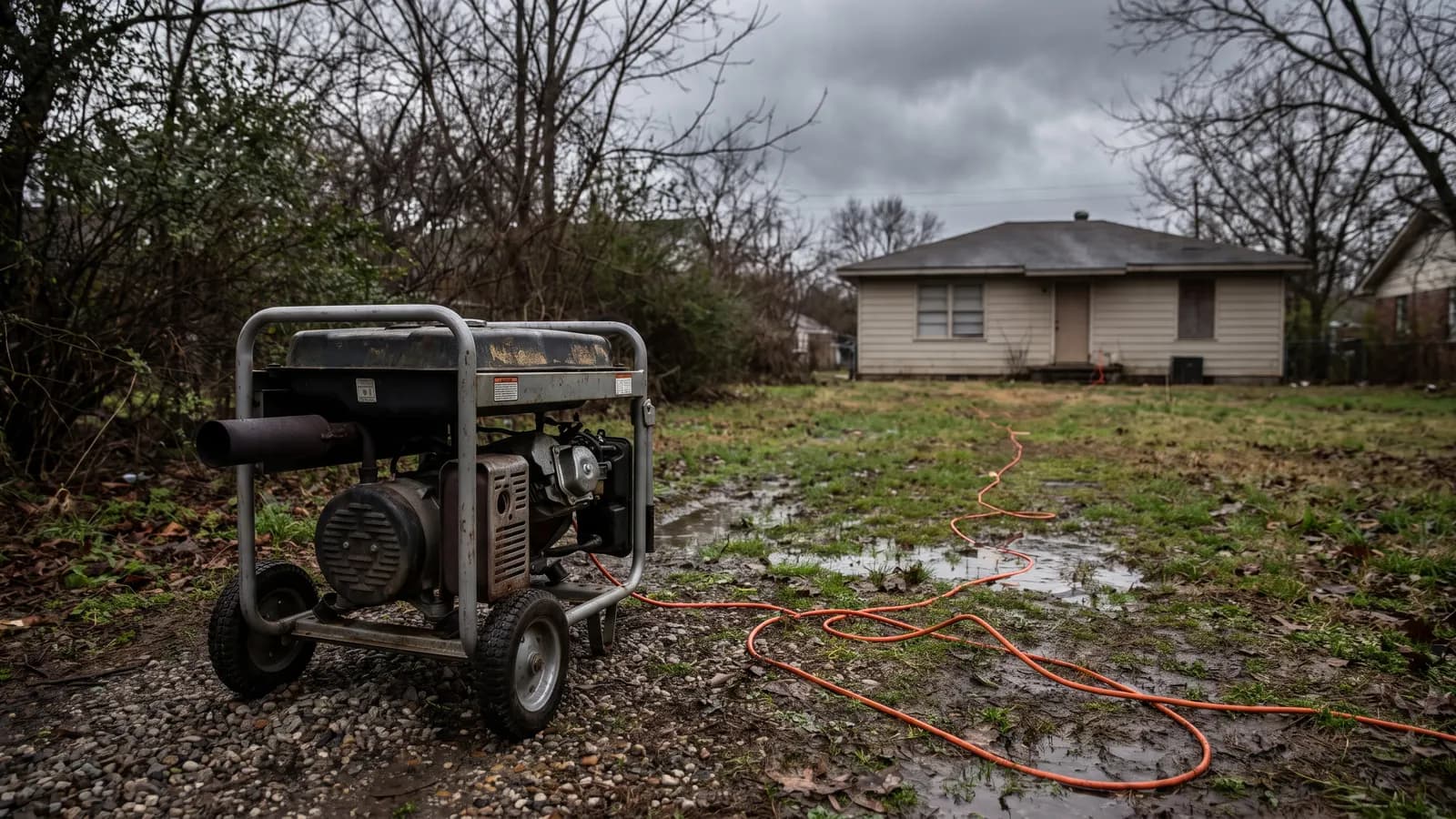
Run a portable generator outdoors only, at least 20 feet from the house with the exhaust pointed away from every window, door, and vent, and never in a garage, a carport, or a basement, even with the door open. Connect it to the house through a transfer switch that an electrician installed, or run outdoor-rated extension cords from the generator to each appliance. Those two rules, placement and connection, separate a useful machine from a fatal one.
A generator is a gasoline engine with no exhaust pipe, sitting beside a house full of sleeping people during a storm. Everything below follows from that.
Why does generator placement matter?
Placement matters because a running generator produces carbon monoxide, a gas you cannot see or smell, and the exhaust drifts into the house through any opening it finds. The CPSC's Carbon Monoxide Information Center says one portable generator can produce the same amount of carbon monoxide as hundreds of cars, and that generators are used outside only, at least 20 feet away from homes with the exhaust facing away, never inside homes or garages even with doors and windows open.
The CPSC's page says more than 200 people in the United States die every year from accidental non-fire CO poisoning associated with consumer products, and more than 100 of those deaths are linked to portable generators. The symptoms it lists are headache, dizziness, weakness, nausea, vomiting, sleepiness, and confusion. If you suspect CO poisoning, get outside to fresh air immediately and call 911.
The other half of placement is the alarm. The CDC's carbon monoxide page says to install battery-operated or battery back-up CO detectors near every sleeping area; Ready.gov's power outage page adds every level. Test them on the monthly detector round, and again the day the generator comes out.
How should a generator connect to the house?
A portable generator connects to the house one of two ways: through a manual transfer switch that a licensed electrician installed at the panel, which isolates the house from the utility line and feeds chosen circuits, or through outdoor-rated extension cords run from the generator's outlets to each appliance. Never plug a generator into a wall outlet. ESFI's outdoor electrical safety page says not to plug generators directly into a home outlet without a transfer switch, to prevent backfeed, which could harm utility line workers making repairs.
Transfer switch
- Installed at the panel by a licensed electrician, usually with a permit
- One cord to an inlet on the outside wall; the house cannot backfeed the line
- Runs hardwired equipment: the furnace, a well pump, some lights
Extension cords
- Nothing to install; works the day you buy the generator
- One outdoor-rated cord per appliance, through a door that then cannot close
- Cannot run the furnace, a well pump, or the water heater
If you use cords, ESFI's same page says never to use an indoor extension cord outdoors; outdoor cords are labeled "For Outdoor Use" and are often orange. In freeze country the transfer switch is the only way to run the furnace, which the regional prep post treats as the one thing such a house cannot lose. For small loads a battery power station makes no exhaust; it has its own charging rules.
What do you need?
You need the generator's manual, fresh fuel in an approved container stored away from the living space, engine oil of the grade the manual names, outdoor-rated cords long enough to keep the machine 20 feet out, a working CO alarm on every level, and, to run hardwired equipment, a transfer switch installed before the season starts.
- The owner's manual: starting sequence, oil grade, load limits
- Fuel in an approved container, plus stabilizer if it will sit
- Engine oil of the type the manual specifies, and a funnel
- Outdoor-rated extension cords, heavy enough for the load and long enough for 20 feet
- A CO alarm with battery backup on every level, tested
- A cover made for running in rain, not a tarp
- Hearing protection and a flashlight for night starts
What are the steps?
Set the generator up before you need it: pick the spot, measure the distance, and start it once in daylight so the first real start is not a fumble in a storm. On the day, place it, start it with nothing plugged in, add loads one at a time, and let it cool before refueling. The two accidents, CO and fire, both come from a step skipped in the dark.
- Choose the spot in daylight: level ground, at least 20 feet from every window, door, and vent, with the exhaust pointing away from your house and the neighbor's. Done when: a stake or a paint mark shows where the machine sits.
- Check the oil and fuel with the engine cold. Fill fuel outside, engine off, and let any spill dry before starting.
- Start the generator with nothing plugged in and let it settle to a steady note.
- Connect the house: the generator cord into the outdoor inlet and the transfer switch moved to generator, or outdoor-rated cords to the appliances. Never into a wall outlet.
- Add loads one at a time, largest first, and stay under the running rating on the nameplate. Done when: everything you need is on and the engine holds its note.
- Check the CO alarms inside and walk the perimeter. Exhaust smell at any door or window means move the generator, not open a window.
- Refuel only with the engine off and cooled. Gasoline vapor on a hot muffler is the fire that ends the outage badly.
- Shut down in reverse: loads off, transfer switch back to utility, then stop the engine. Ready.gov says to disconnect appliances because power may return with momentary surges.
- Afterward, let it cool, add stabilizer or run it dry per the manual, and store it with the cords coiled beside it. Done when: the next start needs nothing but fuel.
When should you stop and call a pro?
Stop and call a licensed electrician for anything that touches the panel: installing a transfer switch or an inlet, wiring a generator to the house, or any plan that involves a cord with a male plug on both ends, which is never acceptable. Call a small-engine shop if the generator surges, stalls under a normal load, trips its own breakers, or got wet inside. If a CO alarm sounds while the generator runs, the call is 911, from outside.
What should you record?
Record the generator's make, model, and serial, the receipt, each oil change, the ratings from the nameplate, which circuits the transfer switch feeds, and where the cords and fuel live. Add a seasonal test run as a recurring task so the machine is checked on a calendar, not when the sky turns green. In Property Station the generator sits on Systems & Features, the electrician's invoice goes under Documents, and the Storm Prep pack on the Seasonal Checklist adds the storm tasks in one click; the features page shows the rest.
Common questions
Can I run the generator in the garage with the door open?
No. The CPSC's wording is never inside homes or garages, even if doors and windows are open. Exhaust fills an open garage, and an attached garage shares air with the house. The only place is outside, at least 20 feet from the home, exhaust facing away.
Can I plug the generator into a wall outlet to power the house?
No. ESFI says not to plug a generator into a home outlet without a transfer switch, because the house can backfeed the utility line and injure the workers repairing it. Have an electrician install a transfer switch, or run outdoor-rated cords to each appliance.
How do I know what the generator can run?
The nameplate gives a running rating and a higher starting rating. Add up the labels on what you plan to plug in and stay under the running number, starting the largest load first. If the engine bogs down or a breaker on the generator trips, take a load off.
What should you do next?
Buy the cords and the CO alarm before the season, then run the drill once. The generator is one line of the emergency kit; water, food, light, and the documents are what make the first two days without power routine. If the outage is a winter one, read the space heater rules first: a heater belongs on a wall outlet, not on an extension cord, generator or not.