On this page
Use a space heater safely by keeping it at least three feet from anything that can burn, plugging it directly into a wall outlet with nothing else on that outlet, setting it on a flat, level, hard floor, and turning it off whenever you leave the room or go to sleep. Those four rules are the NFPA, ESFI, and U.S. Fire Administration guidance in one sentence, and a heater used inside them is a reasonable way to warm one room.
The trouble is that every rule is easy to break by accident: a rug creeps under the heater, the outlet is behind the bed so an extension cord appears, the room gets warm and you doze off.
Why does a space heater deserve its own rules?
A space heater deserves its own rules because it is the heating equipment most likely to kill someone. The NFPA's heating safety page reports that space heaters and heating stoves accounted for nearly a third (30%) of the fires but over seven out of ten deaths (73%) in heating equipment fires from 2020 to 2024. The U.S. Fire Administration's heating fire safety page says portable heater fires were only 3% of home heating fires for 2017 to 2019 but 41% of the fatal ones.
The deaths happen where heaters run: in bedrooms, at night, near bedding, behind a closed door. The NFPA's heating tip sheet puts the rule as keeping anything that can burn at least three feet from heating equipment, with a three-foot "kid-free zone" around space heaters.
Where should a space heater go?
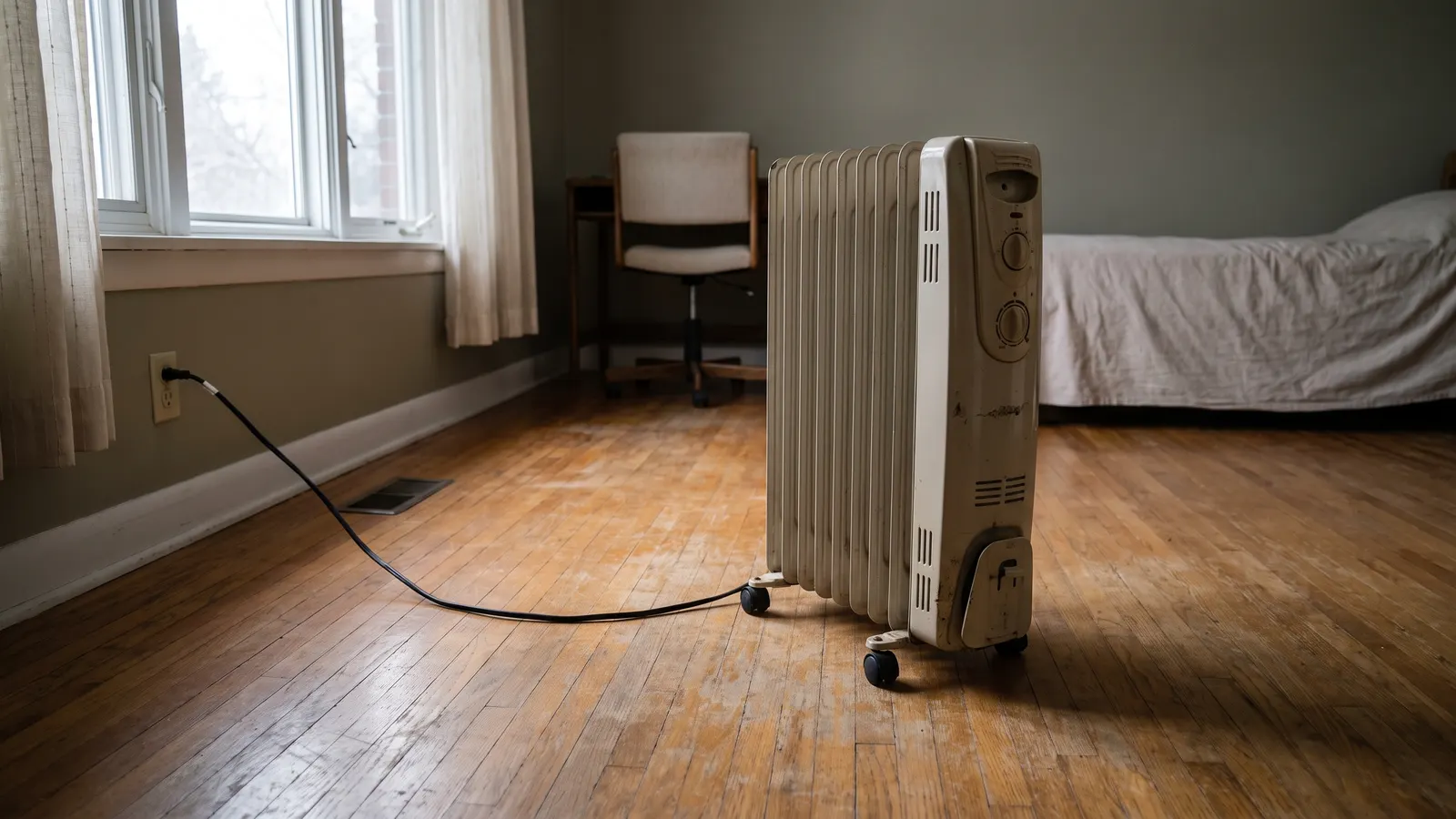
A space heater goes on a flat, level, hard floor in the open part of the room, three feet from the bed, the curtains, the laundry, the sofa, and the door, plugged into a wall outlet it has to itself. ESFI's space heater safety tips say to place heaters on level, flat surfaces and never on cabinets, tables, furniture, or carpet, and to plug them directly into a wall outlet, not an extension cord or power strip, with no other device on the same outlet.
Where a heater can go
- On a hard, level floor: wood, tile, vinyl, or bare subfloor
- Three feet of clear space on every side, including above
- On a wall outlet with nothing else plugged in
- Where you can see it from where you sit
Where it cannot
- On carpet or a rug, a table, a dresser, or a cabinet
- Near bedding, curtains, clothes, paper, or the laundry basket
- On an extension cord, a power strip, or a shared outlet
- In a hallway or doorway, or anywhere near water
The NFPA's electrical safety page adds the outlet rule from the other side: only one heat-producing appliance plugged into a receptacle outlet at a time. If no outlet is within reach of a safe spot, the fix is an electrician adding one, not a longer cord.
What do you need?
You need a heater carrying the label of a recognized testing laboratory, a wall outlet in the room where it will run, a yardstick for the first three-foot check, and working smoke alarms. Look in the manual for a tip-over switch and an overheat cutoff. ESFI says to inspect for cracked or broken plugs and loose connections before each use; a heater with a damaged cord is retired, not taped.
- A heater with a testing laboratory label (UL, ETL, or CSA are the common marks)
- The manual: clearances, the surfaces it may sit on, and how to clean the grille
- A yardstick for the first three-foot check
- A wall outlet in the room, free of anything else
- Smoke alarms tested this month
- A vacuum with a brush attachment for the intake grille
What are the steps?
Each time the heater comes out, check the cord, set it on the floor with three feet clear, plug it into the wall, set the thermostat, and stay in the room; each time you leave, turn it off and unplug it. The seasonal version, at the start of winter, adds a cleaning and an inspection so the first cold night does not begin with a burning-dust smell.
- Inspect the plug and cord before each use, the same way you check cords and outlets elsewhere in the house. Cracked insulation, a bent prong, a warm plug, or a scorched outlet face means the heater does not run today. Done when: the cord is smooth end to end and the plug seats firmly.
- Vacuum the intake and outlet grilles. Dust on the element is the smell of the first run and a fuel source.
- Set the heater on a hard, level floor with three feet of clear space in every direction. Measure the first time; after that you will see it.
- Plug it directly into a wall outlet with nothing else on it. If the cord does not reach, move the heater, not the outlet. Done when: the plug is in the wall, not a strip.
- Use the thermostat or the low setting and let the room come up; a thermostat cycles the heater instead of running it flat out all evening.
- Keep children and pets outside the three-foot zone. The NFPA's kid-free zone is the same three feet.
- Turn it off and unplug it when you leave the room or go to bed. Warm the bedroom before you get in, then switch it off.
- At the end of the season, clean it, coil the cord loosely, and store it dry with the manual. Done when: it is in the closet, not under the bed with the cord kinked.
When should you stop and call a pro?
Stop and call a licensed electrician if the outlet the heater uses is warm, discolored, or loose, if the breaker trips when the heater runs, or if the lights dim when it cycles on; the NFPA's electrical page lists all three as reasons to call. A gas or kerosene heater is a different appliance: if you smell gas, the NFPA says do not light it, leave the home immediately, and call the fire department or gas company. And a heater doing the furnace's job all winter means the furnace needs its service visit, not a second heater.
What should you record?
Record the heater's make and model, the room and outlet it uses, and the date of the seasonal inspection, then set that inspection as a recurring task each fall beside the furnace filter and the alarm test. If an outlet ever ran warm or a breaker tripped, log the room and the date; that note is what an electrician wants. In Property Station the Fire Safety pack on the Seasonal Checklist adds the heater and alarm tasks together; the features page shows the rest.
Common questions
Can I plug a space heater into a power strip?
No. ESFI says to plug space heaters directly into a wall outlet, not an extension cord or power strip, which could overheat and start a fire, and to plug nothing else into the same outlet. If the cord does not reach, move the heater.
Is it safe to leave a space heater on overnight?
No. The NFPA, ESFI, and the U.S. Fire Administration all say to turn a portable heater off when leaving the room or going to bed. Warm the bedroom before you get in, switch the heater off, and let the blanket do the rest.
Can I use the oven to heat the house if the furnace fails?
No. The NFPA and USFA both say never to use an oven to heat your home, and Ready.gov adds the gas stovetop. A space heater on a wall outlet in the room you are in, or a generator feeding the furnace through a transfer switch, are the safe options.
What should you do next?
Measure the three feet tonight in the room where the heater lives and move whatever is inside it. Then test the smoke alarms, since a heater fire starts at floor level in a closed room, and walk the escape plan with the household. If the heater exists because the power goes out, the generator guide covers the safe way to keep the furnace running instead.