On this page
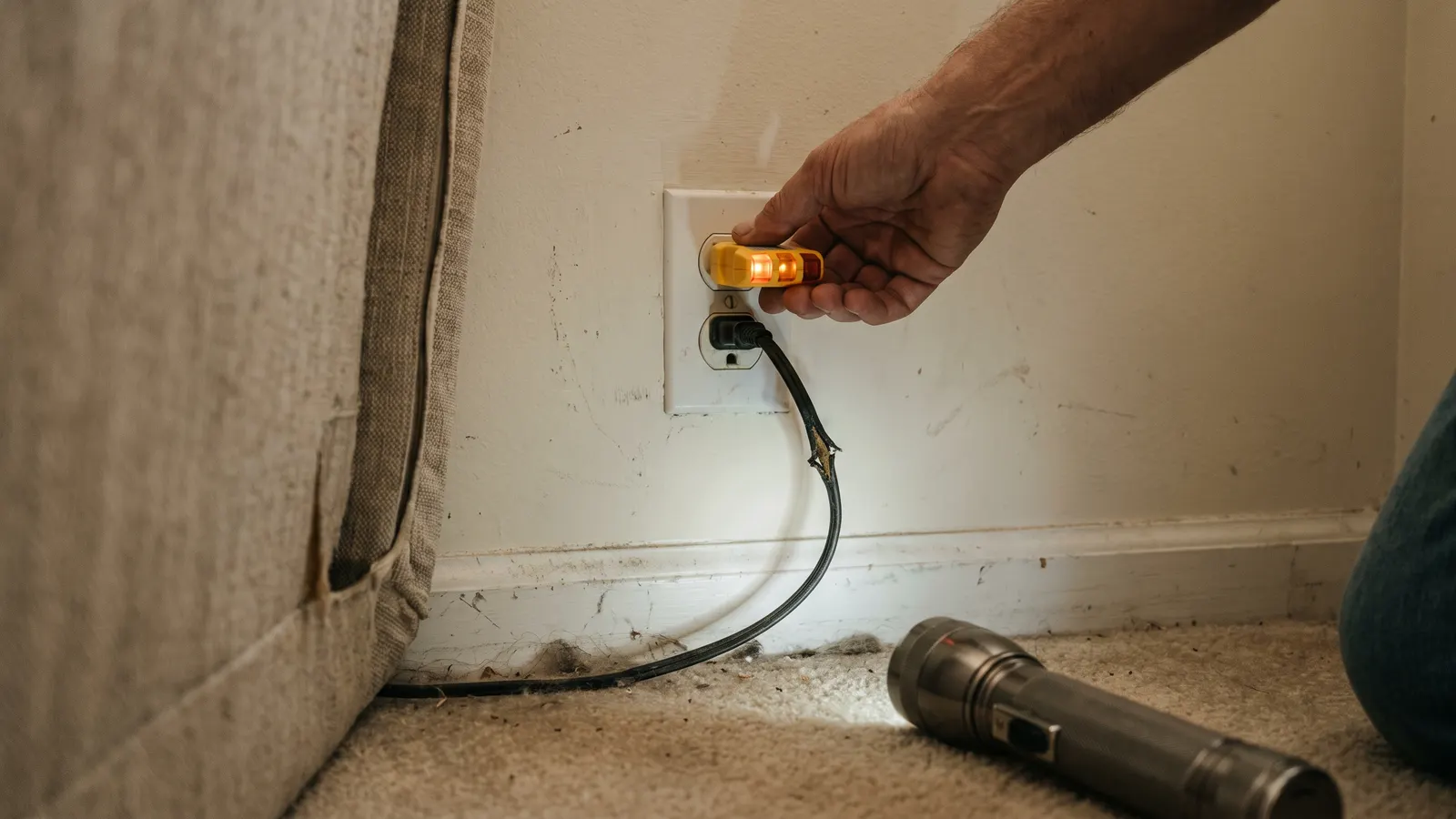
Inspect the cords, plugs, and outlets in your home once a season: walk every room, feel each outlet cover and plug in use for warmth, look for cords that are cracked, pinched, taped, or running under rugs or through doorways, and tug each plug to see whether the outlet still grips it. Unplug anything damaged today, move heat-producing appliances onto outlets of their own, and retire every extension cord that has become permanent. It takes half an hour and needs no tools.
Outlets, cords, and plugs are the visible end of the wiring, and most of the warning signs the fire agencies publish show up there first.
Why inspect cords and outlets?
Cords and outlets deserve a regular look because they are where the electrical system meets daily wear: plugs pulled out at an angle, cords crushed under furniture, an outlet that has held a heater every winter for years. The NFPA's electrical safety page lists the signs that mean a qualified electrician is needed, and every one is something you notice standing in the room, not at the panel. A frayed cord is also the arc an AFCI breaker is built to catch; the walk finds it before the breaker has to.
NFPA's call-an-electrician signs
- Frequent blown fuses or tripping breakers
- A tingling feeling when you touch an appliance
- Discolored or warm wall outlets
- A burning or rubbery smell from an appliance
- Flickering or dimming lights
- Sparks from an outlet
How often should you do it?
Once a season is enough for a walk of the whole house, with two extra moments: before the heating season, when space heaters and electric blankets come out, and whenever you move furniture, because that is when cords get pinched. A new build needs the walk in the first month too; outlets never used before you moved in can be loose or miswired, and the warranty period is the time to report them.
What do you need?
Your hands, your eyes, and a small lamp or a plug-in outlet tester. A flashlight helps behind furniture. Keep a notepad or your phone for the fix list, and a bag for the cords that are leaving the house. Nothing here involves opening an outlet or the panel; if a finding needs a screwdriver, it needs the breaker off first, and for most owners it needs an electrician.
- A flashlight for behind couches, beds, and the entertainment center
- A nightlight or a plug-in outlet tester (the kind with three lights shows an open ground or reversed wiring)
- A bag for the extension cords and power strips that are being retired
What are the steps?
Go room by room. At each outlet in use, feel the cover plate and the plug for warmth, look at the plug for discoloration, and check that it sits tight. Follow every cord to its end looking for damage and anything covering it. Count what is plugged into each outlet and strip, and pull heat-producing appliances onto outlets of their own. Then sort the findings: unplug now, replace, or list for the electrician.
- Start in the room with the most plugged in, usually the living room or the home office, with the lights on.
- Feel every outlet cover in use with the back of your hand. Done when: each one is room temperature. A warm plate goes on the electrician list and its load gets unplugged now.
- Look at each plug in use. Brown marks, melted plastic, or a bent blade mean the plug and cord are retired. A cracked, damaged, or loose cord on an appliance means, per the U.S. Fire Administration, replacing the appliance.
- Tug gently on each plug. Done when: it stays put. A plug that slides out or tilts means the outlet is worn and should be replaced.
- Follow each cord to the device. Look for cracked or brittle insulation, taped repairs, cuts, kinks, and anything sitting on it: a chair leg, a bed frame, a rug. Cords under rugs, across doorways, or through walls come out today.
- Count the loads on each outlet and strip: one heat-producing appliance per outlet (toaster, coffee maker, space heater, hair dryer), and major appliances (refrigerator, range, washer, dryer, window air conditioner) straight into the wall, never a strip or an extension cord.
- Find every extension cord and ask whether it has been there more than a few weeks. If it has, it is a missing outlet; plan one with an electrician and retire the cord.
- Check the strips. Each should have internal overload protection (a reset button or a rating on the label), be plugged into the wall and not another strip, and carry only electronics. Not all strips are surge protectors; whole-home surge protection covers what a strip cannot.
- In bathrooms, the kitchen, the garage, the basement, and outdoors, confirm the outlets are GFCI protected and press Test on each while you are there. Outdoors, confirm the cover closes over a plugged-in cord.
- Write the findings in three lists: unplug now, replace, and call the electrician. Done when: nothing on the first list is still plugged in.
Temporary (fine)
An extension cord for a weekend project, coiled afterward. A power strip under the desk with a laptop, a monitor, and a lamp. A space heater on its own wall outlet while someone is in the room.
Permanent (fix it)
A cord across the hallway feeding the aquarium since move-in day. A strip plugged into a strip behind the TV. A heater and a coffee maker sharing one outlet. A cord under the rug to the floor lamp.
When should you stop and call a pro?
Stop and call a licensed electrician for any warm or discolored outlet, any sparking, any plug that no longer fits snugly, a breaker that trips often, lights that flicker when an appliance starts, or a tingle from an appliance. Do not open or replace an outlet unless you know how to prove the circuit dead at the breaker; the NFPA says to have all electrical work done by a qualified electrician. A house that needs extension cords in every room needs outlets, which is an electrician visit, not a longer cord.
What should you record?
Record the date of the walk, what you unplugged or replaced, and the electrician list with the room and outlet for each item. If you retired an extension cord, note where an outlet is needed so the next electrician visit covers it. Put the walk on the maintenance schedule as a recurring task every few months; in Property Station the task's description can say that the fall pass includes the heaters. Space heater rules are a separate list, and the outlet the heater uses is the first item on it.
Common questions
Is it safe to run the TV and its boxes on one power strip?
Yes, for low-draw electronics, if the strip has internal overload protection and is not plugged into another strip. Keep heat-producing and major appliances off it. If you want surge protection, check the label; not all power strips are surge protectors.
How do I know if an outlet is worn out?
A plug that slips out under its own weight, or tilts when the cord tugs it, is the sign. The U.S. Fire Administration says to replace wall outlets if plugs do not fit snugly. A loose contact heats the plug, which is why worn outlets are found by feel as often as by sight. Replacement is an electrician's job.
Can I run an extension cord under a rug to hide it?
No. A covered cord cannot shed heat, and foot traffic breaks the insulation where you cannot see it. Route cords along walls, use a cord cover made for the purpose, or have an outlet added.
What does a warm outlet cover mean?
A loose connection behind the plate, a worn outlet, or too much load on one receptacle. Unplug what is on it, leave it unused, and have an electrician look; warm or discolored outlets are on NFPA's list of signs that need a qualified electrician.
What should you do next?
Do the living room and the office tonight; they hold most of the strips. Walk the rest of the house this weekend with the bag, and check the fire extinguisher on the way past the kitchen; it is the backup for everything on this list.