On this page
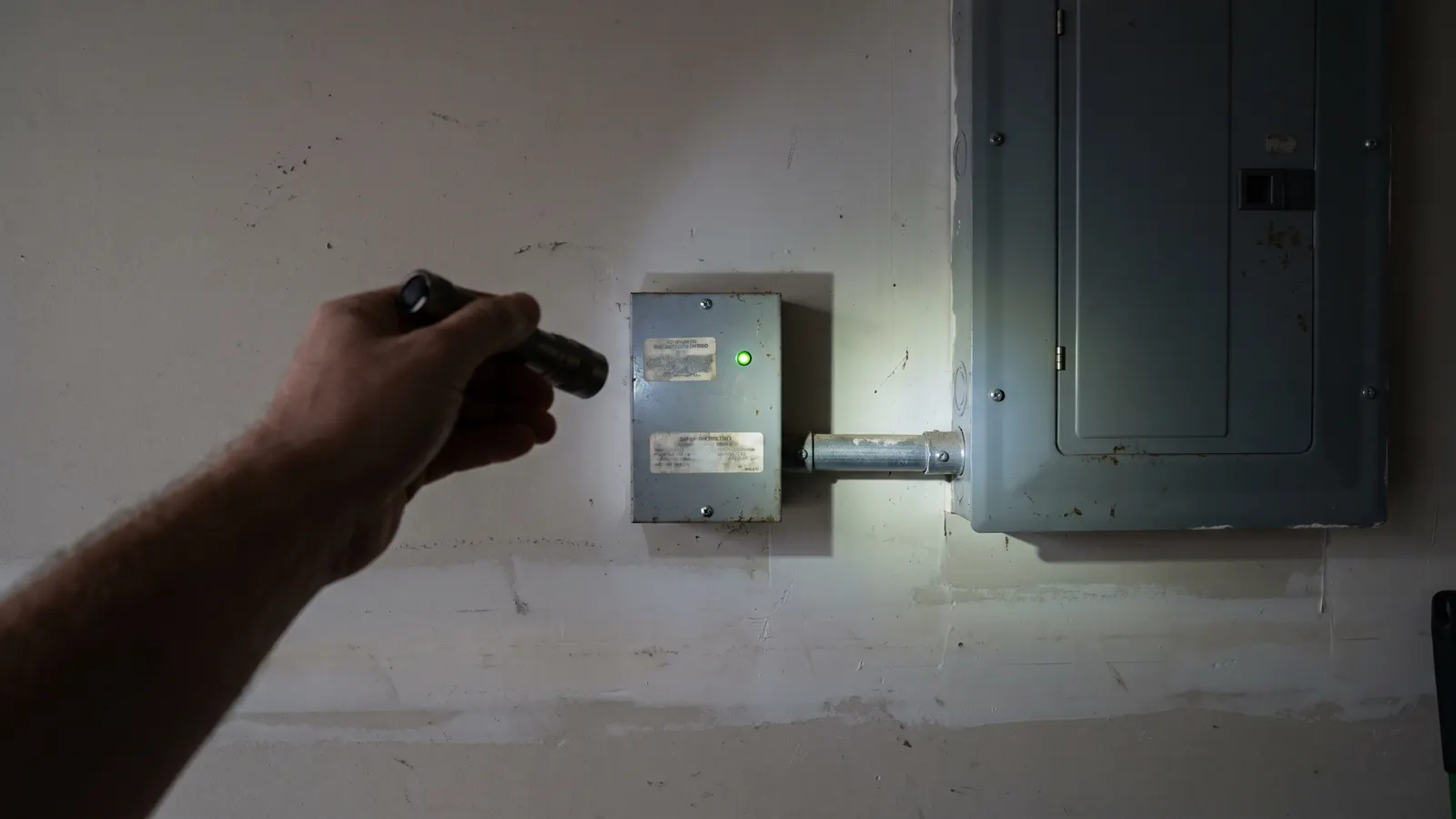
A whole-home surge protector is a device wired at the electrical panel that diverts voltage spikes to ground before they travel to the appliances, outlets, and switches in the house. Check it once a season and after every storm or outage by reading its indicator light: the color the label calls normal means it is still protecting, and any other color, or no light, means it has been used up and needs an electrician to replace it. It is a few minutes at the panel and needs no tools.
A power surge, as the Electrical Safety Foundation International defines it, is a sudden and unwanted increase in voltage that can damage, degrade, or destroy electronic equipment. ESFI says surges can occur when large appliances such as air conditioners turn on and off, and it puts 60 to 80 percent of surges at internal sources, inside the home or business. Lightning is the surge people picture; the air conditioner compressor is the one that happens every day.
Why does a whole-home surge protector matter?
A whole-home surge protector matters because the things that fail from surges are now everywhere in the house, not just on the desk. A furnace control board, a heat pump's inverter, an induction range, a smart thermostat, and the garage door opener all contain electronics, none of them plug into a strip, and a surge reaches them through the panel. ESFI notes that point-of-use protection only protects what is plugged into it, while whole-home protection covers the entire electrical system, including large appliances, outlets, and light switches.
Point-of-use strip
Protects only the devices plugged into it. Sits at the TV, the desk, or the router. ESFI says it must be replaced over time and after a major surge. Inexpensive, and you install it yourself.
Whole-home device
Protects the whole system from the panel outward: hardwired appliances, outlets, switches, and whatever is on them. Must be installed by a qualified electrician, per ESFI. Has an indicator that tells you when it is spent. Meant to be layered with strips at sensitive electronics.
ESFI's surge protective devices page says surge protection is required by the 2020 National Electrical Code. As of September 2026, a home built or rewired under that cycle or later is likely to have a device at the panel; an older home may not.
How often should you check it?
Check the indicator once a season, after any thunderstorm close enough to hear, and after every power outage. Ready.gov's power outage page warns that power may return with momentary surges or spikes that can cause damage, and says to turn off or disconnect appliances, equipment, and electronics while the power is out. The device may have absorbed its whole capacity during that one restoration. The check itself is a glance; the hard part is remembering it, which is what the schedule is for.
What do you need?
A flashlight, the panel directory so you know which breaker feeds the surge device, and the device's own label or instruction sheet, which tells you what the indicator light means for that model. Some devices have one light, some two, and some an audible alarm; the legend on the face or the sheet in the panel door says which. Nothing goes behind the dead front.
- A flashlight
- The panel directory, labeled so the surge device's breaker is named
- The surge device's instruction sheet, or the legend printed on its face
- Your phone, to photograph the device label and the light
What are the steps?
Find the device, read its label, compare the indicator to the legend, confirm its breaker is on, look for damage, and record the result. If the light says protected, you are done. If it says anything else, note the date and call an electrician; the house has no panel-level protection until the device is replaced.
- Open the panel door only. Look for a small box mounted beside the panel with a short conduit into it, or a module in a breaker slot with a light on its face. Labels say surge protective device, SPD, or surge protector.
- Read the legend on the device or its sheet. Done when: you know which light or color means protected and which means replace.
- Compare the light to the legend. Whatever the legend calls normal means it is working. A red light, a dark light, or a changed pattern means the device has sacrificed itself and needs replacing.
- Confirm the breaker feeding the device is On. A device on a tripped breaker protects nothing; reset the breaker once, and if it trips again leave it off and call an electrician.
- Look at the housing for scorch marks, a melted spot, or a smell. Any of these means the breaker goes Off and the electrician gets a call; do not touch the device.
- Photograph the device label (make, model, and ratings) and the indicator. Done when: the photo shows the light's state and the date goes in the record.
- Walk the house and check the strips at the TV, the desk, and the router. Each should say surge protection on its label; ESFI notes that power strips and surge protectors are not the same and not all power strips offer surge protection. Replace any strip whose own protection light has gone dark.
When should you stop and call a pro?
Call a licensed electrician to install a whole-home surge protector, to replace one whose indicator says it is spent, and for any device that is scorched, buzzing, or on a breaker that will not stay on. ESFI says whole-home surge protection must be installed by a qualified electrician; it connects to the panel's bus, which is live even with the main off. Never open the device or the dead front yourself.
During a storm, the owner's job is the one ESFI gives: no surge protection can handle a direct lightning strike, so disconnect sensitive electronics if you suspect a surge is coming.
What should you record?
Record whether the house has a whole-home device, its make and model from the label, where it is, the install date if the builder or electrician gave one, and each check with the light's state. Add the seasonal check to the maintenance schedule and put what a good light looks like for your model in the task description, so whoever does the check next does not need the sheet. In Property Station that description travels with the task each time it recurs.
The seasonal walk of cords and strips is the natural time to read the panel light too. When the device is replaced, the electrician's invoice belongs with the panel's record.
Common questions
Do I still need surge strips if I have a whole-home device?
Yes, for sensitive electronics. The panel device takes the large spikes; a point-of-use protector at the TV or the computer catches the smaller remainder that gets through, and the two are meant to work as layers. Check that the strip actually says surge protection on its label; not all strips do.
Will a whole-home surge protector protect the house from lightning?
Not from a direct strike. ESFI says no surge protection can handle a direct lightning strike, and its advice for a storm is to disconnect sensitive electronics. A whole-home device handles the far more common indirect surges from nearby strikes, utility switching, and the house's own large appliances.
How do I know if my new home has one?
Look in or beside the panel for a small box or a breaker-shaped module with an indicator light, often labeled SPD or surge protective device. Homes wired under the 2020 code cycle or later commonly have one. If you cannot tell, ask the builder, or ask an electrician at the next visit.
How long does a whole-home surge protector last?
Until it has absorbed enough surges, which depends on the house and the grid rather than the calendar. The indicator light is the only reliable signal. A normal light means it is protecting; a changed, red, or dark light means it has done its job and needs replacing. Check it after any big storm or outage.
What should you do next?
Open the panel door tonight and look for the light. If there is a device, photograph it and set the seasonal check. If there is none, add "ask about a surge protective device" to the list for the next electrician visit, and read what to do after a power outage so the restoration spike is on your checklist before the next storm.