On this page
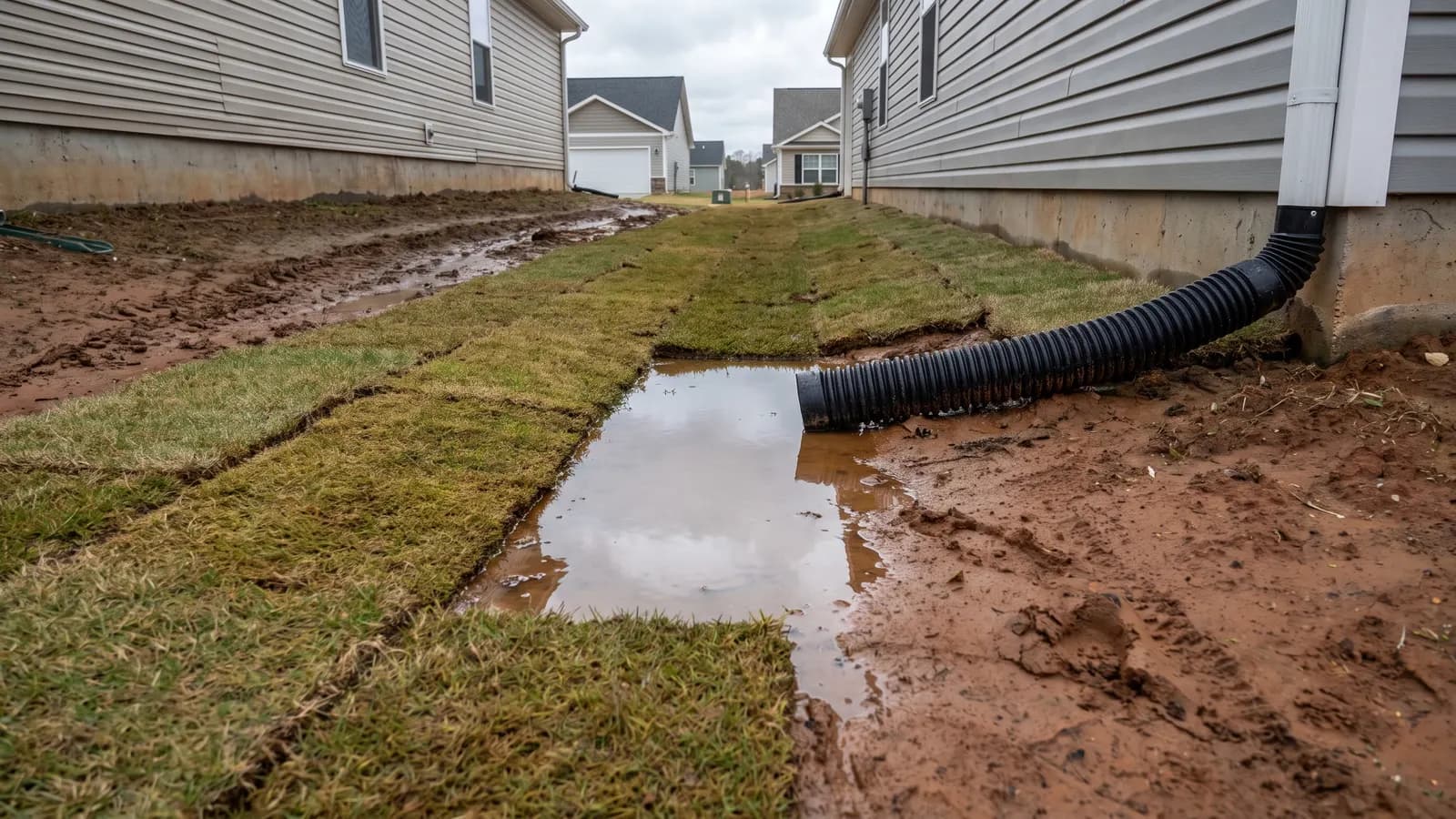
A new yard puddles for three reasons: the backfill around the foundation settles into a trough that collects water, the downspouts dump a roof's worth of rain where the ground cannot carry it away, or the rough grading was never finished into a slope away from the house. The first is expected and builders usually fill it once. The second is a small fix either side can make. The third is the builder's while the warranty window is open. Walk the yard after heavy rain, photograph the water, read your warranty's grading section, and report it in writing.
Where is the water coming from?
The water in a new yard comes from the roof, the surface, or the ground, and each has a different fix. Roof water is the biggest volume in the smallest place: one downspout carries the rain from a large section of roof to a single point. Surface water lands on the lot and should run downhill to a swale, the street, or a storm drain. Ground water is the water table or a spring, and it shows up as a spot that stays wet in dry weather.
- RoofRain runs to the gutters, and each downspout concentrates it at one point near the wall
- Downspout outletA splash block keeps the water at the foundation; an extension carries it away
- Grade at the wallThe soil should fall away from the house; settled backfill makes a trough that catches what the downspouts deliver
- The lotSurface water follows the slope across the yard toward the low side
- The swaleA shallow channel along the lot line carries the water to the street or a storm drain; a blocked swale is where the lot-line puddle forms
- AwayThe street gutter, a storm inlet, or a retention area takes it off the lot
Find the break in that chain and you have found the cause. The grading and drainage check is the walk to do after the next heavy rain, and the gutter and downspout guide explains where each downspout should discharge; new gutters often hold roofing grit before any leaf falls.
Which puddles are normal in a new yard, and which are not?
A trough along the foundation in the first year is normal and expected; water that stands against the house, a swale that does not drain, and a low spot that stays wet in dry weather are not. The difference is whether the cause is soil finishing its settling, the same story that produces the nail pops and cracks inside, or a piece of the drainage design that was not finished or does not work.
| Where the water is | Most likely cause | Normal in year one? | Who usually fixes it |
|---|---|---|---|
| A trough along the foundation wall after rain | Backfill settling | Yes, once | Builder fills it at the settling visit; report it so it is on the list |
| A puddle under a downspout | Outlet at the wall, no extension | Common, not acceptable | Either side; an extension is a small job, and a crushed buried line is the builder's |
| Water standing against the house for a day or more | Grade sloping toward the wall, or a trough plus a downspout | No | Builder, in writing, while the workmanship window is open |
| A puddle along the lot line | Swale blocked, unfinished, or filled by a fence or bed | No | Builder if the swale was never finished; whoever built across it otherwise |
| A wet spot that never dries | Ground water, a spring, or a leaking irrigation line | No | Irrigation off for a week tells you if it is a leak |
| Water in the basement or crawlspace | Any of the above reaching the foundation | No | Builder now, in writing, with photos; see the warning below |
The EPA's termite page gives a second reason to care: after construction, keep the soil around the foundation dry through proper grading and drainage, including maintaining gutters and downspouts. Wet soil against a new house is cheaper to fix in the yard than inside the wall.
What does the builder usually owe?
What the builder owes is written in the warranty document, and the grading section is one of its most specific parts. What is common: a promise that the lot was graded so water drains away from the house; one fill of settled backfill, usually at the settling visit near the end of the first year; a definition of standing water by how long it remains after rain stops; and an exclusion for changes the owner made to the grade, including beds, fences, and buried lines.
Some documents also exclude drainage problems caused by the neighbor's lot or the subdivision's storm system, which is why the site plan matters before a report goes in.
How to read a builder warranty covers where those definitions hide; the warranty timeline shows which window a drainage item falls in. If the lot came with a grading or site plan, it shows where the water was designed to go, which turns "there is a puddle" into "the swale on the plan was not finished."
Some jurisdictions require the builder to certify the final grade before the certificate of occupancy, and some subdivisions have drainage easements along lot lines that nobody may fill or fence. If the puddle is on a line or in a swale, ask the builder and the municipality what applies, and check the plat from closing for easements.
How do you document and report a drainage problem?
Document a drainage problem with photos taken at a known time after the rain stopped, from the same spots each time, with the house in the frame, and report it in writing with the photos and the plan attached. The warranty document's definition of standing water is the timing to match: if it names a time after rain, photograph at that time with the timestamp visible, then again a day later to show whether it drained.
What a drainage report should contain
- Photos of the water with the house in the frame, timestamped, at the time your warranty document defines
- Follow-up photos from the same spots a day later
- A short video walking from the downspout to the puddle to the swale
- The spot marked on the site plan, and whether the irrigation had run
- What you have not changed: no beds, fences, or regrading in that area
- The date, and a request for a written response and a visit
If your home is linked to your builder in Property Station, the report goes through the Requests page: "New request", choose "Warranty claim", describe it under "What is wrong?" and "Describe it", and send it. The conversation on the request keeps the photos, the builder's replies, and the visit date in one place. If the builder sent a claim link, claiming the home also brings over the documents the builder loaded, which is often where the site plan is.
What can you fix yourself?
You can extend a downspout, fill a settled trough with soil that compacts, keep a swale clear, and move a splash block, all without much risk to the warranty or the neighbor. What you should not do while the grading coverage is in force is regrade, bury drain lines, cut a new swale, or build anything that changes where the water goes, because many warranty documents make those the owner's responsibility from that day on.
- Extend every downspout so it discharges several feet from the wall onto ground that slopes away, or into a buried line that daylights lower, and stake it.
- Fill a settled trough with soil that packs, not topsoil or mulch, tamped so the surface slopes away from the wall. Photograph before and after.
- Keep the swale open: no beds, no fences across it, no piles of fill left by the landscaper.
- Check whether the irrigation is feeding the puddle. A zone that runs at night over a low spot makes a permanent one.
- Wait on the rest. Anything that changes the design goes to the builder in writing first, and the landscaping plan for the first year explains why beds and hardscape should follow the water.
After the warranty ends, a drainage contractor is the right call for a French drain, a regrade of more than a corner, or a sump and discharge line.
Common questions
Is standing water in a new yard a warranty item?
Often, but the warranty document decides. Many builder warranties cover grading so that water drains away from the house and cover settled backfill with one fill, and many define standing water by how long it remains after rain stops. Read yours, photograph the water at that time, and report it in writing while the workmanship window is open.
How long after rain should the yard drain?
Use the number in your warranty document if it gives one; many do. Otherwise, water beside the foundation or in a swale a day after the rain stops is worth reporting, and water still there when the rest of the lawn is dry has a cause that will not fix itself. Photograph it with a timestamp both times.
The puddle is on the property line. Whose problem is it?
Look at the site plan first. Lots in a subdivision are usually graded so a swale between them carries water to the street or a storm drain, and if the swale was blocked or never finished, it may be the builder's to correct on either lot. Talk to the neighbor, photograph it together, and report it with the plan attached. Fences and beds built across a swale are the usual culprits.
What should you do next?
Wait for the next heavy rain, then walk the perimeter with your phone and the site plan. Extend any downspout that ends at the wall this weekend, and send anything else to the builder in writing before the first year is out; the first summer is when most owners find out where the water goes.