On this page
The pre-closing checklist for builders covers the last few weeks before a new home changes hands, in order: the final municipal inspections and the certificate of occupancy, the superintendent's own quality walk, the buyer walkthrough and the punch list, punch-list completion and the re-walk, the record readiness check, utilities and keys, and the closing date and the invitation to claim the home. The order is the point. The quality walk comes before the buyer sees the house, and the record is ready before the keys are handed over.
This post is for builders, superintendents, and closing coordinators. It is the sequence, the checklist for each step, and where the record fits.
What must be done before the buyer walks the house?
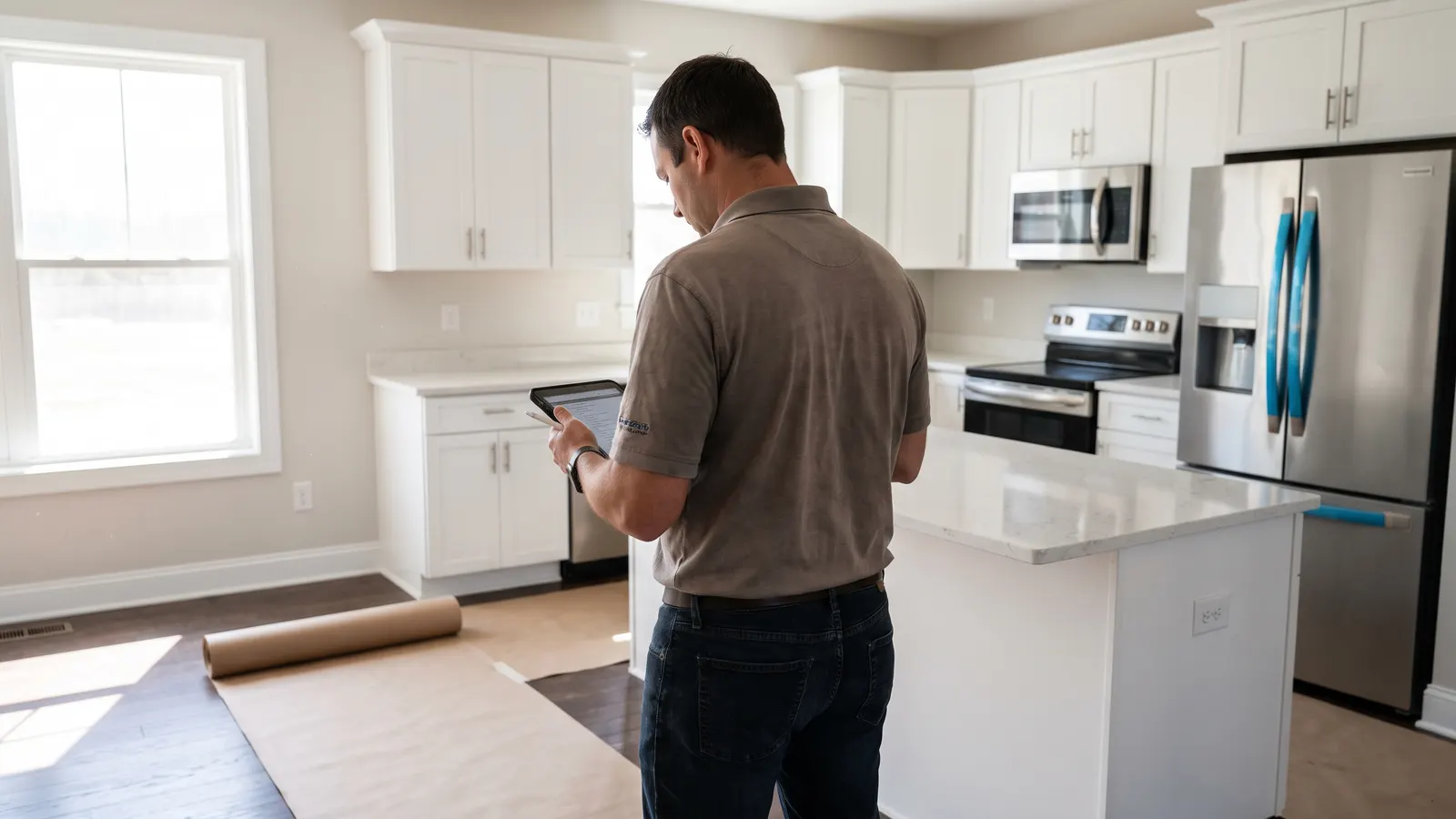
Before the buyer walks the house, the final inspections must have passed, the certificate of occupancy must be issued or scheduled, every system must be running, and the superintendent must have walked the house alone with tape in hand and sent the trades back for what they found. The buyer walkthrough is a finish inspection, not a completion inspection; if the buyer finds an unfinished item, the quality walk was skipped.
Before the buyer walkthrough
- Final municipal inspections passed: building, electrical, plumbing, mechanical, and any local ones
- Certificate of occupancy issued, or its date confirmed
- Utilities on and in service: power, water, gas, sewer or septic, and the meters read
- HVAC running with a clean filter, the thermostat set, the condensate line draining
- Water heater at temperature; every fixture run hot and cold; every drain and toilet tested
- Every appliance installed, run through a cycle, with the manuals and the model and serial recorded
- Superintendent's quality walk done in raking light, items taped, trades sent back, and the tape removed
- Exterior complete: grading, gutters and extensions, driveway and walks, sod, exterior lights, hose bibs
- House cleaned, debris gone, protective films removed, garage door opener tested with its reverse
The quality walk is the step most often shortened. It is also the one with the most effect on the punch list, because everything the superintendent finds is fixed before the buyer forms an opinion of the house.
How should the buyer walkthrough be run?
The buyer walkthrough should be run with enough time, by the superintendent or a customer care representative who knows the house, with every system demonstrated and every item written so a trade can find it: location, description, photo, and a number. The buyer signs the list, receives a copy before leaving, and gets a completion date in writing. What a punch list is, from the owner's side describes what a prepared buyer will bring and check; the walkthrough should assume that buyer.
Demonstrating the systems is the half of the walkthrough that reduces calls later. Show the main water shutoff and the gas shutoff, the panel and its labels, the thermostat, the filter, the water heater, the irrigation controller, the garage door and its safety reverse, and each appliance. Say what settling looks like and when the workmanship inspection will happen. This is the owner's orientation, and it is the only one they will get.
How do you close the punch list before the keys?
Close the punch list by assigning every item to a trade with a date the day the list is signed, walking the house again when the trades report done, and putting any carry-over items in writing with new dates before closing. The re-walk is not optional: items fixed badly go back on the list, and items missed get a dated note. What the buyer sees at closing should be a completed list or a short, dated, signed carry-over.
- SignThe buyer and the builder sign the numbered list at the walkthrough; the buyer leaves with a copy
- AssignEach item goes to a trade with a date; the superintendent owns the schedule
- FixTrades complete items; the superintendent checks each one in the same light the buyer used
- Re-walkThe house is walked against the list; bad fixes go back on; missed items get a dated note
- Carry overAnything left is written down with a date and signed by both sides before closing
- Close outThe completed list, with dates, goes into the home's record with the closing documents
Owners are tracking the same list from their side, and how they track punch-list items to completion is worth reading, because an item that goes quiet on the builder's side turns into a request on the owner's. The list, with its dates, is the first document in the record and the baseline every settling claim is measured against.
Is the record ready to hand over?
The record is ready to hand over when the owner could answer their first month of questions from it without calling: the shutoffs and key locations, the panel schedule, the equipment labels with models and serials, the manuals, the warranty document and the claim procedure, the paint and finish schedule, the subcontractor list, the plans and permits, and the signed punch list. What owners actually reach for ranks these by when they are used, and the first-week items are the ones that must be there.
In Property Station's builder portal, each home has a "Handoff readiness" checklist on its page. The required items are the street address, at least one system or appliance, the shutoffs and key locations, and the closing date; the square footage and specs, at least one document, and the paint and finishes are optional. The "Invite homeowner" button stays disabled until the required items are in, which makes the readiness check a gate rather than a reminder. Building the record during construction is how the check passes without a closing-week scramble.
What happens on closing day and the week after?
On closing day the closing date goes into the record, the keys and openers change hands, and the invitation to claim the home is sent to the buyer's email; in the week after, the owner claims the home, the warranty start is set from the closing date, and the first requests arrive through the channel the owner was shown at the walkthrough. The builder's job in that week is to answer the first request fast, because it sets the pattern for the rest of the warranty period.
In the portal, sending the invitation moves the home to "Invited", and the claim link expires fourteen days after it is created; "Revoke" stops a link immediately and a new one can be sent, which covers a wrong email or a buyer who missed the message. Once the owner claims the home, its status becomes "Claimed", the record moves into the owner's account with the builder's name and support contacts attached, and the builder no longer sees it. The home's statuses before that (Draft, Under construction, Pre-closing, Ready for handoff) are the same sequence as this checklist, which is a useful way to see at a glance which homes in a phase are where.
Common questions
Should the buyer walkthrough happen before or after the final inspection?
After. The final municipal inspection and the certificate of occupancy confirm the house is complete and safe to occupy; a walkthrough before that risks showing the buyer a house that still changes. Schedule the walkthrough once the inspection has passed and the superintendent's own quality walk is done, so the buyer's list is about finish, not completion.
How long should the walkthrough take?
Long enough to demonstrate every system and walk every room and the exterior without rushing, which for most houses is a couple of hours. A walkthrough squeezed into thirty minutes produces a short punch list and a long first year, because the items the buyer did not have time to find become warranty requests instead.
What if punch-list items cannot be finished before closing?
Write them down with a completion date, give the buyer a signed copy, and keep the dates. Backordered materials and trade scheduling happen; what damages the relationship is an open item with no date and no update. Carry-over items should be few, specific, and dated, and the re-walk should be scheduled before closing, not after.
When should the claim invitation be sent?
On or just after the closing date, once the record passes its readiness check and the closing date is entered, because the warranty start is set from that date. Sending it earlier means the owner claims a record that is still changing; sending it weeks later means the owner has already started a folder of their own.
What should you do next?
Take the homes closing in the next month and put each one against this sequence: inspection status, quality walk done or not, walkthrough scheduled with enough time, record readiness passed or failing on which item. The ones failing on the record are usually missing the shutoffs or the closing date, and both take a few minutes to add. Do that today, and closing week becomes a check instead of a scramble.