On this page
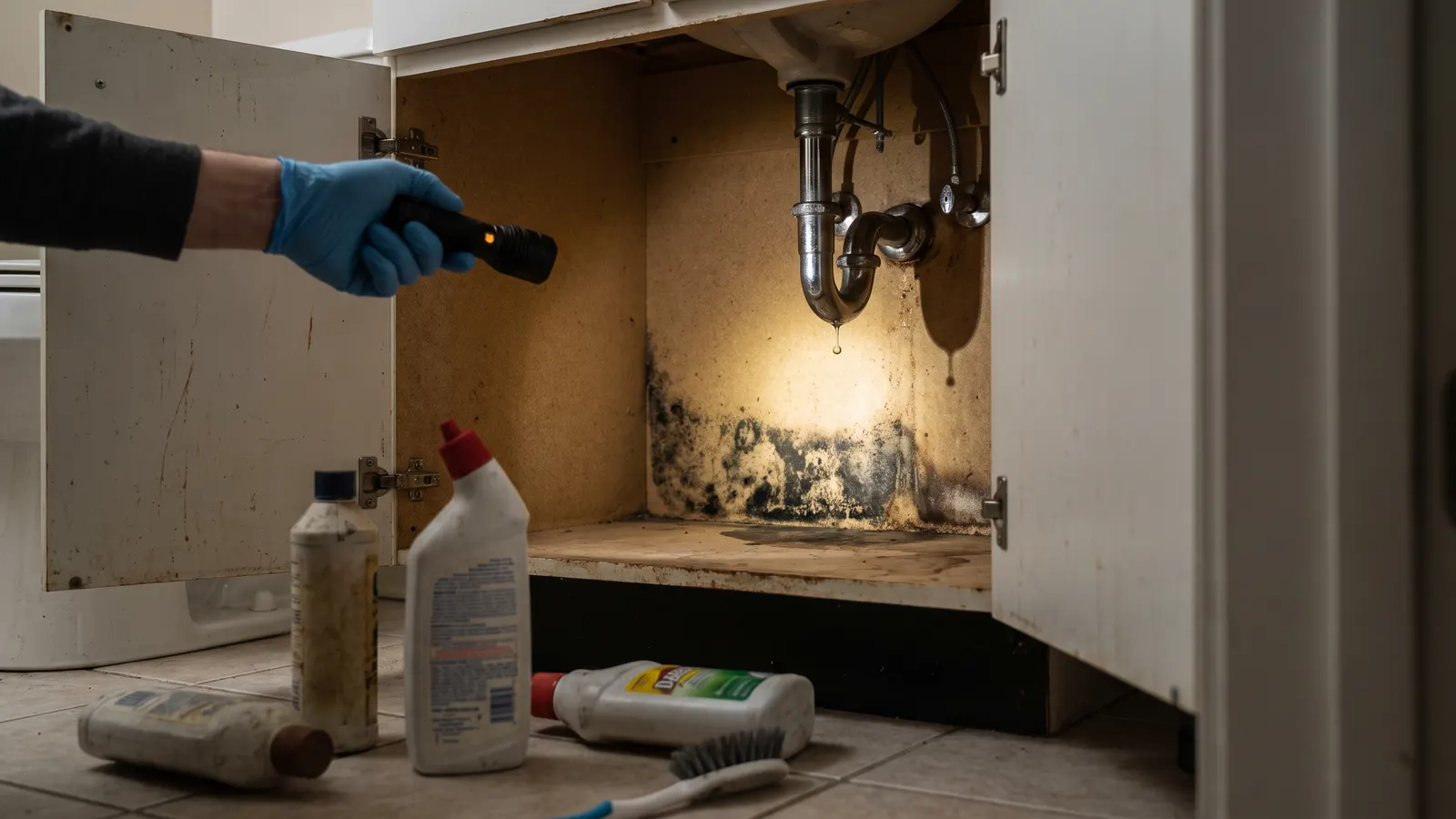
When you find mold, do three things in order: find and stop the water that fed it, measure the patch, and decide who cleans it. The EPA's brief guide to mold and moisture says a moldy area under about 10 square feet, roughly a 3 foot by 3 foot patch, is a job most people can handle themselves with detergent, water, gloves, goggles, and an N95 respirator. Larger areas, sewage, or mold in the HVAC system go to a professional. Whoever cleans it, the water problem gets fixed or the mold returns.
What should you do first when you find mold?
First find the moisture, because mold is the symptom and water is the cause. The EPA's guide says it plainly: you must clean up the mold and fix the water problem, or the mold will come back. Look above and behind the patch for the leak, condensation, or humidity that fed it before you touch the mold.
- Find the waterA leak above, a trap behind, a cold surface that condenses, a fan that vents nowhere, or a room that holds high humidity. Where water damage starts is the short list.
- Stop itClose the valve, fix the fitting, run the fan, or dry the space. A stain with no visible source needs the hidden-leak tests first.
- Measure the patchUnder about 10 square feet is the EPA's line for doing it yourself; over it, or anything you cannot see the edges of, is not.
- Photograph itWith the date and a hand for scale, before cleaning. This is the record for a warranty or insurance claim.
- DecideSmall, clean water, hard surfaces: clean it yourself. Large, sewage, or HVAC: call a remediation contractor.
The EPA's guide says that if wet materials are dried within 24 to 48 hours of a leak, in most cases mold will not grow; the CDC's preventing mold page gives 48 to 72 hours. If a leak just happened and there is no mold yet, the hour-by-hour plan after a water event is the page to read instead.
When can you clean mold yourself, and when do you call a pro?
Clean it yourself when the patch is under about 10 square feet, the water was clean, the surface is hard, and nobody in the house is in a high-risk group; call a professional when any of those is false. The EPA's mold cleanup page adds two hard lines: sewage or other contaminated water means call in a professional, and do not run the HVAC system if you suspect it is contaminated.
| Situation | Who cleans it |
|---|---|
| Under about 10 square feet, clean water, hard surface | You, with protective gear |
| Over 10 square feet, or you cannot see the edges | A mold remediation contractor |
| Sewage backup, floodwater, or any contaminated water | A professional, per the EPA |
| Mold inside ducts or on the air handler | An HVAC contractor; do not run the system |
| Someone in the home has asthma, COPD, or a weakened immune system | A professional; the CDC says they should not stay in the home |
When you hire, the EPA's cleanup page says to make sure the contractor has experience cleaning up mold. Ask what they will remove, how they will contain the dust, and how they will confirm the moisture source is fixed; a contractor who quotes a cleaning without asking about the water is quoting the wrong job. Visible mold inside ducts is one of the three conditions in the duct cleaning guide.
How do you clean a small area of mold safely?
Clean a small patch by protecting yourself, scrubbing hard surfaces with detergent and water, drying them completely, and throwing away porous materials that stayed wet. The CDC's cleanup guidelines give the gear: at least a NIOSH-approved N95 respirator, goggles with complete eye protection, and gloves (non-latex, vinyl, nitrile, or rubber).
- Put on the N95, goggles, and gloves before you disturb anything. Fit the mask tightly.
- Open a window or door. Do not run the HVAC if the mold is near a return or a duct.
- Bag and remove anything porous that soaked through. The EPA says absorbent materials such as ceiling tiles and carpet may have to be thrown away if they become moldy.
- Scrub hard surfaces with detergent and water until the visible growth is gone. Rinse.
- Dry the surface completely: towels, then a fan for a day or more. Done when a moisture meter says it is dry.
- Do not paint or caulk until it is clean and dry; the EPA says to clean the mold and dry the surface before painting.
- Bag the rags and the mask, wash up, and photograph the cleaned area with the date.
Why does mold keep coming back?
Mold comes back because the moisture that fed it is still there: a leak that was cleaned around instead of fixed, a bathroom with no working exhaust, a closet on an exterior wall, or a house that holds humidity above 50 percent. The EPA's mold guide sets the target below 60 percent and ideally between 30 and 50; the humidity numbers and the fixes cover how to measure and get there.
Bathrooms are the most common repeat. The EPA's cleanup page says that for bathroom mold that keeps returning, increasing ventilation by running a fan or opening a window, and cleaning more often, will usually prevent it. A fan only counts if it sends air outdoors; cleaning the bathroom exhaust fan and checking where it vents is the tissue test plus a look in the attic.
Set the bath fan on a timer so it runs 20 minutes after every shower, hold the house between 30 and 50 percent, and put a monthly look at the known spots on the schedule. Mold that returns after that is a hidden leak.
What should you record?
Record where the mold was, how big it was, what fed it, what you fixed, and when, with photos before and after, plus the humidity reading after the fix. That record is what a builder needs for a warranty claim, what an insurer asks for on a water claim, and what a buyer's inspector will ask about when they see new drywall.
For an owner of a new build, mold in the first two years is often a workmanship item: a fan vented into the attic, a fitting that weeped, a window flashed wrong. Report it to the builder in writing with the photos while the warranty is open, and keep the report with the response.
In Property Station the monthly look at the usual spots is a recurring task on the Maintenance page, and the photos, readings, and invoices go on the task's completion notes or in Documents. See how the schedule and the record work.
Common questions
Can I clean mold myself?
If the patch is under about 10 square feet, roughly a 3 foot by 3 foot area, the EPA says in most cases you can handle it yourself. Wear an N95, goggles, and gloves, scrub hard surfaces with detergent and water, dry completely, and fix the water source. Larger areas, sewage, or mold in the HVAC are jobs for a professional.
Do I need bleach to kill mold?
No. The EPA's guidance is detergent and water on hard surfaces, then drying. The CDC says bleach or dish detergent can be used, no more than 1 cup of bleach per gallon of water, never mixed with ammonia or any other cleaner. Killing mold is not the point; removing it and the moisture is.
Is it safe to stay in a house with mold?
That depends on who lives there and how much mold there is. The CDC says people with asthma, COPD, or a compromised immune system should not stay in a moldy home, and its mold page says people with mold allergies or chronic lung disease can have severe reactions. A small bathroom patch: clean it and ventilate. A flooded floor or a musty house with no obvious source: get it assessed.
What should you do next?
Find the water today, even if the cleaning waits for the weekend. Measure the patch, photograph it, and make the call from the table above. Then put a hygrometer in the room; if it holds above 50, the source is not fixed.