On this page
Water damage in a house almost always starts at one of a short list of places: a supply hose or fitting (washing machine, dishwasher, ice maker, toilet, sink), a drain or seal that has failed (tub, shower, toilet wax ring), the air conditioner's condensate line, the water heater, or the roof edge and the ground around the foundation. Weather and burst pipes get the attention; slow leaks at these spots cause most of the damage, because they run for weeks before anyone notices.
Where does water damage start most often?
Water damage starts where water is under pressure or moving every day, and where a failure is out of sight. Inside the house that means the flexible supply lines and their fittings, the seals around fixtures, and the drains that carry condensate and wastewater. Outside it means the roof edge, the gutters, and the grade against the foundation. Each has a signature, and each has a check that takes minutes.
| Source | How it fails | Where the water shows up |
|---|---|---|
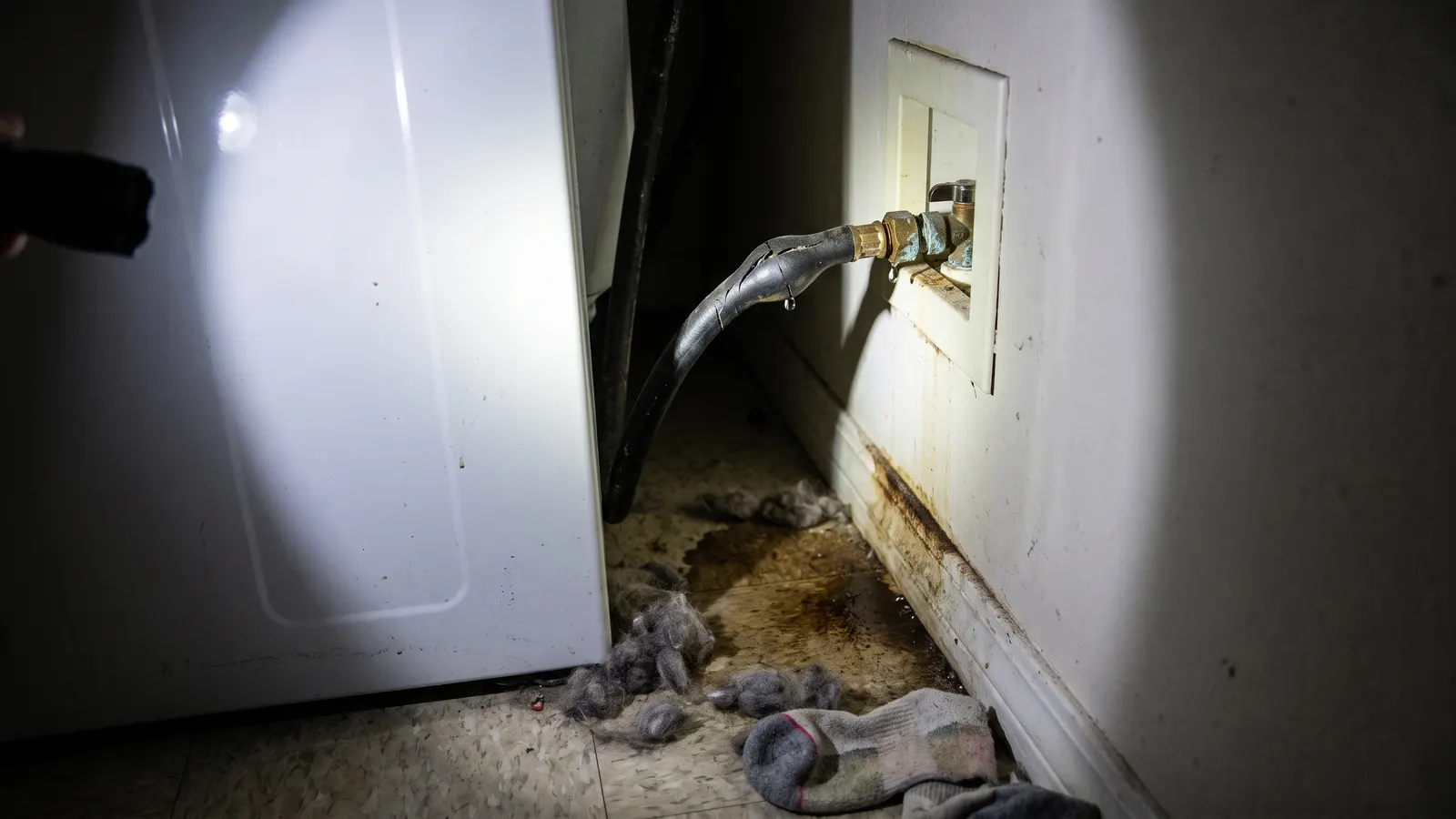
| Washing machine hoses | Rubber hose bulges or splits; fitting weeps | Laundry floor, wall behind the machine, room below |
| Under-sink supply lines and traps | Fitting loosens, compression nut weeps, trap seal cracks | Cabinet floor swells, smell, warped doors |
| Toilet supply and wax ring | Supply fitting drips; wax seal fails under a rocking bowl | Floor around the base, ceiling stain below |
| Refrigerator ice maker line | Thin plastic line cracks or fitting loosens behind the fridge | Floor under and behind the refrigerator |
| Dishwasher | Door gasket, drain hose, or inlet valve leaks | Toe kick, cabinet next to it, floor in front |
| AC condensate line | Algae clogs the drain; pan overflows | Ceiling stain below an attic air handler, closet floor |
| Water heater | Fittings weep; tank corrodes from inside | Puddle at the base, rust streaks, wet drywall behind |
| Tub and shower | Grout and caulk fail; drain shoe leaks | Ceiling below, wall next to the tub |
| Roof edge and flashing | Flashing lifts, shingles curl, ice dams back water up | Ceiling stains near exterior walls, attic sheathing |
| Gutters and grading | Overflow at the foundation; soil slopes toward the house | Basement or crawl space walls, efflorescence, musty smell |
Why do slow leaks cost more than burst pipes?
Slow leaks cost more because they run unseen for weeks while the water soaks into materials that cannot be dried in place. A burst pipe is loud, obvious, and stopped within the hour. A weeping fitting inside a cabinet or a condensate pan overflowing above a ceiling wets drywall, subfloor, and framing a little at a time until something stains, swells, or smells. By then the drying window has closed.
The EPA's brief guide to mold and moisture says that if wet materials are dried within 24 to 48 hours of a leak, mold usually will not grow. A slow leak misses that window by definition. A small leak found late means torn-out cabinets and a mold question; a large leak found fast means fans and a plumber. If the water has been there for a while, what to do when you find mold is the next read.
Damp wood and damp soil at the foundation are also what termites look for, which is why termite and pest prevention starts with drainage and fixed leaks rather than chemicals.
Which spots should you check, and how often?
Check the supply-side spots monthly, the appliances and condensate line each season, and the exterior twice a year. The checks are looks and touches: a hand on the cabinet floor, a flashlight on the fittings, a finger on the hose at the valve. None needs tools.
The monthly and seasonal leak check
- Monthly Open every sink cabinet and feel the floor and the trap. Checking under-sink plumbing is a two-minute look per sink.
- Monthly Look at the floor around each toilet base and the supply fitting behind it.
- Monthly Look at the water heater base and the fittings on top; a puddle or rust streak is a call to a plumber.
- Every season Feel the washing machine hoses for bulges and check the fittings. Replacing washing machine hoses with braided stainless lines is a cheap upgrade.
- Every season Pull the refrigerator forward enough to see the ice maker line and the floor behind it.
- Every season, in cooling months Confirm the AC condensate line drips outside or into the drain and that the pan is dry. Clearing the condensate drain is the fix if it does not.
- Twice a year Clean the gutters and confirm downspouts discharge away from the house. Gutter cleaning before the rainy season is the exterior half of leak prevention.
- Twice a year Walk the foundation after a hard rain and look for pooling. Grading and drainage explains what the slope should be.
ENERGY STAR's HVAC maintenance checklist puts the condensate drain on the contractor's pre-season list because a plugged drain can cause water damage in the house. In Property Station each of these checks is a recurring task on the Maintenance page: set the frequency in months once and the reminder comes back on its own, and the scheduler keeps the completion history an insurer or a buyer will ask about later.
What changes in a new-construction home?
A new home has new pipes and a new roof, but every fitting, seal, and drain in it is untested, and the first year is when installation mistakes show. The leak list is the same as an older house; the difference is that most of what you find in year one is a builder item, and the record you keep of it is what makes the warranty claim work.
The first-year finds we see most often: a compression fitting under a sink that was hand-tight and now weeps; an unglued condensate joint above a ceiling; a bath fan that vents into the attic, which the Building America Solution Center says causes mold growth and wood damage; unfinished flashing at a roof-to-wall joint; and backfill that settled into a trough against the foundation. Checking that the bath fan vents outside is a one-time attic look.
Do the full leak check in the first month, again at six months, and again before the workmanship warranty closes. Photograph anything wet or stained with the date, and send it to the builder in writing. A leak reported at month eleven with a photo from month six is a documented defect; the same leak reported at month fourteen is your bill.
What should you do on the first day you find water?
Stop the water, dry the area, and document it, in that order and on the same day. Close the valve nearest the leak, or the main if you cannot find it. Move what can be moved, get the standing water up, and put a fan on the wet area. Photograph the source, the damage, and anything you discard before it goes.
A stain with no obvious source needs the meter test and the food-coloring test in the guide to signs of a hidden leak before you open a wall. If the water has spread past one room or has been there for days, the hour-by-hour plan for a leak or flood covers drying, cleanup, and the insurance call.
Common questions
What is the most common cause of water damage in a house?
In the houses we see, it is a small, unnoticed leak from something that carries water every day: a washing machine hose, a supply line under a sink or behind a toilet, a refrigerator ice maker line, or a clogged air conditioner condensate drain. Weather and burst pipes are rarer; slow leaks win because nobody is looking.
How fast does water damage happen?
Staining and swelling can start within a day, and the EPA says that materials dried within 24 to 48 hours of a leak usually will not grow mold. Past that window, drywall, subfloor, and cabinets absorb water and the job changes from drying to replacing. Speed matters more than technique.
Does homeowners insurance cover water damage?
Sudden and accidental damage, such as a burst pipe, is commonly covered; damage from a slow leak that went unaddressed, and flooding from outside, often are not. Only your policy says for certain. Read it before you need it, and keep photos and dated notes of every leak you find and fix.
What should you do next?
Do the cabinet-and-toilet check tonight; it takes ten minutes and finds most of the leaks that are running right now. Then put the monthly and seasonal items on a recurring schedule so the next check happens without you remembering it.