On this page
Six things need a look every month in most houses: the HVAC filter, the smoke and carbon monoxide alarms, the GFCI outlets, the garage door's safety reverse, the drains, and the places where water shows up first. Each takes a few minutes, none needs a professional, and together they catch the small failures that turn into repairs when nobody is watching. Everything else in home maintenance is seasonal or yearly and belongs on a different list.
The monthly list is short on purpose. If it takes more than an hour, items get skipped, and a skipped monthly check is worse than a shorter list done every time.
What should you check every month?
The monthly list is the filter, the alarms, the GFCI outlets, the garage door reverse, the drains, and a leak check under every sink and around every appliance that uses water. Four of the six come with a monthly interval from a federal agency or a safety body; the other two are habits that cost nothing and find leaks and clogs while they are still small. Print the list or put it on a schedule, then walk it in the same order each time.
The monthly six
- Check the HVAC filter; change it if it looks dirty
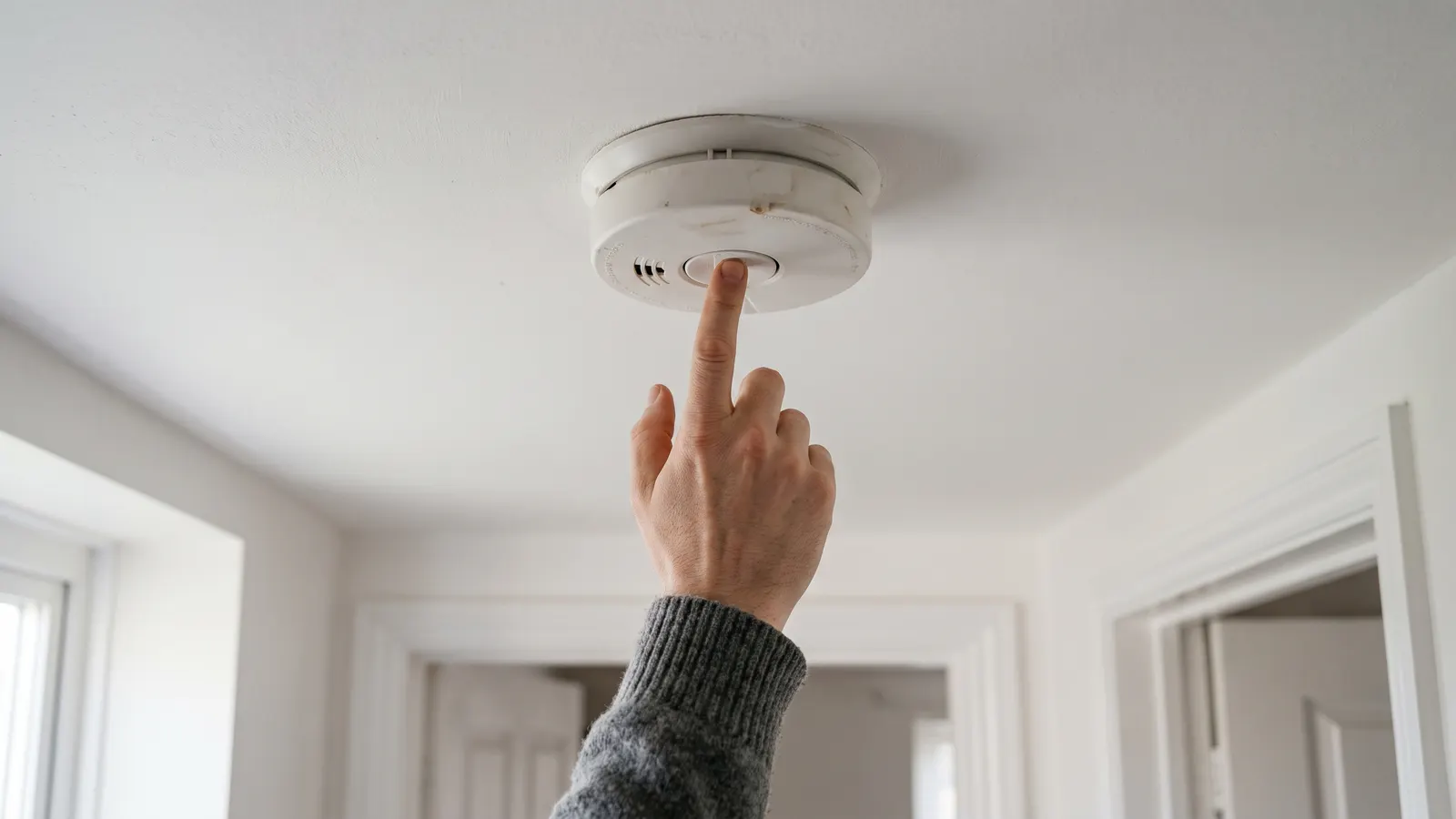
- Press the test button on every smoke and CO alarm
- Test every GFCI outlet with the TEST and RESET buttons
- Put a 2x4 under the garage door and confirm it reverses
- Run water in every sink, tub, and shower and watch it drain
- Look under every sink and around the water heater, washer, dishwasher, and refrigerator for moisture
| Check | Where the monthly interval comes from | Done when |
|---|---|---|
| HVAC filter | ENERGY STAR | You have seen the filter face and decided to keep or change it |
| Smoke and CO alarms | NFPA | Every alarm has sounded from its test button |
| GFCI outlets | ESFI | Every outlet has cut power on TEST and restored it on RESET |
| Garage door reverse | CPSC | The door has reversed off a 2x4 |
| Drains | Our recommendation | Every fixture drains without pooling or gurgling |
| Leak look | Our recommendation | Every cabinet floor and appliance base is dry |
Why are these six monthly and not seasonal?
These six are monthly because each one is a safety device or a fast-moving failure, and a month is about how long it takes for a small problem to become an expensive one. A filter loads up in weeks during heavy use. An alarm battery dies without warning. A GFCI can fail silently and still deliver power. A garage door's sensors drift out of alignment. A drip under a sink turns a cabinet floor to pulp in a season. The yearly tasks (the water heater flush, the gutters, the HVAC tune-up) fail slowly; these do not.
ENERGY STAR's heating and cooling page says to check your filter every month, especially during heavy use months, change it if it looks dirty after a month, and change it at a minimum every 3 months. The NFPA's smoke alarm page says to test all smoke alarms at least once a month by pressing the test button. ESFI's GFCI page says GFCIs should be tested every month. The CPSC's garage door opener notice says to inspect the door and opener every 30 days.
What does each check involve?
Each of the six checks is a look, a button, or a board, and the whole list fits inside an hour with the walk between rooms included. The filter is a pull and a glance. The alarms and the GFCIs are buttons. The garage door is a 2x4 on the floor. The drains and the leak look are eyes and a flashlight. The guides below cover each one in full; this is the short version for the month you already know how.
- Filter. Turn the system off at the thermostat, pull the filter, and hold it to a light. If you cannot see light through it or the face is gray, change it; the arrow on the frame points toward the blower. The filter guide covers sizes and MERV ratings.
- Alarms. Press and hold the test button on each smoke and CO alarm until it sounds. A single chirp every 30 or 60 seconds between tests is the NFPA's description of a low battery. The detector guide covers replacement ages.
- GFCI outlets. ESFI's test: press RESET, plug in a nightlight, press TEST (the light should go off), press RESET (the light should come back). An outlet that keeps power on TEST is not protecting anyone. The GFCI guide covers what to do when one fails.
- Garage door. Lay a 2x4 flat in the door's path and close the door. If it does not reverse when it hits the board, the CPSC says to disengage the opener until it is adjusted, repaired, or replaced. The safety reverse guide covers the photo-eye test too.
- Drains. Fill each sink a few inches and pull the stopper. Slow drains and gurgling are a clog forming, and a clog caught now is a plunger, not a plumber.
- Leak look. Open every sink cabinet, feel the floor of it, and look at the supply lines and the trap. Check the pan under the water heater, the floor under the dishwasher and refrigerator, and the washer hoses. Dry is done; damp is a task.
What changes for a new build or a condo?
A new build follows the same six checks from the first month, with two additions: a look at the ceilings and walls for the settling cracks and nail pops that appear in year one, and a note of anything that might be a warranty item before the workmanship window closes. A condo or townhome drops the garage door and the exterior if the association owns them and keeps everything inside the unit. The list flexes; the cadence does not.
In a new home the filter check matters more, not less, because construction dust keeps loading the filter for months after move-in. The first-year schedule for a new build puts these six inside the larger month-by-month plan. For a condo, the guide to what is yours and what is the association's settles which checks apply. And if the house has smart alarms, a smart thermostat, or leak sensors, those need their own monthly look: a low battery in a leak sensor is a sensor that is not sensing.
How do you make the monthly list happen?
A monthly list happens when it has a date, a reminder, and a place to record that it was done; without those three it lasts about two months. Tie it to something that already recurs (the first weekend, the day the mortgage payment posts, the day the recycling goes out) and put a single reminder on the calendar for that day. Then log the result, even if the result is "all clear." The log is what turns six checks into a record of the house.
In Property Station the six checks are one recurring task on the Maintenance page with Frequency set to 1 month; the reminder arrives 7 days before the due date, and completing the task schedules the next one on its own. Setting up the schedule takes a few minutes, and the maintenance scheduler on the features page shows how completion and history look. If you want the monthly hour to be a walk through the house rather than a list of buttons, the one-hour monthly walkthrough is the same six checks arranged by room. Either way, a calendar that survives past February is what keeps it going.
Common questions
Do I really need to check the filter every month?
Check it, yes; change it only when it looks dirty. ENERGY STAR says to check monthly, especially in heavy heating and cooling months, and to change it at least every three months. A house with pets, a remodel underway, or a 1-inch filter will usually need the change sooner than a house with a thick media filter.
What if I miss a month?
Do the six checks the next time you think of it and move on. Nothing on the monthly list fails catastrophically from one skipped month; the point of the cadence is that a problem gets caught within weeks instead of within years. If you miss three months in a row, the fix is the reminder, not more willpower.
Is this list different for an apartment or condo?
Shorter. You still own the alarms, the GFCI outlets, the filter if the unit has its own air handler, and the drains and leak check inside your walls. The garage door and the exterior usually belong to the association. Your declaration says which.
Should I do the monthly checks myself or have a service do them?
Yourself. Every item takes a few minutes, needs no tools beyond a 2x4 and a nightlight, and involves nothing that requires a license. A service contract makes sense for the yearly HVAC tune-up and the chimney, not for pressing a test button.
What should you do next?
Do the six checks today, note what you found, and set the reminder for the same day next month. The first pass takes longest because you are finding the alarms and the GFCI outlets; every pass after that is under an hour.