On this page
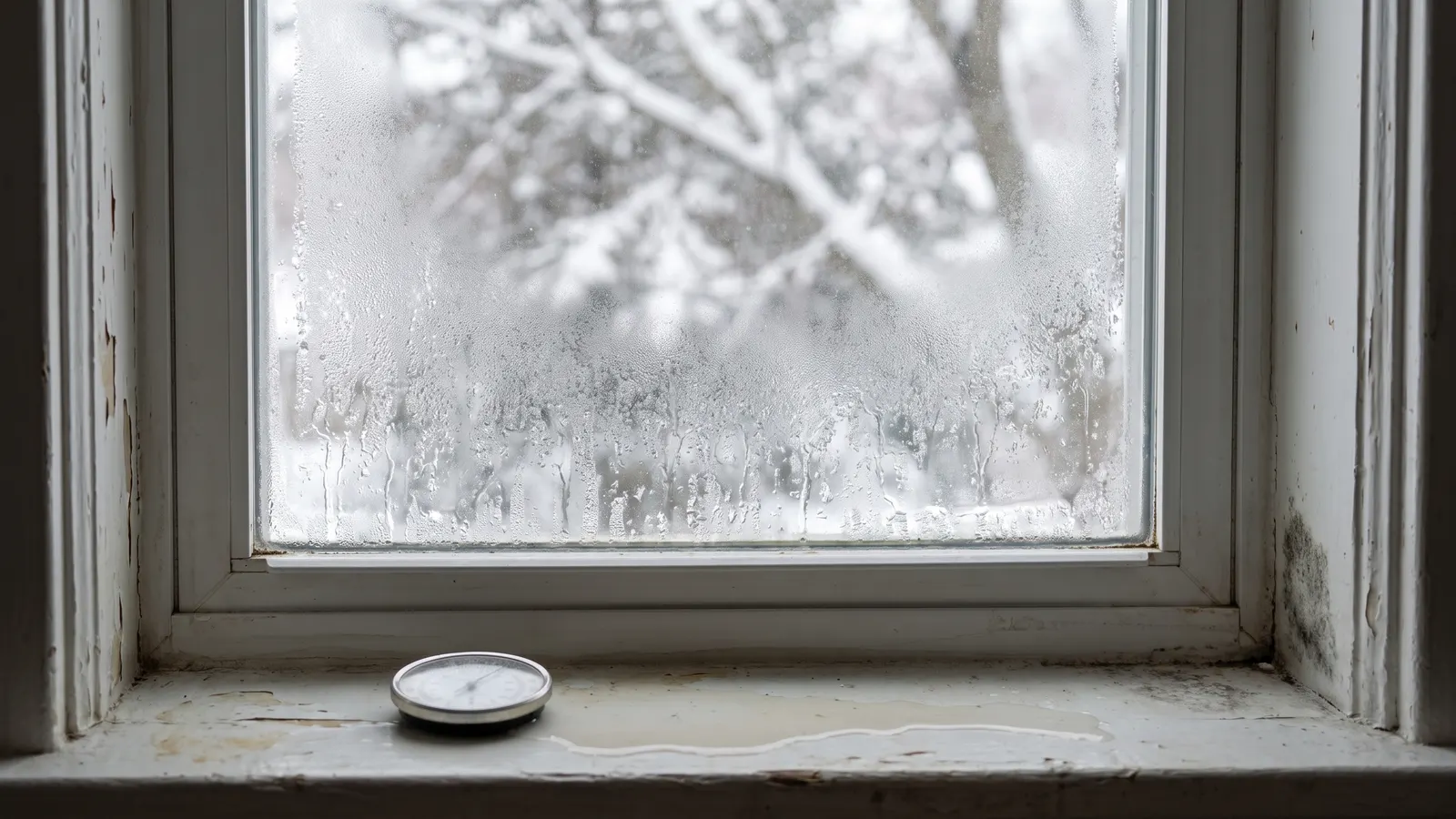
The ideal indoor humidity is between 30 and 50 percent relative humidity, and it should never sit above 60. The EPA's brief guide to mold and moisture gives that range; the CDC's mold page says to keep it no higher than 50 percent all day long. In a cold climate during the heating season, aim lower, 30 to 40 percent, so the windows do not sweat. Measure in the dampest room and a bedroom, and act when a reading holds outside the range for more than a day.
What is the ideal indoor humidity?
The ideal indoor humidity is 30 to 50 percent, with 60 as the ceiling and a winter target of 30 to 40 in cold climates. Three agencies land on the same range: below 30 the house dries and shrinks, above 50 the surfaces start to support mold, and cold windows condense long before the air feels damp.
ENERGY STAR's dehumidifier page puts the two seasons together: the optimum relative humidity for a building is generally considered to be between 30 and 50 percent, and in colder climates during the heating season it should be 30 to 40 percent to prevent window condensation. Relative humidity is the moisture in the air compared with what the air could hold at that temperature, which is why the same moisture reads higher on a cold night and why glass shows it first.
How do you measure humidity in a house?
Measure with a digital hygrometer, placed in the dampest space and in a bedroom, read at the same time each day for a week. A single reading after a shower means little; a week of readings shows whether the house holds its moisture or sheds it. Thermostats report humidity too, but they sit in the hallway, rarely where the problem is.
For crawl spaces, the Building America Solution Center's crawl space moisture guide gives two thresholds: air relative humidity above 70 percent is bad, and wood moisture content above 18 percent is bad. The crawl space moisture check walks through both.
What happens when humidity is too high or too low?
Too high, and the house grows mold, sweats on cold surfaces, and smells musty; too low, and wood shrinks, joints open, and static follows. Both are slow, both show up in the finishes first, and both are cheaper to fix at the source than at the symptom.
Too high (holding above 50 to 60 percent)
- Condensation on windows, then on the frames and sills
- Mold on bathroom ceilings, closet walls, and behind furniture on exterior walls
- Musty smell in the basement, crawl space, or a closet
Too low (holding below 30 percent)
- Gaps open in hardwood floors and trim; joints crack
- Static shocks on every doorknob and light switch
- Humidifier scale and white dust if you overcorrect
If the high side has already produced visible growth, what to do when you find mold covers the size rule and the cleanup.
A newly built home runs damp for the first year: concrete, framing, drywall mud, and paint release moisture as they cure, and a tight envelope holds it. Run the fans, run the air conditioner or a dehumidifier, and re-read the next year before you buy equipment.
How do you lower indoor humidity?
Lower humidity by removing the sources first, then ventilating, then dehumidifying. ENERGY STAR's dehumidifier page says the same: reduce sources first by extending downspouts away from the foundation, venting the clothes dryer outdoors, and using bath and kitchen fans. Air conditioning removes moisture as it cools, so an oversized system that short-cycles leaves the house cool and clammy.
The fans are the cheapest step. ENERGY STAR's windows page says to use the kitchen and bath fans during showers and cooking, leave them running for 20 minutes afterward, and make sure they vent directly outside; checking that the bath fan vents outdoors is the one-time look that makes the habit count. A plugged condensate drain also raises indoor humidity, per ENERGY STAR's maintenance checklist, so clearing the condensate line belongs on the summer list.
When the sources are handled and a space still reads high, a dehumidifier finishes the job. ENERGY STAR's sizing, for a space under 2,000 square feet:
| How damp the space is | Relative humidity | Minimum capacity (pints per day) |
|---|---|---|
| Slightly to moderately damp | 50 to 75 percent | 20 to 30 |
| Very damp | 75 to 90 percent | 25 to 40 |
| Wet | 90 to 100 percent | 30 to 50 |
The same page says it is better to oversize than undersize, to close doors and windows to the space while the unit runs, to choose a low-temperature unit if the space falls below 65 F, and that a whole-home unit suits a house reading above 55 percent throughout, with the drain routed by an HVAC professional. Dehumidifier care covers the filter, coils, and drain hose; the full step-by-step from sources to equipment is in the guide to controlling indoor humidity.
In Property Station the fan check, the condensate drain, and the dehumidifier filter are recurring tasks on the Maintenance page, and the hygrometer readings go in the task notes so the trend is on the record. The scheduler sends the reminder.
How do you raise humidity in winter?
Raise winter humidity only as far as the windows allow, which in a cold climate is 30 to 40 percent, with a humidifier that is cleaned and set by outdoor temperature. Low winter humidity is the same physics in reverse: cold outdoor air holds little moisture, the furnace warms it, and the relative humidity indoors drops.
A whole-house humidifier on the furnace is the steady fix, and it needs its water panel replaced each season and its humidistat turned down as the outdoor temperature falls; maintaining a whole-house humidifier covers both. Watch the windows: the first fog on the glass is the signal to turn the setting down, no matter what the meter says. The Building America Solution Center's storm window guide lists the same condensation controls from the other direction: bath fan timers, the dryer and fans ducted outside, a continuous crawl space vapor barrier, and a tight lid on the sump basin.
The house needs to give up moisture in summer and be given a little in winter, and the meter, read in the same two rooms all year, says which. The broader habits that keep the air clean are in indoor air quality basics.
Common questions
What should indoor humidity be in winter?
Lower than the summer target. ENERGY STAR says that in colder climates during the heating season, humidity should be in the 30 to 40 percent range to prevent window condensation. Cold glass condenses at levels that would be fine in July, so if the windows sweat, turn the humidifier down whatever the meter reads.
Is 60 percent humidity too high for a house?
Yes, as a steady reading. The EPA says to keep indoor humidity below 60 percent and ideally between 30 and 50, and the CDC says no higher than 50 all day long. A reading of 60 after a shower that falls within an hour is normal; a room that sits at 60 is a mold risk and needs a source fixed or a dehumidifier.
Does a dehumidifier need to run all the time?
Only until the space holds the target. Set it to about 50 percent, close the room, and let the built-in humidistat cycle it. If it never shuts off, it is undersized or a source (a leak, a wet crawl space, an open sump) is feeding it faster than it can drain.
What should you do next?
Buy two hygrometers, put one in the dampest room and one in a bedroom, and read them for a week. If either holds above 50, fix the sources in the order above before you shop for a dehumidifier; if either sits below 30 in winter, turn the humidifier up a notch and watch the windows. Put the fan and drain checks on a recurring schedule.