On this page
Clean an AC condensate drain line by turning the system off, pouring about a cup of distilled white vinegar into the line's access port, letting it sit, and then pulling the loosened slime out of the outdoor end with a wet/dry vacuum. Do it at the start of every cooling season and again mid-season in a humid climate. A plugged line is the most common reason a central air conditioner puts water on a ceiling or a floor, and the job takes half an hour.
The condensate line is the PVC pipe that carries away the water the indoor coil pulls out of the air. It runs from the drain pan under the coil to a house drain or to the outside. The water is clean, but the pipe is dark and damp, and the film that grows on its walls plugs it.
Why does a plugged condensate line matter?
A plugged condensate line matters because the water has nowhere to go but the house. The indoor coil makes water every hour the air conditioner runs; if the pipe is blocked, the drain pan fills, overflows, and soaks whatever is below it: a closet floor, a garage ceiling, or the attic insulation and the drywall under it. ENERGY STAR's maintenance checklist says a plugged drain can cause water damage in the house and affect indoor humidity levels.
- Indoor coilWarm house air crosses the cold coil and leaves its moisture behind
- Drain panThe water collects in a shallow pan under the coil
- Trap and access portA capped tee near the air handler, sometimes with a U-shaped trap after it
- Drain linePVC pipe, downhill the whole way
- TerminationOutdoors near the foundation, or into a house drain
How often should you clean it?
Clean the line at the start of cooling season and look at the drain pan at every filter change; in a humid climate, where the system runs most of the year, a second cleaning mid-season is worth the half hour. Between cleanings, check the outdoor end while the system is running on a warm afternoon: a steady drip means the line is open. The manual for your air handler is the tie-breaker.
What do you need?
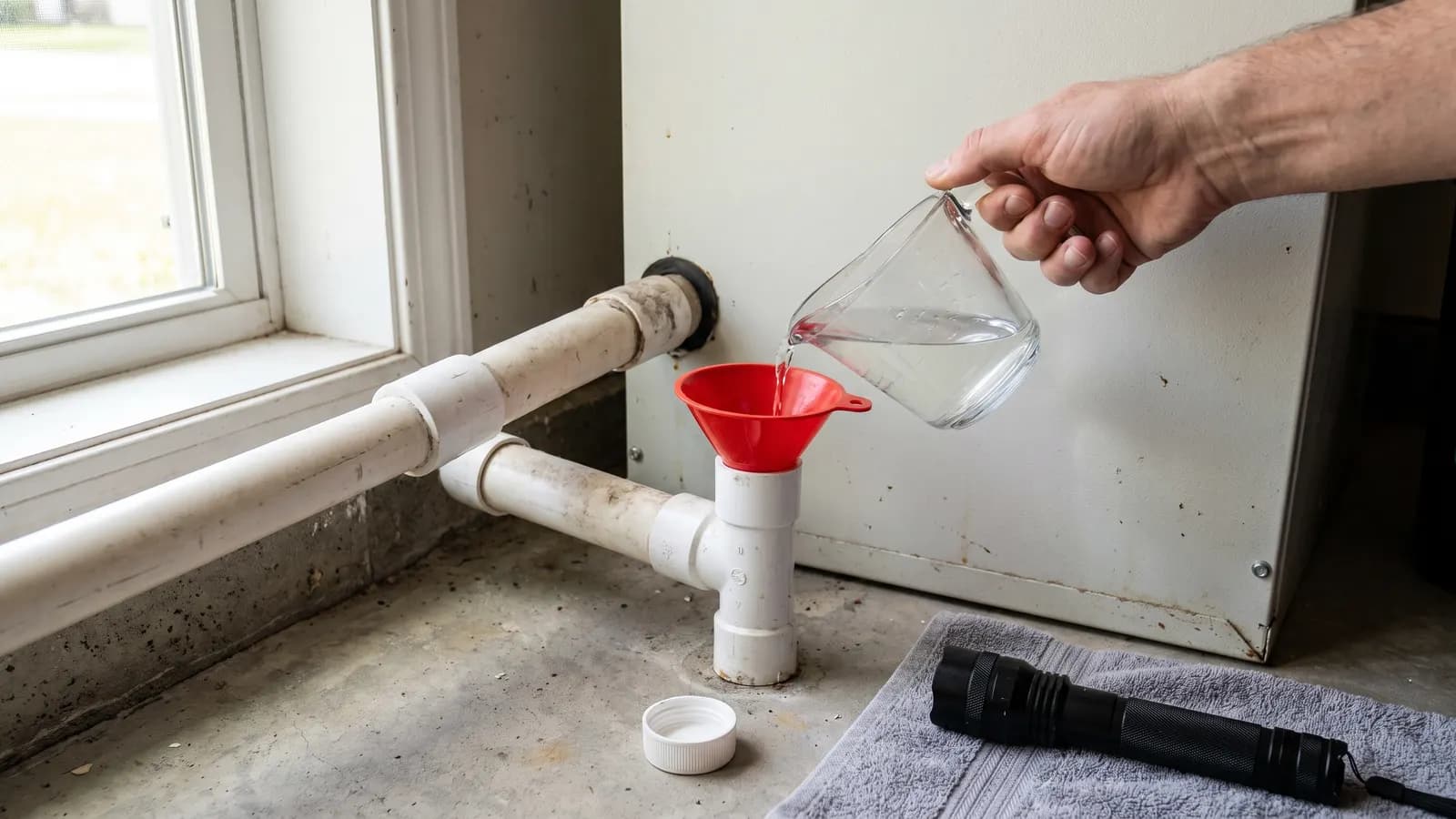
You need distilled white vinegar, a wet/dry vacuum with a hose that fits over the pipe's outdoor end, a rag or tape to seal that fit, a flashlight, and a towel. A funnel helps at the access port. Skip chemical drain cleaners; they are made for sink drains, not for a thin PVC line that ends beside the foundation.
- Distilled white vinegar, about a cup
- A wet/dry vacuum with a hose that seals over the outdoor pipe end (a rag wrapped around the joint closes the gap)
- A flashlight and a towel
- A funnel or a turkey baster for the access port
- Foam pipe insulation, if the line runs horizontally through a hot attic
What are the steps?
Turn the system off, find the access port near the air handler, pour vinegar into the line, wait, then go outside and pull the loosened film out of the pipe's end with the vacuum. Confirm the drain pan is empty and dry before you turn the system back on, and watch the outdoor end drip once it has run for a while.
- Turn the air conditioner off at the thermostat. Water keeps forming on the coil while it runs, and you want the line still.
- Find the drain line at the air handler: a PVC pipe, usually white, leaving the bottom of the coil cabinet. The capped tee or short vertical stub near the unit is the access port.
- Shine the flashlight into the drain pan. Standing water or rust-colored slime means the line has been slow for a while. Note what you see.
- Remove the cap and pour the vinegar into the port slowly. If it backs up instead of draining, the plug is downstream: skip to step 6, vacuum first, then come back and pour.
- Let the vinegar sit for about half an hour so it loosens the film on the pipe walls.
- Go to the outdoor end of the line and seal the vacuum hose over it with the rag or tape. Run the vacuum for a couple of minutes. Done when: the hose stops gurgling and a slug of gray water has landed in the tank.
- Pour a pitcher of water into the port. Done when: clean water flows freely from the pipe outside.
- Replace the cap and wipe the drain pan dry. If the pan has a float switch, lift it gently and let it drop to confirm it moves.
- Turn the system back on. After it has run for a while on a humid day, check the outdoor end again. Done when: water drips outside and the pan under the coil stays dry.
The Building America Solution Center's guide on condensate drain line insulation says that when hot, humid attic air touches the cold pipe, water vapor can condense on it and drip onto attic insulation, framing, and ceiling drywall, where it can encourage mold growth and cause water damage over time. Look for droplets on the pipe and stains below it, and insulate horizontal runs with pipe insulation or hire an HVAC contractor or handyman.
When should you stop and call a pro?
Call an HVAC technician if the line will not clear with vinegar and the vacuum, if the drain pan is rusted through or cracked, if water is coming from the coil cabinet rather than the pan, or if the float switch has shut the system down more than once this season. Do not open the coil cabinet beyond the filter door, and do not touch the insulated copper refrigerant lines; those belong to the technician at the annual tune-up.
A line that ends inside the crawlspace is an installer item in a new home; ask the builder to reroute it while the warranty is open. A high-efficiency furnace makes condensate in winter too, often into the same line; the pre-season furnace check covers that end of it.
What should you record?
Record the date, what came out of the line, and whether the pan had standing water, then set the next cleaning for the start of the next cooling season. In a new home, note where the line terminates and whether the attic run is insulated; the builder can answer both while the warranty is open, and the answers belong on the home record. Put the task on a recurring schedule next to the filter change, because the filter swap is the moment you are already standing at the air handler with a flashlight.
Common questions
Can I use bleach instead of vinegar?
Vinegar is the better choice. It loosens the film that plugs the line, it does not corrode a metal drain pan, and it leaves no fumes in a closet that may also hold a gas furnace. If the manual for your air handler names a cleaner, use that one.
Why is a pipe dripping outside near a window?
A second, separate pipe that drips near a window or an eave is usually the emergency overflow drain from an attic air handler. It is meant to stay dry. Dripping there means the primary line is plugged and the pan is filling, so clear the line the same day.
What does the float switch do?
A float switch sits in the drain pan or in the line and shuts the air conditioner off when water rises past it. It exists to stop the system before the pan overflows. If the AC quits for no reason on a hot day, look in the pan before you call anyone.
How often should the line be cleaned?
Once at the start of cooling season is the minimum, with a second cleaning mid-season in a humid climate where the system runs most of the year. The manual and the installer's notes outrank that default; some air handlers have a cleanout port meant for a monthly vinegar pour.
What should you do next?
Clear the line this weekend if the system has been running and nobody has done it, then give the outdoor unit the same half hour; it is the same trip with the same vacuum. If the pan had standing water and the house has felt clammy, read how to bring indoor humidity down before summer.