On this page
In a condo, maintenance is split by a line the declaration draws: what is inside the unit (typically from the finished surfaces of the walls, floors, and ceilings inward, plus the equipment that serves only your unit) is usually yours, and the structure, the exterior, the roof, and the systems that serve more than one unit are usually the association's. In a townhome the owner often has the exterior too. The only source that settles it for your home is the declaration, the bylaws, and the association's responsibility chart.
That split changes the task list, not the cadence. A condo owner still has a monthly list, a water heater, a dryer vent, and a set of shutoffs, and a neighbor below who makes leaks more expensive than in a house.
What is usually yours and what is usually the association's?
What is usually yours is everything that serves only your unit: the interior finishes, the fixtures and appliances, the in-unit plumbing from the branch that feeds you, the unit's electrical panel and wiring, the HVAC equipment that serves only your space, the water heater, and often the windows and doors. What is usually the association's is the building: the roof, the exterior walls, the foundation, the common pipe stacks and mains, the elevators, the grounds, and any system that serves more than one unit.
| Item | Usually the owner's | Usually the association's | Varies most |
|---|---|---|---|
| Interior finishes, fixtures, appliances | Yes | ||
| In-unit plumbing branches and fixture shutoffs | Yes | ||
| Water heater, dryer vent, in-unit HVAC | Yes | Rooftop condensers | |
| Unit electrical panel and wiring | Yes | ||
| Windows, exterior doors, balcony surfaces | Yes; read the declaration | ||
| Roof, exterior walls, foundation, structure | Yes | Townhomes | |
| Common pipe stacks, mains, building electrical service | Yes | ||
| Grounds, driveways, shared walkways | Yes | Townhome lots |
The table is the common pattern, not a rule. Declarations differ, the boundary of a "unit" is defined in each one, and some associations maintain items they do not own and bill the owner. Read yours before acting on anything in this post, and treat the association's written answer as the record.
How do you find out for sure?
Find out from three documents and one email: the declaration (also called the CC&Rs or master deed), which defines the unit boundary and assigns maintenance; the bylaws and rules, which cover approvals and contractors; the association's maintenance responsibility chart, if it has one, which is the table above filled in for your building; and a written question to the manager for anything the documents leave unclear. Save all four with the home's records.
The declaration usually defines the unit by its boundaries ("the interior surfaces of the perimeter walls") and then lists what the owner maintains and what the association maintains, sometimes with a separate list of what the association maintains at the owner's expense. The responsibility chart, where one exists, is the easiest version to read. Living with an HOA covers the approvals, the rules, and how to work with the board when the answer is not what you hoped.
Ask the manager the specific questions in writing before you need the answers: who maintains the windows, who maintains the dryer vent run inside the wall, whether the rooftop condenser is yours, and who you call for a leak from above at midnight. Put the replies in the record next to the declaration. An email from the manager is what you will be reading when the ceiling is dripping.
Which tasks are on a condo owner's calendar?
A condo owner's calendar is the monthly list with the exterior removed, plus the yearly tasks for the equipment inside the unit: the HVAC filter if the unit has its own air handler, the smoke and CO alarms, the GFCI outlets, the drains, the leak look, the dryer vent, the water heater flush, the caulk around tubs and showers, the washer hoses, and a test of the unit's own water shutoff. The garage door, gutters, roof, and grounds come off the list if the association owns them.
A condo owner's list
- Monthly: filter check, alarm test, GFCI test, drains, leak look under every sink and around the water heater and washer
- Every few months: run the bath fans and check they clear the mirror; test the unit shutoff
- Yearly: dryer vent, water heater flush, caulk at tubs and showers, washer hose inspection, balcony drain if you have one
- As the declaration says: window seals and tracks, exterior door weatherstripping
The monthly checklist is the full version of the first line, and the filter guide covers the one item most condo owners with a fan coil or air handler never find: the filter slot behind a closet louver. In Property Station the property type Condo or Townhouse is set when the home is added, and the maintenance templates are grouped by system, so a home with no roof or gutter system on file does not get roof and gutter tasks. The maintenance scheduler then runs the shorter list on the same monthly loop.
Why does a leak matter more in a condo?
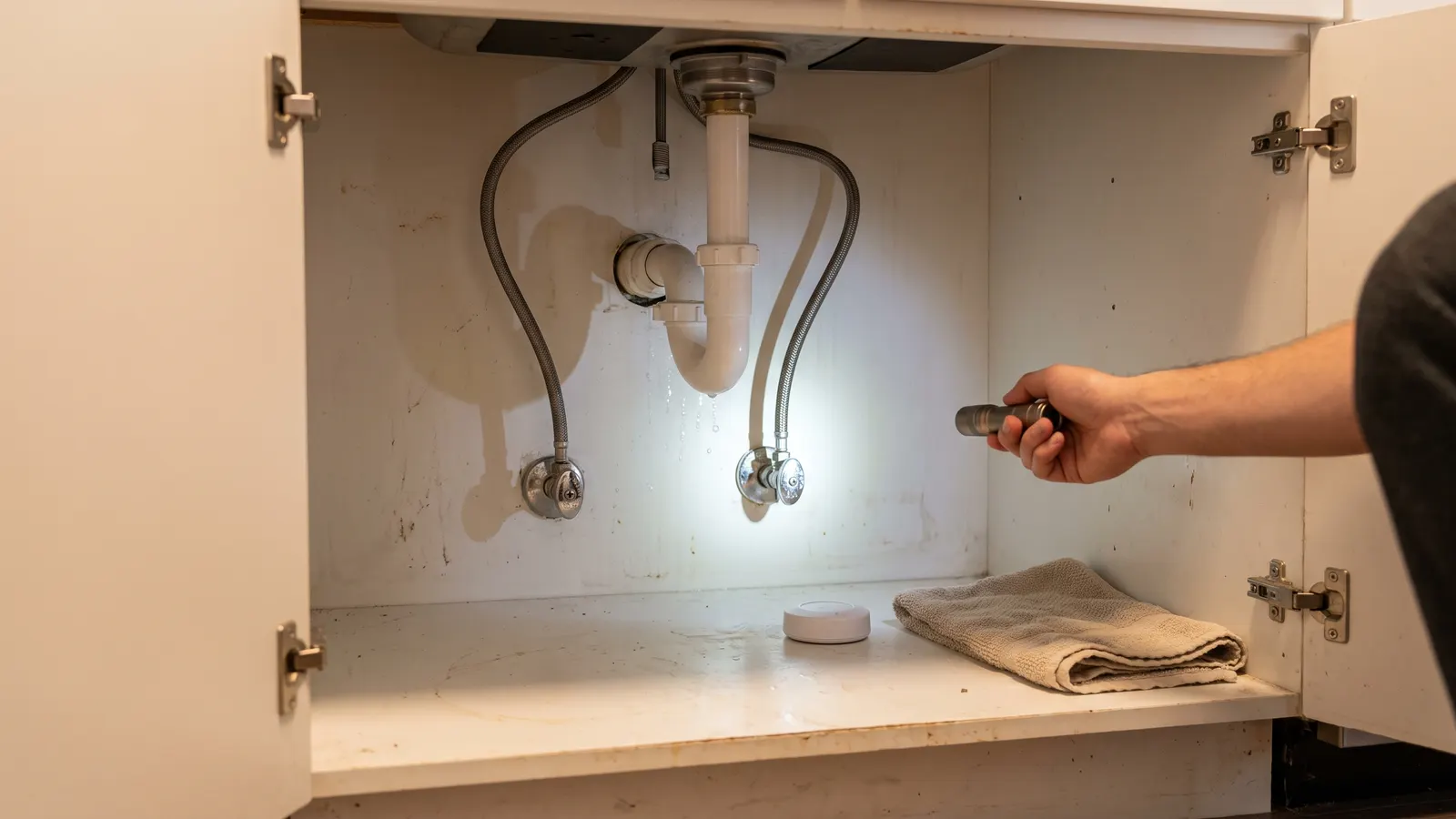
A leak matters more in a condo because water goes down, and down is someone else's ceiling, cabinets, and floor, with their insurer and the association's involved before yours. A water heater in a hall closet on the fourth floor, a washer hose behind a stacked unit, a toilet supply line, and a shower pan are the common sources, and every one of them is caught by the monthly leak look or replaced on a schedule before it fails.
Know the unit's own water shutoff, which is often in a closet, behind an access panel, or at the water heater, and know who to call for the building's shutoff, which you are usually not allowed to touch. The five shutoffs covers the search; for a condo, the unit shutoff and the fixture stops are the two that are yours, and the meter and the main are the association's. Ask your insurer what a condo owner's policy covers for damage to a neighbor's unit and for your own interior, because the association's policy and yours meet at a line you want to know in advance.
How do townhomes differ from condos?
A townhome differs from a condo mainly in what the owner holds title to: in many townhome communities the owner owns the lot and the structure, including the roof and the exterior walls, and the association maintains only the common areas, or maintains the exterior under a separate arrangement funded by the dues. In a condominium the owner holds the unit and a share of the common elements. The word on the sign does not tell you which; the deed and the declaration do.
For a townhome owner who holds the exterior, the calendar is a house's calendar with a party wall: gutters, roof inspection, exterior caulk, grading, and the garage door come back on. For a townhome whose association maintains the exterior, the list looks like a condo's, but the owner often still holds the roof for insurance and replacement purposes. That distinction matters at the first roof leak, and it is worth an email to the manager before it rains.
What should you record?
Record the declaration, the bylaws, the responsibility chart, the manager's written answers, the association's contacts and after-hours number, the unit's shutoff locations, and the age and model of every piece of equipment you own inside the unit. Then keep the same maintenance log a house would keep, because the association's records cover the building and nobody's records cover your water heater but yours.
The documents go in the Document Vault under a type such as Contract or Other with the association's name in the title; the manager and the building's emergency line go under Emergency Contacts; the unit shutoff goes on Shutoffs & Key Locations with a photo. At resale, the buyer's questions are the same ones you asked on day one, and a record that answers them is a shorter closing.
Common questions
Who maintains the HVAC in a condo?
Usually the unit owner, when the unit has its own furnace, air handler, or heat pump, and the association when the building has a central plant that serves every unit. A rooftop condenser that serves only your unit is often yours even though it sits on common property. The declaration or the association's responsibility chart is the answer for your building.
Do I need to change the filter if the building has central air?
If your unit has its own air handler or fan coil with a filter slot, yes, on the same monthly check as any house. If the building's central system serves your unit through ducts with no filter in your space, the association's contractor handles filtration. Ask, and write down the answer.
What happens if my water heater leaks into the unit below?
You will usually be responsible for the damage your unit's equipment causes, subject to the declaration and the insurance policies involved. Ask your insurer what a condo owner's policy covers before it happens, and keep the water heater's age, the pan, and the shutoff on your own record. The monthly leak look under it is the cheapest habit in a stacked building.
Can I do my own repairs in a condo?
Inside the unit, usually, with the same DIY-or-pro test as any house. Anything that touches a shared wall, a common pipe stack, the building's electrical service, or the exterior typically needs the association's approval and often its contractor. Check the rules before opening a wall, even your own.
What should you do next?
Find the declaration and the responsibility chart, read the unit boundary definition, and send the manager the four questions. Then find the unit shutoff and do the monthly list this weekend. The whole setup is one evening, and it is the evening that decides whose problem the next leak is.