On this page
The energy savings that actually work at home change a setting or a habit rather than requiring a purchase: a thermostat schedule with a night setback (for a furnace, not a heat pump), a water heater turned down to 120°F, a clean HVAC filter on a set interval, LED bulbs in the fixtures that run the most hours, and ceiling fans switched off when the room is empty. Heating and cooling are where the money is. ENERGY STAR's smart thermostat page says that for the average American household, almost half of the annual energy bill goes to heating and cooling.
None of this needs an audit. If you want to know where your particular house loses the most, a home energy audit will tell you; the list below is what to do regardless.
Where does the energy go?
Most of a home's energy goes to heating and cooling the air, then to heating water, and then to everything else. The DOE's Federal Energy Management Program Home Energy Checklist says heating can account for almost half of the average family's winter energy bill and that water heating can account for 14 to 25 percent of the energy consumed in your home. Lighting, appliances, and electronics are the remainder, which is why a new bulb saves less than a new thermostat schedule.
What should you set and forget?
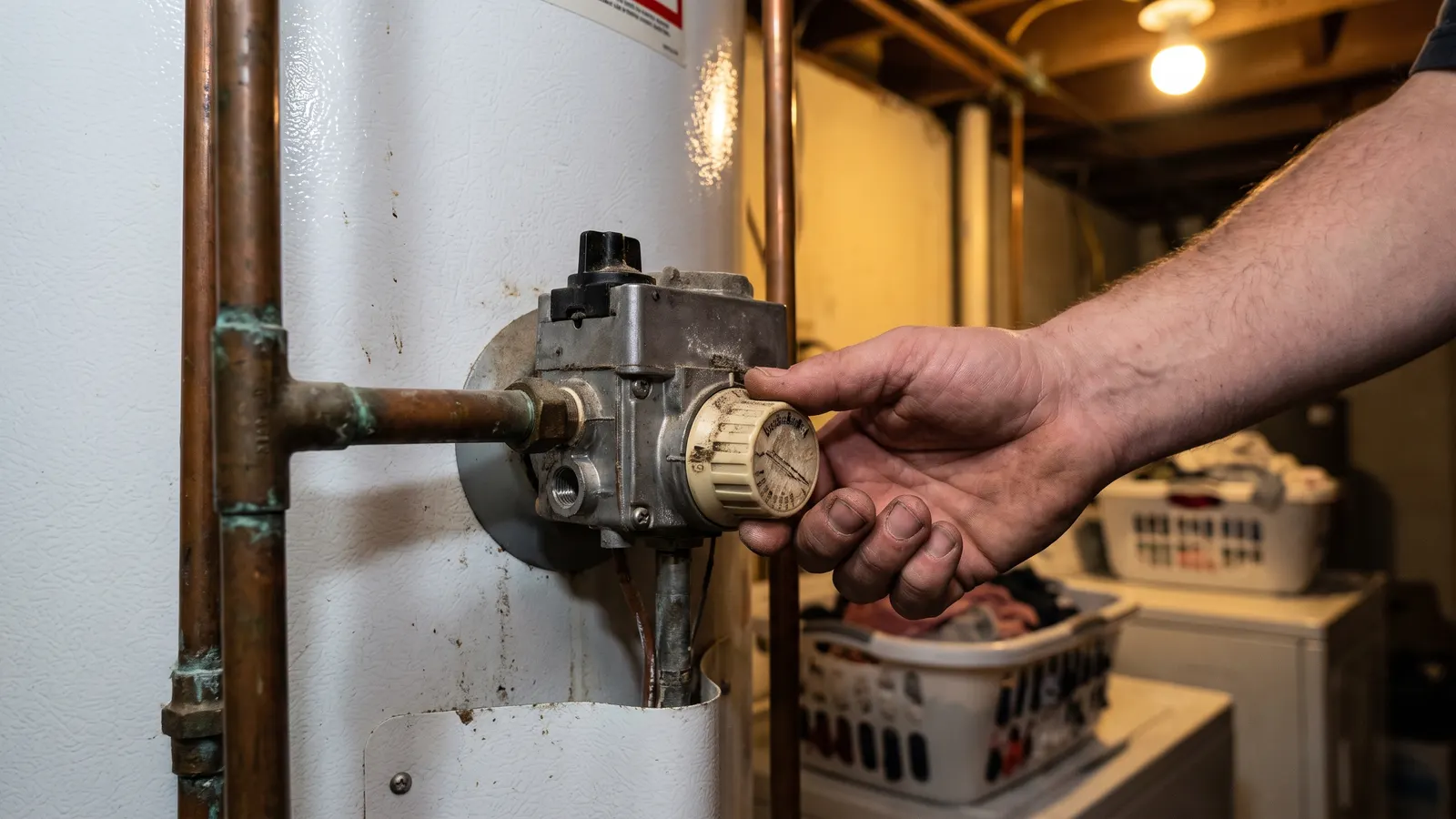
Set three things once: the thermostat schedule, the water heater temperature, and the filter interval. The FEMP checklist recommends a programmable thermostat that sets back automatically at night and turning the water heater down to the warm setting, 120°F, which saves energy and avoids scalding. The filter interval comes from ENERGY STAR's heating and cooling page: check it every month during heavy-use seasons, change it if it looks dirty, and change it at least every 3 months.
A smart thermostat automates the schedule, and that is all it does. The Building America Solution Center's guide to whether a smart thermostat is right for you says that if the home is occupied during the day and you want a steady temperature, the savings and comfort it can offer will be small.
| Setting | What to do | Why it works |
|---|---|---|
| Thermostat schedule | Set back at night and when the house is empty; how to set a schedule | Less runtime when nobody is there to feel it |
| Water heater | Turn to 120°F; details in lowering water heating costs | Every degree the tank holds is heat lost through its walls all day |
| HVAC filter | Check monthly, replace at least every 3 months; how to change it | A dirty filter slows airflow and makes the system work harder |
| Ceiling fans | Off when the room is empty; counterclockwise in summer, clockwise on low in winter | Fans cool people, not rooms |
Heat pumps are the exception to the setback rule. ENERGY STAR's heat pump page says that unlike a furnace or boiler, heat pumps do not save energy by turning them down when you are away or asleep, and to pick a comfortable temperature and leave it there. If a heat pump heats your house, skip the night setback and set the thermostat to "heat" or "cool" rather than auto.
Which habits cost the most?
The habits that cost the most are the ones that run equipment for nobody: a ceiling fan spinning in an empty room, a thermostat held at one temperature around the clock in a house that is empty all day, and heat-producing appliances doing work the house then has to undo. ENERGY STAR's ceiling fan page says it plainly: "Ceiling fans cool people, not rooms. If the room is unoccupied, turn off the ceiling fan to save energy." It also says to adjust the thermostat when using the fan, since the wind-chill effect is the saving, not the fan itself.
Lighting is the habit that is cheapest to fix with hardware. ENERGY STAR's LED page says LED products produce light up to 90 percent more efficiently than incandescent bulbs and that incandescent bulbs release 90 percent of their energy as heat, which in summer the air conditioner then removes. Swap the bulbs that run the longest first.
What maintenance saves energy?
The maintenance that saves energy is the maintenance that keeps air moving: a clean filter, a yearly professional tune-up, ducts that are sealed and insulated where they run through unheated space, and clean coils on the refrigerator and the outdoor unit. The FEMP checklist says to make sure the furnace or heat pump receives professional maintenance each year, and to insulate heating ducts in unheated areas such as attics and crawl spaces, because keeping ducts in good repair can prevent heat loss of up to 60 percent at the registers.
The energy maintenance calendar
- Monthly: check the HVAC filter; change it when it looks dirty and at least every 3 months.
- Spring and fall: professional check-up of the cooling system, then the heating system, per the annual tune-up guide.
- Once a year: clean the refrigerator coils and the dryer vent; both make a motor work less.
- Once, then re-check yearly: seal and insulate the ducts in the attic, crawl space, or garage.
- Fall: reverse the ceiling fans; spring: reverse them back and clear the outdoor AC unit.
Each of these has an interval, which makes them tasks rather than projects. In Property Station a task on the Maintenance page carries a Frequency in months, and completing it schedules the next one, so the filter check comes back on its own instead of when you remember it.
The yard counts too. FEMP's checklist says to plant shade trees and shrubs around the house to reduce air conditioning costs; landscaping that cuts energy use covers where they should go.
Common questions
Does turning the thermostat down at night really save energy?
For a furnace or boiler, yes; the FEMP checklist recommends a programmable thermostat that sets back automatically at night. A heat pump is different. ENERGY STAR says heat pumps do not save energy by turning them down when you are away or asleep, and to pick a comfortable temperature and leave it there.
Do LED bulbs pay off if the old bulbs still work?
ENERGY STAR says LEDs produce light up to 90 percent more efficiently than incandescent bulbs, which release 90 percent of their energy as heat. Replace the bulbs that run the most hours first, such as the kitchen, the living room, and any exterior light left on overnight, and let the rest burn out.
Is a smart thermostat worth it?
It depends on whether anyone is home all day. The Building America Solution Center says that if the home is occupied during the day and you want a steady temperature, the savings a smart thermostat offers will be small. If the house is empty on a schedule, the setbacks it automates are where the savings come from.
Which of these should a new-construction owner do first?
Check the water heater setting and the thermostat schedule, because both are often left at installer defaults. Then find the filter and set its interval. A new house has efficient equipment; the settings are what the owner controls.
What should you do next?
Tonight, check the water heater dial and the thermostat schedule; both take minutes. This weekend, write the filter date on the frame and put the interval on the schedule. Then decide whether the house needs an audit or just a habit.