On this page
Touch up interior paint with the exact paint the wall was painted with, in the same sheen, applied with the same kind of tool that put the original coat on, in thin coats feathered out past the patch. Prime any bare compound first so it does not soak up the paint and dry dull. A touch-up disappears on flat and matte walls and often shows on eggshell or shinier ones, where the honest fix is repainting the wall corner to corner.
Why do touch-ups show?
Touch-ups show for four reasons, and color is the least of them. The sheen differs, because a can of the same color in a different sheen reflects light differently. The texture differs, because a brush leaves strokes and a small roller a finer stipple than the roller that did the wall. The patch absorbs differently, because unprimed compound drinks the paint and dries flat, a defect painters call flashing. And the old paint has drifted, faded by sunlight and yellowed by time, so even the same can no longer matches.
A touch-up that disappears
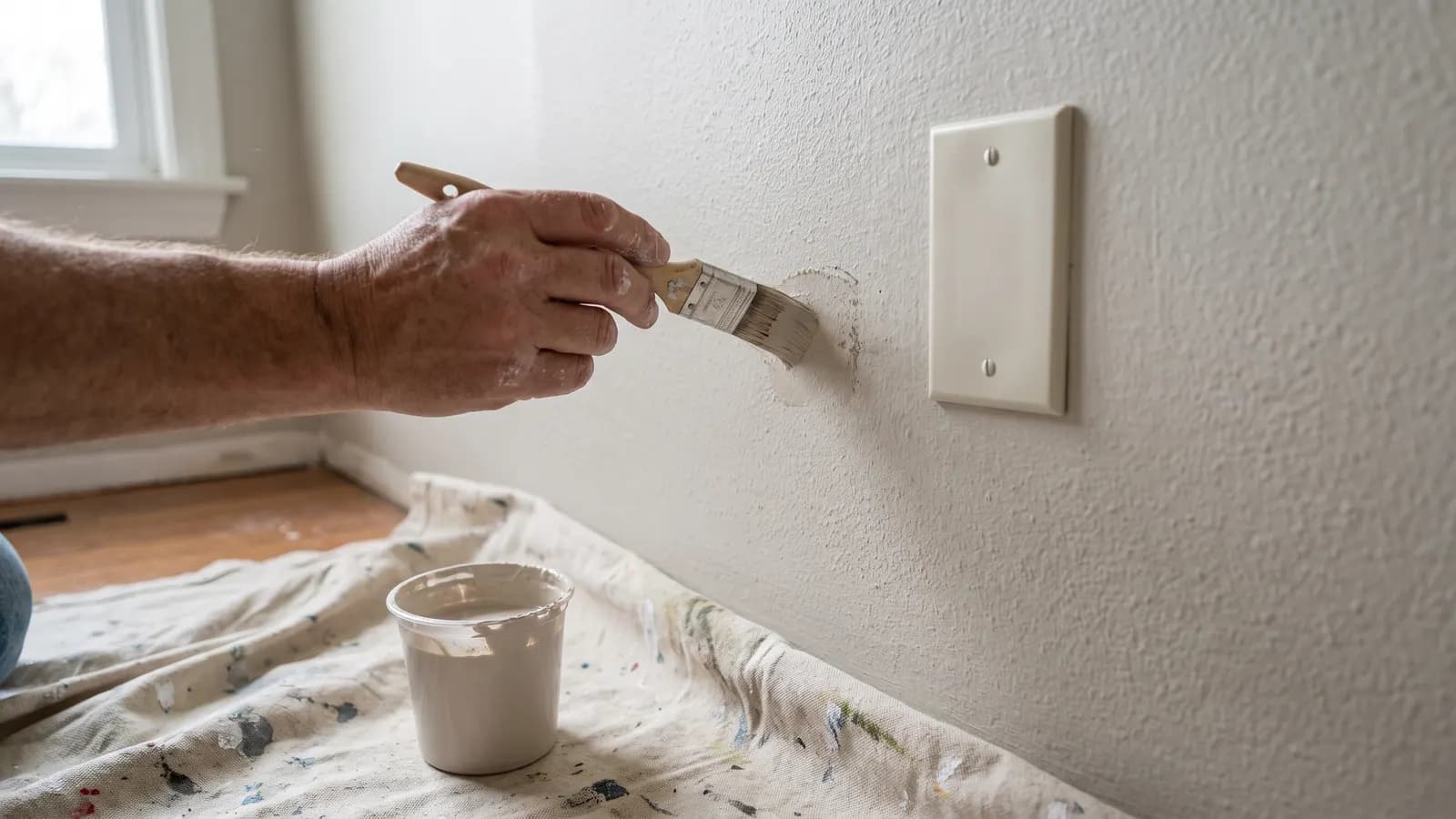
Same can, same sheen, patch primed, applied with the same nap roller, feathered wide, on a flat or matte wall in a room without raking light.
A touch-up that shows
A different brand or sheen, brushed onto bare compound in a small hard-edged square, on an eggshell or satin wall beside a window.
How do you find the right paint?
Find the right paint from the record first: the brand, product line, color name and code, sheen, and base, which are on the can label and on the builder's selection sheet or the painter's invoice. On a new build, the builder often leaves labeled cans in the garage or a color schedule with the closing documents, and those are worth keeping with the paint colors and finishes record before they are lost. Without a record, cut a chip from inside a closet and have it matched.
Once you have the label, photograph it. In Property Station the photo goes in Documents and the paint is listed on the Paint & Finishes page under My Home, so the next touch-up starts from the record rather than from a search of the garage.
What do you need?
The matching paint, a stir stick and a strainer, primer for bare patches, a small roller with the same nap as the original job (or a brush for trim), a roller tray, painter's tape, a damp cloth, a fine sanding sponge, and a drop cloth. A work lamp helps you see the patch the way a window will.
- The matching paint, stirred well and strained if it is old
- Primer for any bare compound or repaired spot
- A small roller with the same nap as the original coat, and an angled brush for trim
- A tray, painter's tape, and a drop cloth
- A fine sanding sponge and a damp cloth
- A work lamp to rake light across the wall
What are the steps?
Prepare the surface, prime the patch, then paint in thin coats feathered out past the repair with the same tool the wall was painted with, and judge the result in daylight. Ventilate the room while you work. Stop after two coats; if the patch still shows, the wall needs repainting, not a third coat.
- Sand the patch or scuff smooth with the fine sponge, wipe the dust with a damp cloth, and let it dry. Done when: your hand slides over the repair without catching an edge.
- Open a window or run a fan. The EPA's page on volatile organic compounds says to increase ventilation when using products that emit them, and paint is on its list.
- Prime any bare compound with a thin coat and let it dry. Done when: the primed area is uniform and no longer looks chalky.
- Stir the paint thoroughly, then pour a small amount into the tray and strain it if the can is old.
- Load the roller lightly and roll the patch, then feather outward with lighter pressure so the edge fades rather than stops. Use the brush only where the wall was brushed, such as at trim and corners. Done when: no wet edge is visible around the patch.
- Let the first coat dry fully, then apply a second thin coat the same way if the color looks light.
- Look at the wall from an angle in daylight and under a lamp raked across it. If the patch shows as a dull or shiny square, plan to repaint the whole wall corner to corner.
When should you stop and call a pro?
Stop and repaint the wall corner to corner when a touch-up still flashes after two coats on an eggshell, satin, or semi-gloss wall; a painter will do that in an afternoon and it is the only fix that works. Call a painter for ceilings, stairwells, and anything that needs a ladder on a landing, and for a whole room where the color has drifted enough that every patch shows.
Two situations are not paint jobs. If the surface under the paint is stained or discolored from water, or shows spots that smear when wiped, find and fix the moisture first; the EPA's mold cleanup page says not to paint or caulk moldy surfaces but to clean up the mold and dry the surface before painting. And if the home was built before 1978, the EPA says its paint is likely to contain lead, so do not sand or scrape more than a spot without reading its lead pamphlet; larger work belongs to a lead-safe certified firm.
What should you record?
Record the brand, product line, color name and code, sheen, and base for every room, plus where the paint came from and the date it was last applied, and store a photo of each can label with the receipt. Note which walls were touched up and when, because a wall that has been touched up twice is the next one to repaint. Keep the builder's color schedule and the painter's invoice with the closing paperwork; the sheen on that sheet is the fact most owners cannot recover later.
Common questions
Why does my touch-up look different even with the same paint?
Sheen and texture, not color. A brush lays paint differently from the roller that did the wall, and fresh paint over bare compound soaks in and dries duller than the paint around it. Prime the patch, use the same nap roller, and feather the edges; if the wall is eggshell or shinier and it still shows, repaint corner to corner.
Can I use the leftover can from the builder?
Yes, if it was stored indoors, never froze, and stirs to a smooth consistency with no lumps or sour smell. Paint left in a garage through a winter is often ruined. Strain it before use, and expect the wall's color to have drifted slightly from light and time.
How do I find the paint color if I have no record?
Look for a color name on a can lid, inside a closet, or on the back of a switch plate, where painters often write it. On a new build, ask the builder for the selection sheet. Failing that, a paint store can match a chip cut from a hidden spot, but a match in a different brand or sheen rarely disappears.
What should you do next?
Photograph every can label in the garage today and write the sheen next to each room in the record, before the labels fade. Most touch-ups follow a repair, so do the nail pop and crack fixes first and paint them all in one session, and put the door edges you sealed while fixing a sticking door on the same list. The same rules, same product, same tool, same sheen, apply outside; exterior touch-ups add sun and weather to the reasons paint drifts.