On this page
Fix a sticking door by finding exactly where it rubs, then correcting the smallest thing that causes the rub: tighten the hinge screws, replace one top-hinge screw with a long screw driven into the framing, adjust the strike plate, and plane the edge only as a last resort. For a window, clean and lubricate the track and free a painted-shut sash before assuming the frame has moved. Most sticking is loose hardware or seasonal humidity, not a failing house.
Why do doors and windows start to stick?
Doors and windows stick for three reasons: the house moved, the hardware loosened, or the wood swelled. In a new build, the framing dries and shrinks through the first year or two and the openings shift by a fraction, which is why new homes settle. In any house, hinge screws work loose and the door sags toward the latch side. And a wood door or sash grows in humid months, binds, then shrinks again in winter.
How do you find where it rubs?
Find the rub by closing the door slowly and watching the gap, which should look even on all three sides. Where it closes to nothing is the rub; where it opens up is the side the door has moved away from. A rub at the top of the latch side with a wide gap at the bottom hinge means the door is sagging on its hinges; a rub along the whole latch edge means a swollen door or a narrowed opening.
| Where it rubs | What it usually means | First fix |
|---|---|---|
| Top corner on the latch side, wide gap at the bottom hinge | Door sagging on loose hinges | Tighten the hinges; long screw in the top hinge |
| Whole latch edge, gaps even top to bottom | Swollen door or a narrowed opening | Seal the edges; wait for dry weather; plane last |
| Latch misses the strike, door rubs nowhere | Frame shifted slightly | Move or file the strike plate |
What do you need?
A screwdriver or drill, a few long wood screws, wood glue and toothpicks for stripped holes, a metal file, a block plane or coarse sandpaper, chalk, a utility knife, and a dry lubricant for window tracks. A helper is worth having for lifting a heavy door off its hinges.
- A drill or screwdriver with the bit that fits the hinge screws
- Long wood screws, same head style as the hinge screws, long enough to reach the framing behind the jamb
- Wood glue and toothpicks to pack stripped screw holes
- A metal file, a chisel, and a block plane or coarse sandpaper on a block
- Chalk to mark the rub
- A utility knife and a dry lubricant (silicone spray or a paraffin block) for window tracks
- Primer and paint, or clear finish, for raw wood
What are the steps?
Start with the hinges, because they fix the most doors for the least work: tighten every screw, pack any stripped holes, and drive one long screw through the top hinge into the framing to pull a sagging door back up. Plane only if the door still rubs in dry weather. For a window, free the sash and clean the track before anything else.
- Tighten every hinge screw, in the jamb and in the door. Done when: no screw turns further and the door no longer lifts when you raise it by the knob.
- Pack any screw hole that spins: pull the screw, push in glue-coated toothpicks, snap them flush, let the glue set, and drive the screw again.
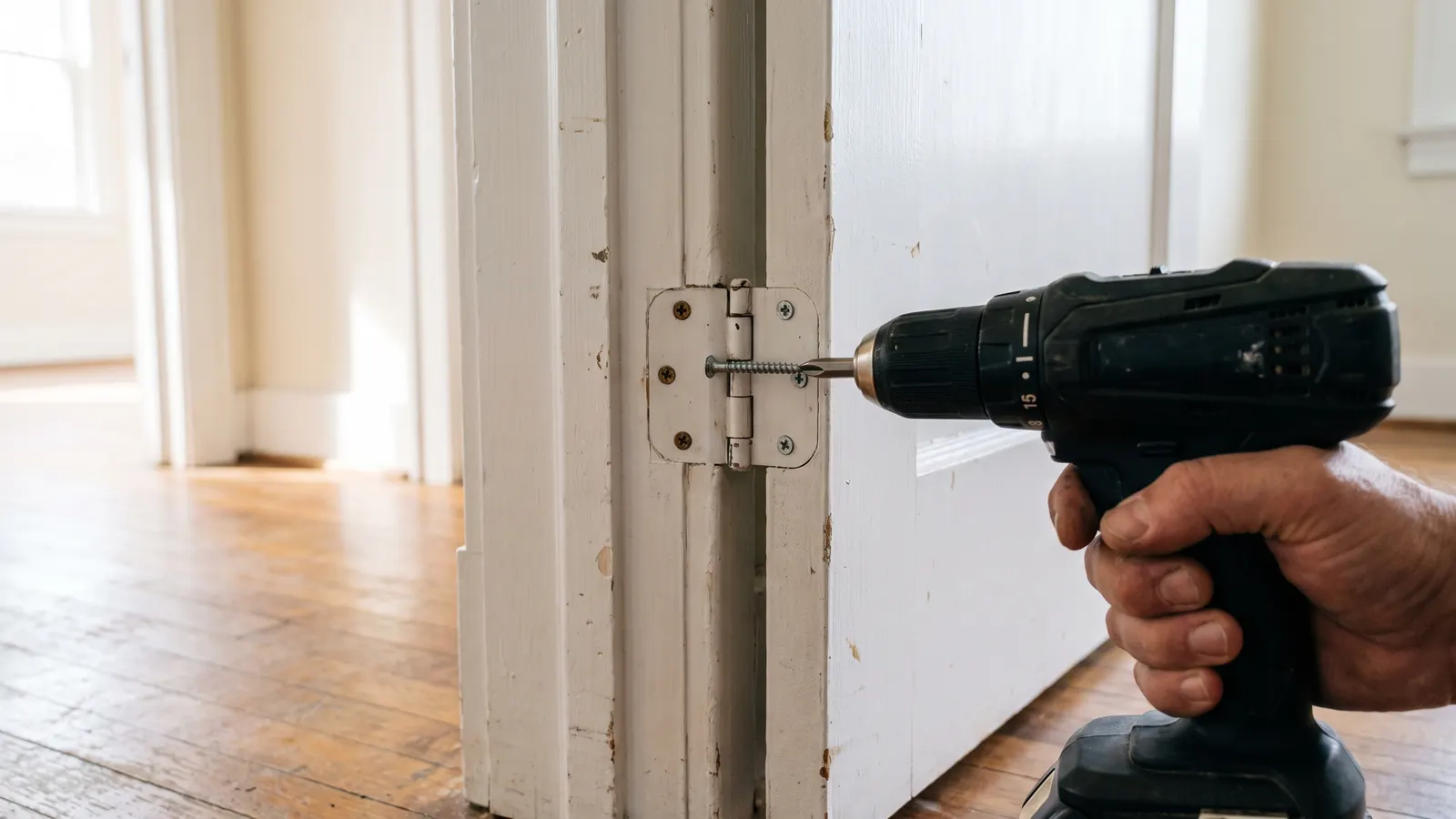
- Replace one jamb-side screw in the top hinge with a long screw driven into the framing. Tighten it while watching the latch-side gap close. Done when: the top gap is even and the door swings shut without touching.
- Check the latch. If it misses the strike plate by a hair, file the strike opening toward the latch. If it misses by more, move the plate, chisel the mortise to suit, and pack the old holes.
- If the door still rubs, mark the rub with chalk, lift the door off its hinges with a helper, and plane or sand the marked edge in light passes, checking the fit each time. Done when: the door closes with an even gap and a clean latch.
- Seal any raw wood with primer and paint or a clear finish, including the top and bottom edges. Unsealed edges are how a door drinks summer humidity.
- For a stuck window, run a utility knife along the paint line between the sash and the stops, inside and out, then tap the sash with a wood block and a rubber mallet to break the paint bond.
- Vacuum and wipe the track, apply the dry lubricant to the track and sash edges, and make sure the lock and any tilt latches are fully released. Done when: the sash slides with one hand and holds its position.
Once every door swings clean, walk the house each fall and tighten what has loosened. In Property Station that walk is a task added once on the Maintenance page, with a frequency in months so the reminder returns on its own.
When should you stop and call a pro?
Stop and call a carpenter or the door installer when the frame itself has moved: a jamb visibly out of square, a gap that keeps growing month after month, or diagonal drywall cracks spreading from the top corners of the opening. That movement is bigger than seasonal settling, and the fix is in the framing, not the hinges. Call a window company for a sash that binds in a racked frame, a broken balance, or a fogged double-pane unit.
Leave glazed exterior doors, patio sliders with worn rollers, and the fire-rated door between the garage and the house to a pro; the first two are dangerous to lift and the third has a rating that trimming voids. An upper-floor window that means leaning out is a two-person job from a ladder set outside, never a reach from inside.
On a new build, sticking doors and windows during the workmanship period are often a builder item. Read your warranty document for the definition and the deadline, then send the request in writing with a photo of the gap before you touch anything.
What should you record?
Record which door or window it was, what you found, what you did, and the date, with photos of the gap before and after. On a new build, log the builder's visits in the same place; a door adjusted twice in the first year is worth showing at the warranty inspection before the first year ends. Add the fall hinge-and-latch walk to your recurring schedule next to the caulk check.
Common questions
Why do doors stick in summer and not in winter?
Humid air swells wood doors and jambs; dry winter air shrinks them. A door that sticks only in humid months is swollen, not misaligned, so seal its top and bottom edges first and plane only if it still rubs in dry weather.
Is a sticking door in a new house a warranty item?
Often, during the workmanship period, because doors that rub or no longer latch are a settling adjustment most builders expect to make once. Read your warranty document for how it defines the item and the deadline, and report it in writing with a photo before you touch the hinges.
Should I plane the door or move the frame?
Move the hardware first. A long screw through the top hinge into the framing pulls the door back into square and fixes most rubs at the latch side. Planing is permanent and moves the latch away from the strike, so it is the last resort for a door that still rubs in dry weather with tight hinges.
What should you do next?
Do the hinge walk this weekend, then check exterior doors with the weatherstripping guide in hand, because a sagged door has also opened a gap in its seal. The same drift shows up as nail pops and hairline cracks around the opening and as cabinet doors that no longer line up; all three are one settling season's work.