On this page
Make a home fire escape plan by drawing every level of the house with all doors and windows, marking two ways out of each room, choosing one outside meeting place in front of the home, and practicing the plan twice a year with everyone who lives there. The NFPA's escape planning page says fire can leave as little as one or two minutes to escape once the smoke alarm sounds; the plan is what you do with those minutes instead of deciding.
New-construction owners have the builder's floor plan already drawn. Resale owners sketch one on graph paper in ten minutes. Either way, the drawing is the easy part.
Why does a written plan matter?
A written plan matters because smoke removes the two things you would normally rely on, sight and time. The U.S. Fire Administration's home fire escape plans page says residents could have less than 2 minutes to escape once the alarm sounds, and Ready.gov's home fires page says a residence can be engulfed in flames in five minutes. A household that has practiced goes to the meeting place; one that has not looks for each other in the hallway.
Drawing the plan also finds what is wrong with the house: a window painted shut, a sash blocked by a dresser, a security bar with no release, a bedroom door that does not close. Those get found on drawing day instead of fire day.
What do you need?
You need a sheet of paper or the builder's floor plan, a pen, a walk through every room with the people who sleep in it, and the smoke alarms tested first, because the drill starts with the alarm. If any bedroom is above the ground floor, add an escape ladder rated for the window height and store it in that room. The finished drawing goes on the refrigerator where a guest or a sitter can see it, and a copy goes in the home record.
- Graph paper or a printed floor plan, one sheet per level
- A pen, and a highlighter for the primary route
- Escape ladders for upper-floor bedrooms, rated for the drop, stored at the window
- Smoke alarms tested this month so the drill starts with a real sound
- Everyone who lives in the house, including children old enough to walk
What are the steps?
Draw each level, mark every door and window, mark two ways out of every room, walk the routes to be sure they open, choose the meeting place, teach the three habits, and run the drill. The NFPA's rule for the drawing is two ways out of each room including windows and doors; the USFA's is that the doors and windows are not blocked. Then practice twice a year, once in daylight and once in the dark.
- Draw the floor plan for every level, with every door and window. The builder's plan or a rough sketch both work. Done when: a stranger could find the front door on it.
- Mark two ways out of every room: the door, and a window or a second door. Walk each one. A window that is painted shut, blocked by furniture, or barred without a quick release is not a way out until it is fixed.
- Mark the smoke alarms and add any that are missing; the NFPA wants one in every sleeping room, outside each sleeping area, and on every level.
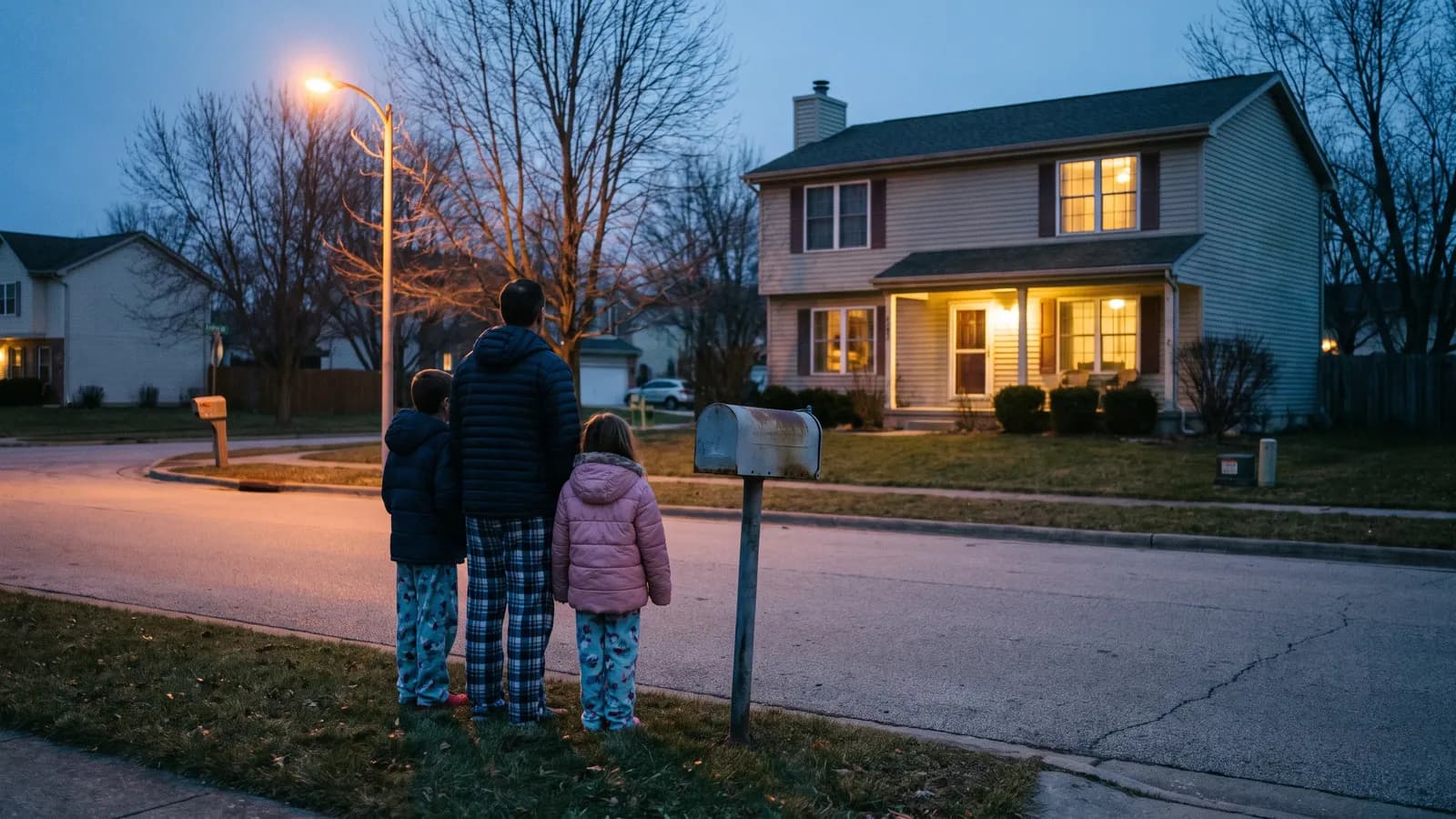
- Choose the meeting place: a neighbor's house, a light post, a mailbox, or a stop sign, a safe distance in front of the home, per the NFPA. Done when: every person can name it without looking.
- Assign anyone who needs help, a small child, an older parent, a guest, to a specific adult, with a backup.
- Check that the street number is visible from the road at night. The NFPA lists it because the fire department cannot help a house it cannot find.
- Teach the three habits: feel the door with the back of a hand before opening it, stay low under smoke, and close doors behind you. The NFPA says closing doors on the way out slows the spread of fire.
- Run the drill. The USFA says to start it by pushing the smoke alarm test button. Everyone goes to the meeting place by the primary route; then run it again by the second way out. Done when: the whole household is at the meeting place and nobody went back for anything.
- Repeat twice a year, one drill after dark, and update the plan when someone moves in, a room changes use, or the furniture moves.
The drawing is finished when it shows
- Every door and window on every level
- Two marked ways out of each bedroom
- The location of every smoke alarm
- The meeting place, named and drawn
- Who helps whom
- The date of the last drill
When should you stop and call a pro?
Call the fire department's non-emergency line for a home safety visit if you are unsure about alarm placement or have a room with only one way out; many departments offer them. Call an electrician for hardwired alarms that need adding or interconnecting, and a window contractor for a sash that will not open. A basement bedroom with no window a person can climb through needs a contractor and a permit; check local code for what an egress window must be. If a fire has happened, Ready.gov says to check with the fire department before re-entering.
What should you record?
Record the plan itself: a photo or scan of the drawing, the meeting place, each escape ladder's location and rating, the alarm map with each unit's manufacture date, and the date of every drill. File the drawing on the Documents page under Other with the alarm map, where the sitter and the next owner can find it, and set the twice-yearly drill as a recurring task on the clock-change weekends, the same days the CDC uses for CO detector batteries. A plan stored in the home record is one a guest can find; the one in your head is not.
Common questions
How often should we practice the plan?
Twice a year, as realistically as possible, per the NFPA; Ready.gov gives the same interval. Run one drill in daylight and one after dark, and start each by pressing the smoke alarm test button, which is the USFA's way to make the sound real.
What if a bedroom window is too high to climb out of?
Buy a collapsible escape ladder rated for that height, store it at the window, and practice unfolding it from a ground-floor window. Teach children to open the window, stay at it, and signal; if the second way out is not usable, that is the room to fix first.
Should we try to put the fire out first?
Only under the USFA's conditions: everyone is alerted, someone has called the fire department, the fire is small and contained to one object, you are safe from the smoke, and you have a clear way out. Otherwise leave, close the door, and call 911 from outside.
What should you do next?
Draw it tonight and run the first drill this weekend. Then look at what starts fires in the house: the space heater in the bedroom, the e-bike charging by the front door (lithium batteries should never block the only exit), and the extinguisher in the kitchen that only counts if it has pressure and you know PASS. In earthquake country, anchor the tall furniture too: a bookcase across the hallway is a blocked exit.