On this page
Keeping drains clear is a set of small habits, not a product. Catch hair and food before it enters the pipe, keep grease out of the kitchen sink entirely, run hot water after each use, and once a season clear the traps the mechanical way. Do that and the plunger and the snake stay in the closet for years.
Clogs form where flow slows: in the P-trap under each fixture, at the strainer, and at the first bend in the drain line. Hair binds with soap scum in bathroom drains; grease cools and coats the walls of kitchen drains and then catches everything else. A clog that reaches the main line is a plumber's job, so the goal is to stop things upstream, at the fixture, where you can reach.
Which habits prevent most clogs?
A few habits at each fixture prevent nearly every clog: no grease or coffee grounds in the kitchen sink, cold water running while the disposal works, a hair catcher on every shower and tub drain, a weekly rinse of bathroom stoppers, nothing but waste and paper in the toilet, and thirty seconds of water down each rarely used drain every month so its trap stays full.
| Fixture | Habit | Why |
|---|---|---|
| Kitchen sink | No grease, oil, or coffee grounds down the drain; wipe pans with a paper towel first | Grease coats the pipe and catches everything after it |
| Kitchen sink | Run cold water while the disposal runs and for fifteen seconds after | Keeps ground food moving past the trap |
| Bathroom sink | Rinse the stopper and overflow weekly | Toothpaste and soap scum build a film that catches hair |
| Shower and tub | Use a hair catcher over the drain; empty it after each shower | Hair is the clog in nearly every bathroom |
| Toilet | Only waste and toilet paper; nothing labeled "flushable" | Wipes do not break down and bind in the line |
| Rarely used drains | Run water for thirty seconds monthly | Keeps the trap full so sewer gas stays down |
In most houses we see, the bathroom drains clog and the kitchen drain slows. The difference is hair versus grease. The fix for the first is a strainer that costs a few dollars; the fix for the second is a habit at the stove.
What do you need?
Strainers for every drain, two plungers (a cup plunger for sinks and tubs, a flange plunger for toilets), a hand-crank drain snake or a plastic barbed strip for hair, and a bucket, gloves, and channel-lock pliers for opening a trap. No chemicals. Everything on the list costs less than one plumber's visit and lasts for years.
- Mesh strainers or hair catchers for each sink, tub, and shower drain
- A cup plunger (flat bottom) for sinks and tubs, and a flange plunger (with the fold-out lip) for toilets
- A hand-crank drain snake or a plastic barbed drain strip for hair
- A bucket, gloves, and an old towel for trap work
- Channel-lock pliers for a stubborn trap nut
What are the steps for a quarterly drain cleaning?
Once a season, pull and clean every stopper, run a barbed strip or a snake down each bathroom drain until it comes up clean, flush each drain with hot tap water, clean the kitchen strainer and disposal, check the traps for slow leaks with a dry paper towel, and run water down every drain that is rarely used. It is about half an hour for a typical house.
- Pull the stoppers. Bathroom sink stoppers lift out or unscrew; some are held by a pivot rod under the sink that you release by loosening the nut on the back of the drain. Tub stoppers unscrew or lift. Clean off the hair and film. Done when: the stopper is clean and back in place.
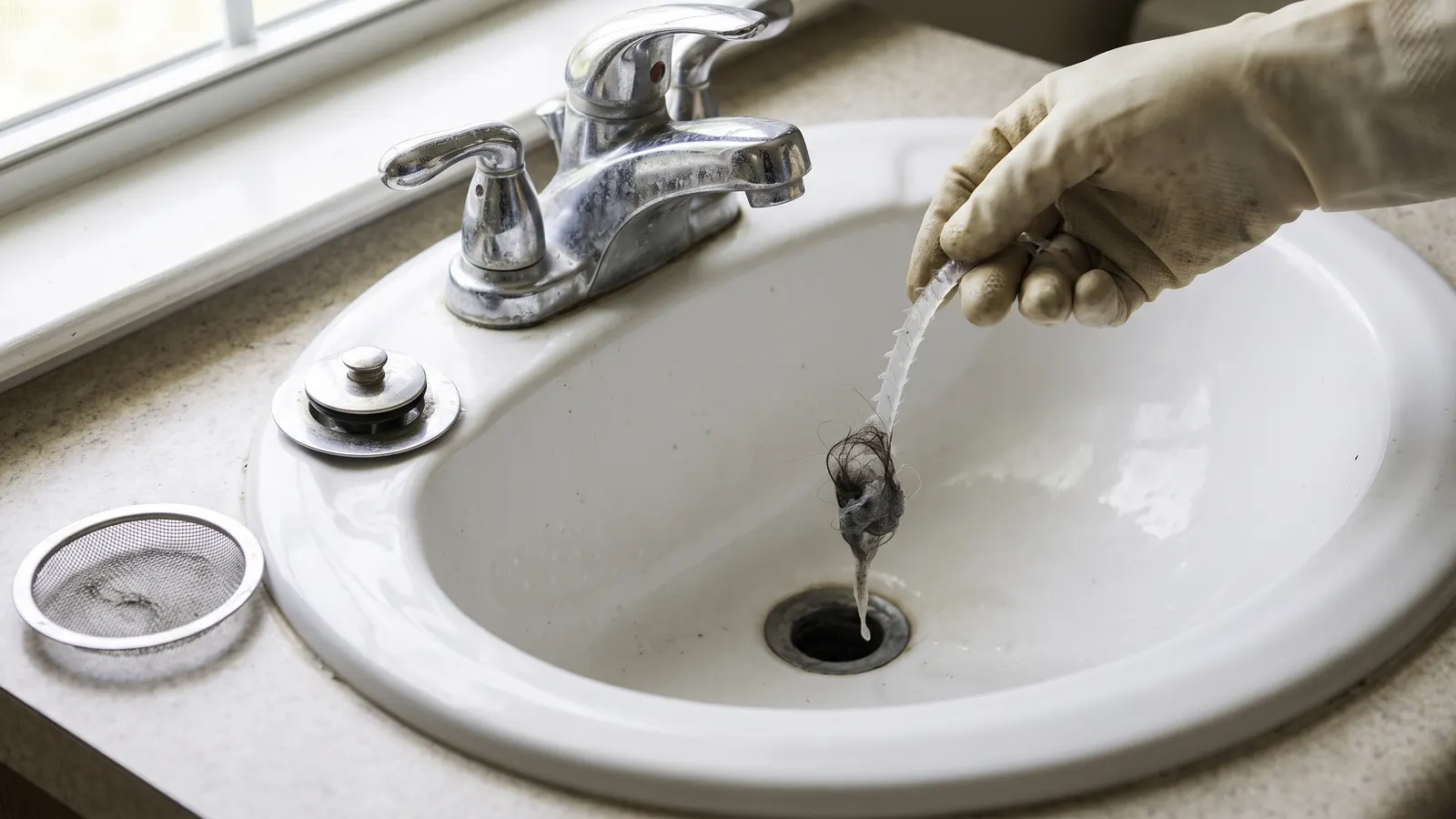
- Run a barbed drain strip or a snake down each bathroom drain. Push it in, twist, and pull. Expect hair. Repeat until it comes up clean.
- Flush each drain with hot tap water for a minute. Not boiling water: it can soften PVC joints and crack a porcelain sink.
- Clean the kitchen sink strainer and the disposal. Run ice cubes through the disposal with cold water to knock buildup off the grinding chamber, then a cut lemon for the smell if you like.
- Check the traps for slow leaks. Put a dry paper towel under each P-trap, run water for a minute, and look. A damp towel means a joint that needs tightening or a washer that needs replacing.
- Run every rarely used drain. Done when: each one has had thirty seconds of water.
What are the steps for clearing a slow or stopped drain?
Work from the least invasive method up: plunge with the overflow blocked, then snake, then open the P-trap over a bucket and clean it out. Most household clogs give way at the first or second step. If the drain is still slow after the trap is clean, the blockage is further down the line and belongs to a plumber.
- Try the plunger first, with enough water in the basin to cover the cup. Block the overflow opening on a sink or tub with a wet rag so the pressure goes down the drain. Ten firm strokes, then check.
- If plunging does not clear it, snake it. Feed the cable in until it meets resistance, tighten the set screw, crank while pushing, then back it out. Run water to test.
- For a bathroom sink that is still slow, open the P-trap. Bucket under the trap, unscrew the two slip nuts by hand or with pliers, drop the trap, and clean it out. Reassemble hand-tight and test for drips.
- Done when: the basin drains in a steady spiral with no pooling.
When should you stop and call a pro?
Call a plumber if more than one fixture is slow at the same time (a main line problem, not a trap), if water backs up into a tub or shower when you flush a toilet or run the washing machine, if the snake meets a hard stop that does not feel like hair, or if you find standing water in a floor drain.
Do not put a chemical cleaner down a drain and then call a plumber; tell them if you already did, so they can protect themselves when they open the line. Never use a chemical cleaner in a toilet or in a drain with a disposal; the disposal has its own care routine.
In a new-construction home, a slow drain in the first year is worth reporting to the builder before you open anything: construction debris in a line is a common cause and often a warranty item. Keep notes and photos before anyone touches it.
What should you record?
Which drain, what came out, and whether it was hair, grease, or something else. A drain that needs snaking every month has a problem the snake is not fixing (a bad slope, a partial obstruction, a venting issue), and the pattern in the log is what tells you to call someone. Put the quarterly cleaning on a repeat; the maintenance schedule keeps the reminder coming.
Common questions
Are chemical drain cleaners bad for pipes?
Caustic and acid cleaners can damage older metal pipes and the rubber and plastic parts in a trap, and they make the drain dangerous for the plumber who opens it afterward. They also rarely clear a real hair clog. A snake or a trap cleanout does the job without the risk.
Why does my new house's drain smell?
Usually a dry trap. A drain that is rarely used (a guest bath, a floor drain, a basement utility sink) lets the water in its P-trap evaporate, and sewer gas comes up the open pipe. Run water for thirty seconds and the smell goes away. Make it a monthly habit for fixtures nobody uses.
What should you do next?
Put strainers on every drain today; that one purchase removes most future clogs. Then handle the two plumbing tasks with a season attached: flushing the water heater in the fall and protecting pipes before the first freeze.