On this page
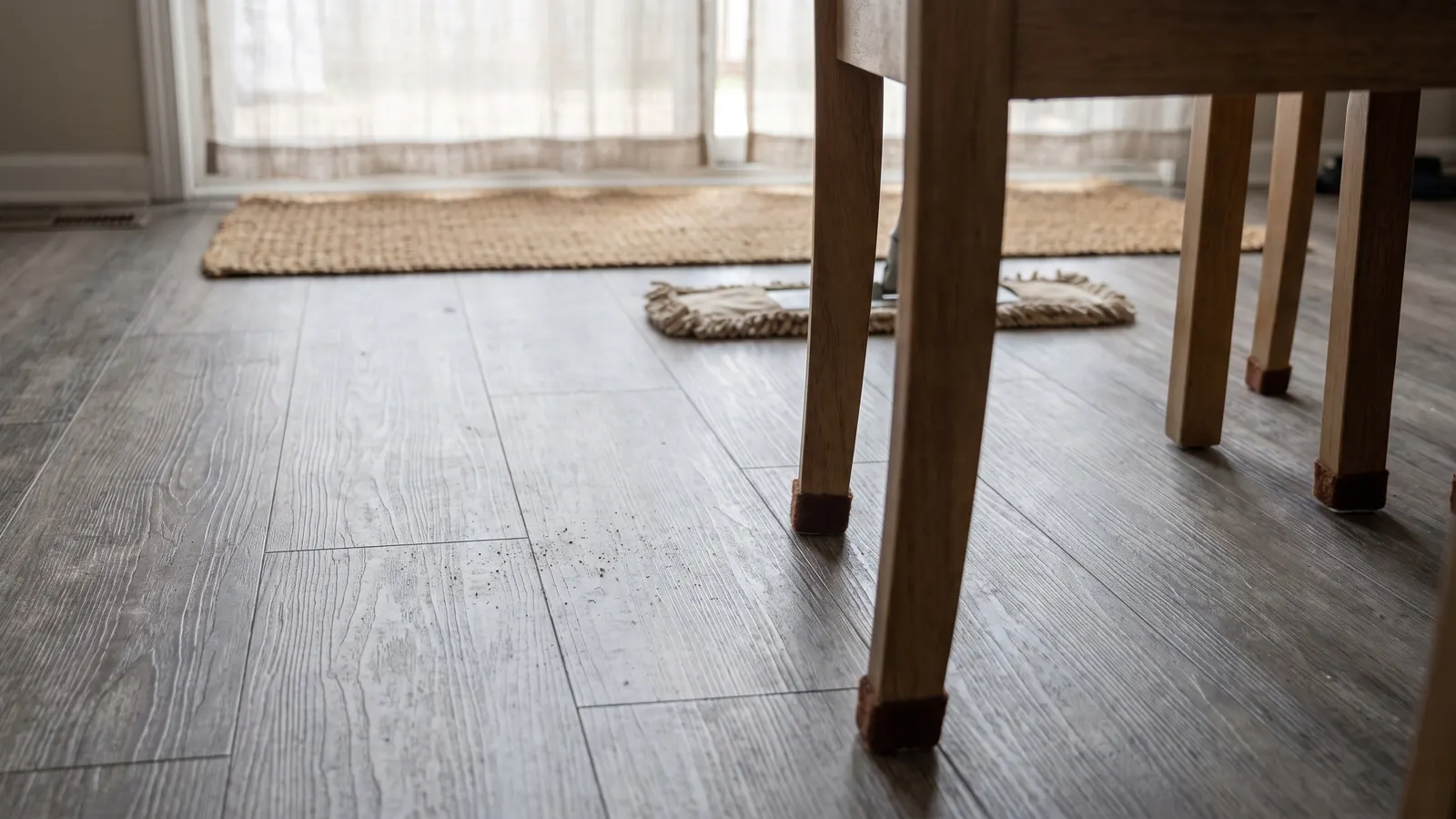
Care for vinyl plank floors by keeping grit off them, keeping water out of the seams, and keeping heat and sunlight off the surface: sweep or vacuum the traffic paths several times a week, damp mop with a pH-neutral cleaner made for vinyl, put felt pads under everything that moves, and never steam, wax, or flood the floor. The wear layer is the whole finish, and once it is scratched through or softened, the plank is replaced, not repaired.
What damages a vinyl plank floor?
Vinyl plank is damaged by four things: grit ground into the wear layer, water that sits in the seams or wicks under the planks, heat and direct sun that soften and expand the vinyl, and dragged furniture that gouges or shifts a floating floor. Harsh cleaners, wax, and steam add a fifth, because they dull or soften the wear layer and leave a film the manufacturer will not warrant. Everything in this guide keeps one of those five off the floor.
How often should you clean it?
Clean vinyl plank on a light, frequent schedule rather than a heavy occasional one: sweep or vacuum the traffic paths every few days, damp mop the whole floor about once a week or whenever it looks dull, wipe spills at once, and walk the floor once a season looking at seams, sun-exposed areas, and the pads under furniture. The floor's paperwork may name a cleaner and a schedule, and that outranks this table.
| Task | How often | Why |
|---|---|---|
| Sweep, dust mop, or vacuum on the hard-floor setting | Every few days in traffic paths | Grit is the main thing that scratches the wear layer |
| Damp mop with a pH-neutral vinyl cleaner | Weekly, or when the floor looks dull | Removes the film that dulls the surface |
| Wipe spills | At once | Liquid finds the seams and the edge of the floor |
| Check felt pads, rugs, seams, and sun exposure | Once a season | Catches the slow damage before it shows |
What do you need?
A broom or a vacuum with a hard-floor setting and no spinning brush, a microfiber flat mop with a washable pad, a spray bottle or bucket, a pH-neutral cleaner made for vinyl (or the one your floor's manufacturer names), felt pads in several sizes, and rugs with a backing labeled safe for vinyl. Nothing abrasive and no oil soap, wax, or "shine" product.
- A broom, dust mop, or vacuum with the beater bar off
- A microfiber flat mop with a washable pad
- A pH-neutral cleaner made for vinyl floors, or the manufacturer's named cleaner
- A spray bottle
- Felt pads in several sizes, and hard-plastic casters or a mat under rolling chairs
- Entry mats and area rugs with a non-staining backing labeled safe for vinyl
What are the steps?
The weekly clean is the whole routine: clear the grit, mop damp not wet, dry the seams, and reset the protection. The seasonal check adds a walk around the room looking at the edges, the seams, and the sunny spots. Both fit inside twenty minutes, and neither needs a bucket of water on the floor.
- Sweep or vacuum the entire floor, including along the baseboards and under furniture where grit collects. Done when: a hand wiped across the floor picks up nothing.
- Mist a section of floor with the cleaner, or mist the mop pad. The floor should look barely damp; standing water is the enemy of the seams.
- Mop in the direction of the planks in overlapping passes, rinsing or swapping the pad when it looks dirty.
- Wipe any streaks or puddles with a dry cloth, especially at the seams and the edges of the room. Done when: the floor is dry within a minute of mopping.
- Treat scuffs and stains as you find them: rubber heel marks with a clean tennis ball or a soft cloth, most food stains with the cleaner, stubborn ones with a small amount of isopropyl alcohol on a cloth, tested first in a closet.
- Once a season, lift the rugs and check for discoloration underneath, check that every chair and table leg still has its pad, and look for gaps or lifted edges at seams and walls. Done when: every pad is present and no seam has opened.
- Once a season, close blinds or shift a rug on the floor's sunniest patch, and note whether the planks there feel warmer or look faded compared with a shaded area.
Vinyl plank is the floor most likely to be in every room of a new build, so the seasonal walk covers most of the house. In Property Station it is one recurring task on the Maintenance page, set to repeat every few months so the reminder comes back without you re-entering it.
When should you stop and call a pro?
Stop and call the flooring installer or a flooring company when planks are lifting, cupping, or separating across more than a small area, when the floor feels soft or spongy underfoot, or when a musty smell comes from the floor. Those point to moisture under the planks, and the source has to be found before any plank is relaid. Also call when a glue-down floor releases in a patch, when a plank is gouged through the wear layer in a visible spot, or when a slab under the floor shows dampness, which needs a moisture test, not a mop.
On a new build, gaps at the seams, ridges at plank ends, or a floor that clicks and shifts underfoot in the first year are often installation items covered by the workmanship warranty; report them to the builder in writing with photos before anyone lifts a plank.
What should you record?
Record the floor's manufacturer, product line, and color name, whether it is floating, glue-down, or loose-lay, the wear layer thickness from the spec sheet, the cleaner the manufacturer names, and the warranty terms and how long they run. Keep a few spare planks from the install and note where they are. Put the seasonal check on a repeating reminder with the other floors, and photograph any damage when it happens so the warranty conversation starts from a date.
Common questions
Can I use a steam mop on vinyl plank?
No. Most manufacturers void the warranty for it. Steam and heat soften the wear layer and the adhesive on glue-down planks, and the moisture is forced into the seams and under the floor. A damp microfiber mop does the same job without the risk.
Why are my planks lifting or separating at the seams?
Usually one of four things: moisture from below, sun heat expanding the planks, a floating floor pinned by heavy furniture or cabinets so it cannot move, or no expansion gap at the walls. Find which before anyone re-lays planks. On a new build, gaps that open in the first year are worth reporting to the builder.
Does vinyl plank need to be sealed or polished?
No. The wear layer is the finish. Polishes and restorer products build up a film that yellows, holds dirt, and is hard to strip. If the floor looks dull, it is usually cleaner residue; mop with plain water first, and if that does not bring it back, the wear layer is worn and the plank is due for replacement.
What should you do next?
Check the pads under every chair this week and put the seasonal walk on the calendar. The same two rules, keep grit off and keep water out, are the whole of hardwood floor care, and where vinyl meets a bathroom, the tile and grout guide covers the seam where water actually collects. If any room is carpeted, carpet care is the other half of the floor schedule, and moisture that reaches vinyl from below is usually the same humidity problem covered in controlling indoor humidity.