On this page
Hardwood floors last for decades when the finish is protected and for years when it is not. The whole job is keeping two things off the surface: grit, which scratches the finish every time someone walks on it, and water, which gets into the joints and under the finish and swells the boards. Dry dusting often does more than any product.
This guide covers site-finished and prefinished solid and engineered hardwood with a polyurethane or aluminum-oxide finish, which is what nearly every house built in the last few decades has. Oiled and waxed floors have their own care routine; the manufacturer's instructions for those are the source.
What are the daily and weekly habits?
Protect a hardwood floor with mats at every exterior door, felt pads under every piece of furniture, shoes off or at least no heels, a dust mop or bare-floor vacuum two or three times a week in the traffic paths, spills wiped at once, pets' nails trimmed, and indoor humidity held in a moderate range. Grit and water are the only two things that wear a finish, and every habit here keeps one of them off it.
| Habit | Why |
|---|---|
| Mats at every exterior door, inside and out | Most grit comes in on shoes; the mat catches it before the floor does |
| Felt pads under every chair, table, and furniture leg; replace them when they pack down | A bare chair leg with a grain of sand under it is a scratch machine |
| Shoes off, or at least no heels and no cleats | Narrow heels dent wood; grit in treads scratches it |
| Dust mop or vacuum with a bare-floor setting two or three times a week in traffic paths | Removes the grit before it is walked into the finish |
| Wipe spills right away, especially water, pet accidents, and anything acidic | Standing liquid finds the joints |
| Trim pets' nails | Same reason as the felt pads |
| Keep indoor humidity in a moderate range year-round | Wood shrinks and gaps in dry winter air and swells and cups in humid summers |
Do not use a vacuum with a spinning beater bar on hardwood; it scuffs the finish. Use the bare-floor setting or a canister with a floor brush.
What do you need?
A microfiber dust mop or a vacuum with a bare-floor setting, a microfiber flat mop with a washable pad, a spray bottle, felt pads in a few sizes, and a cleaner made for polyurethane-finished hardwood or the one your floor's manufacturer names. Prefinished floors often specify a cleaner and void the warranty for others, so check the paperwork before buying.
- A microfiber dust mop or a vacuum with a bare-floor setting
- A microfiber flat mop with a washable pad
- A cleaner made for polyurethane-finished hardwood, or the one the floor manufacturer names. Check the floor's paperwork; prefinished floors often specify a cleaner and void the warranty for others.
- A spray bottle
- Felt pads in a few sizes
What are the steps of the monthly clean?
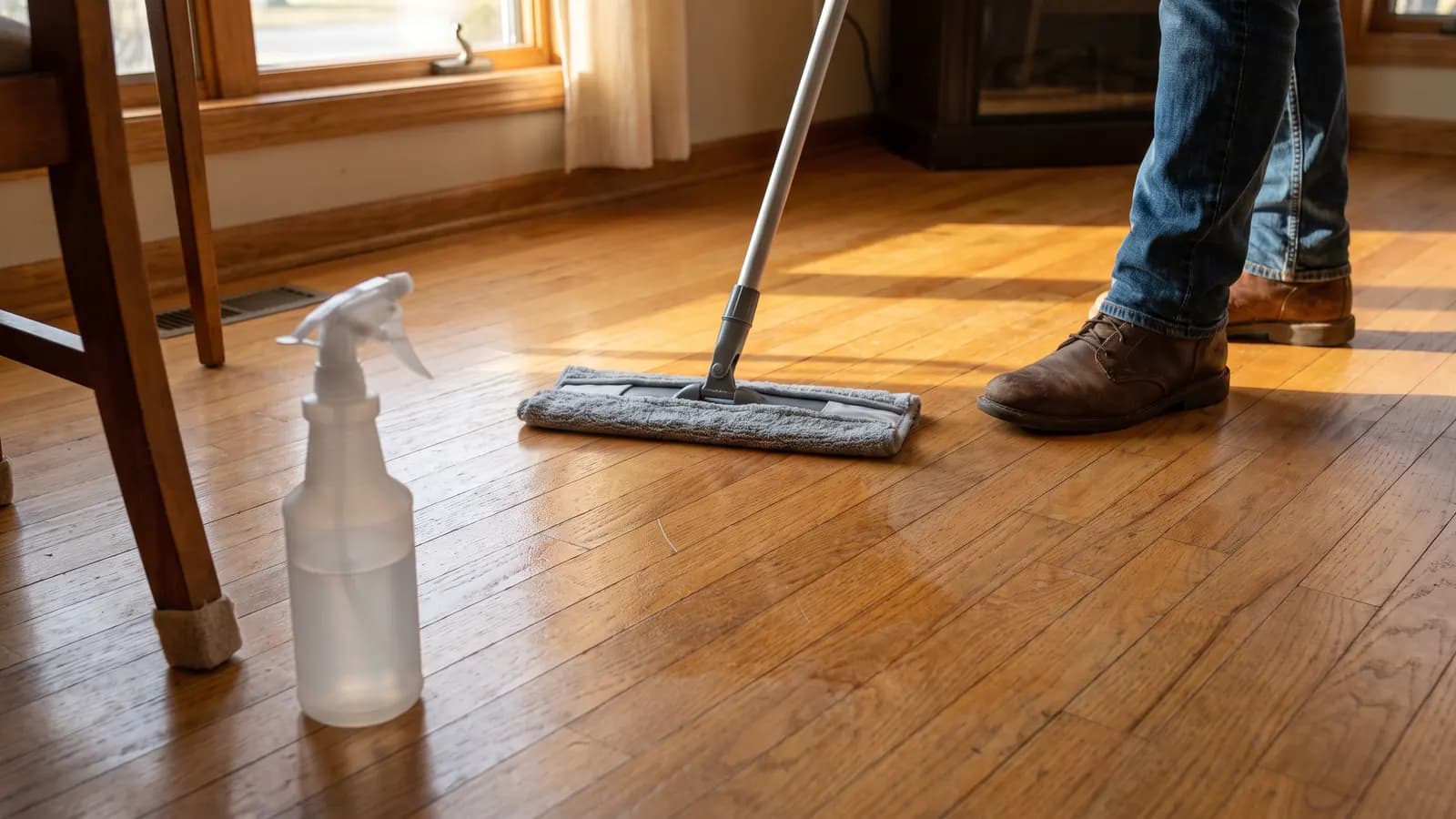
Once a month, dust mop or vacuum the whole floor including under furniture and along the baseboards, mist a section (or the mop pad) so the floor is barely damp, mop with the grain in overlapping passes, wipe any streaks with a dry cloth so the floor dries within a minute, and check the felt pads on anything you moved. No bucket, no steam, no vinegar, no polish.
- Dust mop or vacuum the whole floor, including under furniture and along baseboards where grit collects.
- Mist a section of floor lightly with the cleaner, or mist the mop pad; the floor should look barely damp, never wet. Done when: no visible water is standing on the surface.
- Mop with the grain in overlapping passes.
- Wipe up any streaks with a dry microfiber cloth. Done when: the floor is dry within a minute of mopping.
- Check the felt pads on the furniture you moved, and replace any that are worn or missing.
Never use the following on a polyurethane hardwood floor: a wet mop and bucket, a steam mop, vinegar or ammonia solutions (they dull the finish over time), oil soaps or wax on a modern finish, or any "shine" or "polish" product. If a product promises to restore shine, it is coating the floor with something the next refinisher will have to strip.
How do you deal with damage?
Surface scratches in the finish take a touch-up marker or a repair kit; small dents in solid wood can sometimes be raised with a damp cloth and a warm iron; white water marks are in the finish and usually come out, dark ones are in the wood and need sanding; and dull traffic paths with intact finish call for a screen and recoat before the finish wears through. The recoat is the step that adds years.
- Surface scratches in the finish, not the wood: often reduced with a touch-up marker or a finish repair kit matched to the floor; live with minor ones until the next recoat.
- Dents from a dropped object: in solid wood, a damp cloth and a warm iron can raise a small dent by swelling the crushed fibers; test on a scrap first.
- Water stains that are white or cloudy are in the finish and often come out with the maker's cleaner or a finish repair; stains that are dark are in the wood and need sanding.
- Dull traffic paths with intact finish: a screen and recoat (light abrasion and a fresh coat of finish) restores the surface without sanding to bare wood. This is the maintenance step that adds years; do it before the finish wears through.
When should you stop and call a pro?
A screen and recoat and a full sand-and-refinish are both professional jobs in most houses; the equipment is unforgiving and the dust is everywhere. Call a flooring company if water has soaked in and the boards are cupping or buckling (a moisture problem to find first), if the finish has worn through to bare wood over a wide area, if boards are loose or squeaking badly, or if a prefinished floor is under warranty and the manufacturer requires their process.
On a new-construction home, gaps that open in the first winter and close in the summer are normal seasonal movement; gaps that stay open, cupping, or squeaks are worth reporting to the builder during the warranty period.
What should you record?
The floor's species, finish type, and the manufacturer and product name if it is prefinished, plus the cleaner that is approved for it. The date of any recoat or refinish. Photos of any damage when it happens and where. Put the monthly clean and a yearly "check the finish with the water-drop test" on a repeating reminder.
Common questions
Can I use a steam mop on hardwood?
No. Steam forces moisture into the joints and under the finish, and it can cloud a polyurethane finish and swell the boards. Manufacturers of prefinished floors generally void the warranty for it. Use a barely damp microfiber mop.
Do I need to polish or wax hardwood floors?
Not with a modern polyurethane or aluminum-oxide finish, and wax will make later refinishing harder. Polish products fill scratches temporarily and build up. A floor that has gone dull needs a screen and recoat, not a polish.
How do I know if the floor needs refinishing?
Drop a few drops of water on a worn area. If they bead, the finish is intact and the floor needs cleaning. If they soak in and darken the wood, the finish is gone in that spot and the floor is due for a recoat before the wood itself stains.
What should you do next?
The same rule, protect the finish and keep water out, applies across the house: stone and quartz counters want the same gentle cleaners and the same fast response to spills, and tile and grout is where the water that does get in ends up.