On this page
Before you sign a solar contract, ask five things: whether your roof can carry the system for its whole life, whether the numbers work on your own bills rather than a salesperson's model, how your utility will treat the power you send back, whether you are buying or leasing and what that does to the incentives, and what happens to the contract when you sell. The FTC's guide to solar power for your home says a residential solar system is designed to stay on a home for at least 20 years, so every answer has to hold that long.
Is your roof ready for solar?
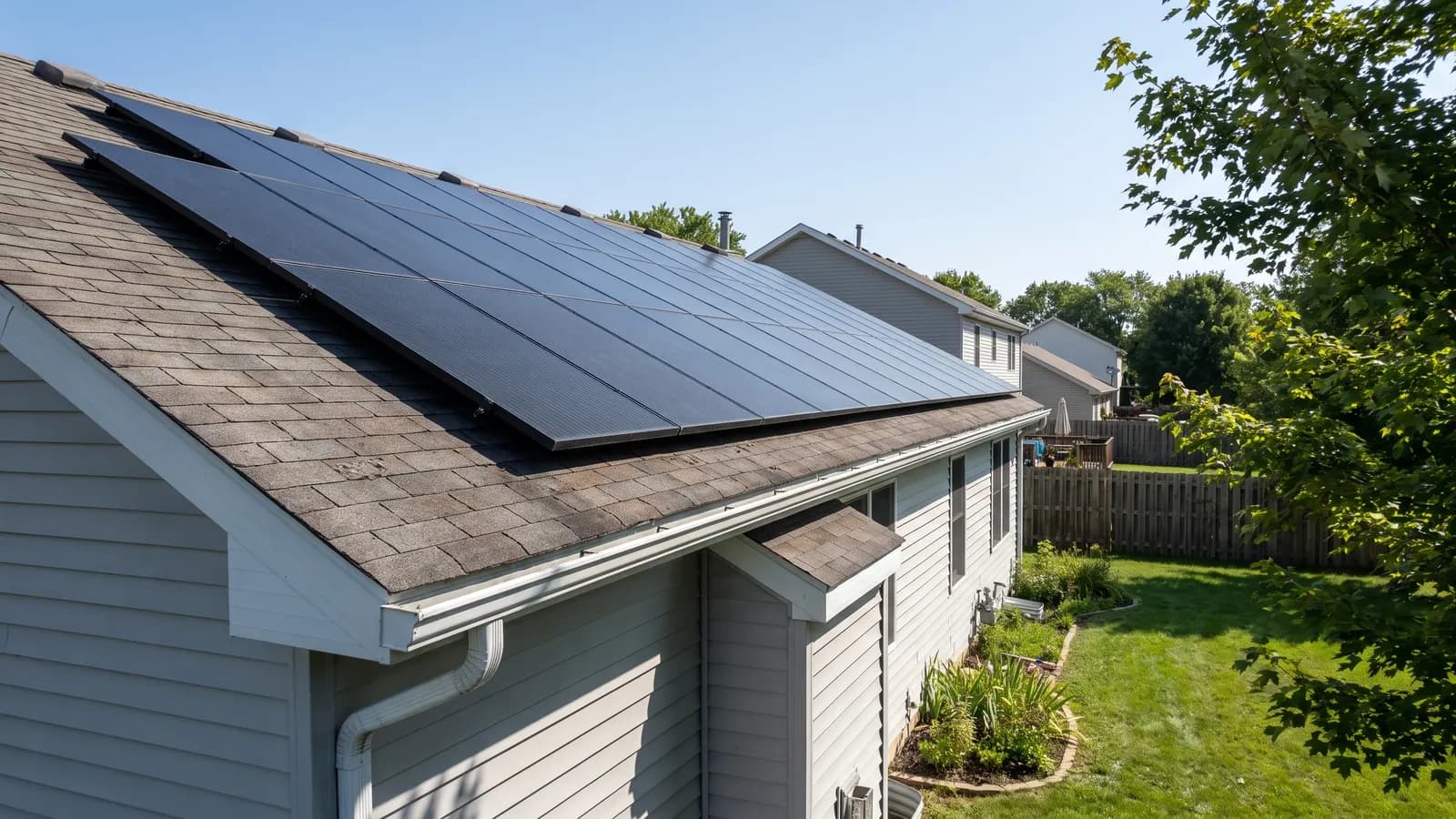
Your roof is ready for solar when it faces the right way, has years of life left, and is not shaded, and only the last two are things you can change. The DOE's Homeowner's Guide to Solar says panels typically perform best on south-facing roofs with a slope between 15 and 40 degrees, though other roofs may be suitable too, and that heavy shade from trees may rule out rooftop panels. It also says to consider the age of the roof and how long until it needs replacement.
Will it actually save money?
Solar saves money when the system produces enough to offset a bill that is mostly energy charges rather than fixed charges, and when you stay long enough to collect. The FTC says to start by reviewing a year of utility bills for your kilowatt-hour usage and fixed charges, to find out how things will work with your utility, to think about how long you plan to stay, and to check whether you need HOA approval. A leaky house is the wrong starting point; an energy audit shrinks the bill first, which may shrink the system you need.
| Question | Where the answer comes from | Why it matters |
|---|---|---|
| How many kilowatt-hours do we use, by month? | A year of bills | Sizes the system |
| How much of the bill is fixed charges? | The bill's line items | Solar offsets energy charges, not connection fees |
| Does the utility offer net metering, and on what terms? | The utility, not the installer | Decides what the power you export is worth |
| How long will we stay? | Your own plans | A system designed for 20 years pays back over years, not months |
| Does the HOA have rules on panels? | The HOA documents; living with an HOA | Approval can change placement or be refused |
The FTC says your utility may use net metering, which gives you credit for excess power your system makes and returns to the grid; the DOE says whether a system qualifies depends on state and utility policy, so ask the utility and get the answer in writing before the contract.
Should you buy or lease?
Buying the system means you own it and the incentives; leasing means lower upfront cost and a contract that follows the house. The FTC and the DOE agree on the trade: if you buy, you get the tax credits, incentives, and renewable energy certificates; with a lease or a power purchase agreement you do not own the system and cannot claim them. The DOE's guide notes that its own tax credit figures go stale, so confirm any credit with a tax professional for the year you install, not from a brochure.
Buy
You own the panels, the inverter, and the warranties. Tax credits, incentives, and renewable energy certificates are yours to claim. When you sell, the system transfers with the house like any other improvement, and the records you kept are what a buyer's inspector reads.
Lease or PPA
The company owns the system and you pay for the power or the equipment monthly. No incentives come to you. When you sell, the FTC says to check what the contract says about transferring the system, transfer fees, and buyer credit requirements, because a buyer who cannot or will not assume the lease is a problem at closing.
Ask for the full contract, including the transfer clause and what happens at the end of the term, and read it at home. The FTC's rule is blunt: never deal with a power or home repair company that pressures you for a quick decision, tells you to sign a contract without time to review, or asks you to pay in cash.
How do you pick an installer?
Pick an installer the way you would any contractor for a permitted job: certified, licensed, insured, with several written bids that you can compare line by line. The DOE names the North American Board of Certified Energy Practitioners (NABCEP) as the industry-standard installer certification and says a qualified installer meets local building, fire, and electrical codes, with the system inspected by a certified electrician as part of installation. Its scam red flags are pushy sales tactics, uncertified installers, unclear financing, and no way to report bad actors.
The FTC adds to compare detailed bids from several companies covering installation cost, warranty, performance guarantees, and maintenance responsibilities. How to hire a contractor covers the contract terms, the payment schedule, and the lien releases, which apply here as to any other trade. If you are also planning an EV charger, tell both electricians, because the panel capacity calculation is done once and both loads count against it.
What documents should you keep?
Keep the contract, the warranties, the permit, the inspection sign-off, the utility agreements, and the production estimate, because the system will outlast your memory of the deal and probably your ownership of the house. A buyer's inspector will ask for most of them, and a warranty claim on an inverter years from now starts with the serial number and the install date.
The solar file
- The signed contract with the transfer clause and payment terms
- Panel, inverter, and workmanship warranties, with start dates
- The building and electrical permits and the final inspection sign-off
- The utility interconnection and net metering agreements
- The installer's production estimate and the as-built layout drawing
- The roof condition report from before installation, and the installer's support contact
In Property Station the contract, permit, and inspection go in Documents under their types, the warranties go in as type Warranty with an Expiry Date so they appear on the Warranties list, and the system goes on Systems & Features with its Warranty Start and Warranty End, next to the closing-day documents.
Common questions
Should I replace the roof before installing solar?
If the roof is near the end of its life, yes. The DOE's homeowner guide says to consider the age of the roof and how long until it needs replacement, because the panels have to come off and go back on for a reroof. Have a roofer look at it before you sign.
Is leasing solar a bad idea?
Not automatically, but know what you give up. With a lease or a power purchase agreement you do not own the system, so the FTC and the DOE both say you cannot claim the tax credits and incentives. Read the transfer terms, since a buyer usually has to take over the lease when you sell.
What does net metering mean for my bill?
The FTC describes net metering as credit from your utility for excess power your system makes and returns to the grid. Whether you qualify, and on what terms, depends on state and utility policy, so the DOE says to ask the local utility directly rather than relying on the installer's description.
What should a solar installer be certified in?
The DOE names the North American Board of Certified Energy Practitioners (NABCEP) as the industry-standard installer certification. The installer should also hold the electrical license your jurisdiction requires, pull the permit, and arrange the inspection.
What should you do next?
Pull a year of bills and call the utility about net metering before you talk to an installer. Then get the roof looked at. With those answers in hand, the bids are comparable and the sales pitch has nothing to add.