On this page
- Why inspect a house that is brand new?
- What does a municipal inspection check, and what does it not?
- When should the inspections happen?
- What does a new-construction inspector look for?
- How do you choose an inspector for a new build?
- What do you do with the report?
- Common questions
- What should you do next?
Yes, for most buyers, hiring an independent inspector for a new build is worth it. The house is new, but it was built by dozens of people in a few months under a schedule, and the municipal inspections behind the certificate of occupancy check code minimums at a handful of stages rather than workmanship. An inspector who reports to you, at the pre-drywall stage and again before the final walkthrough, finds what you cannot and writes it in a form the builder's staff act on. The report is also the first document in the home record.
This post is the case for it, when the visits should happen, and how to choose the inspector. The pre-drywall inspection post covers the single most valuable of those visits in detail.
Why inspect a house that is brand new?
Inspect a new house because "new" describes the materials, not the assembly. Framing, flashing, duct connections, drain slopes, wire runs, and insulation coverage are done by different crews on different days, and a mistake in any of them is invisible once the drywall goes on and expensive once it shows. The builder's superintendent is checking the same things, but for the builder and on the builder's schedule. An independent inspector checks them for you, with the time to look.
HUD's form "For Your Protection: Get a Home Inspection" says the purpose of a home inspection is to inform and educate you about the property before you make a financial commitment, that a home inspection will only occur if you arrange for one, and that a qualified inspector will evaluate the physical condition, estimate the remaining useful life of the major systems, equipment, structure, and finishes, and identify items that need repair or replacement. It adds that an appraisal is required to estimate the home's value for your lender and does not replace a home inspection.
The financial logic is simple. Defects found before drywall are fixed by the trade that made them, at the builder's cost, in an afternoon. The same defects found in year three are a warranty argument at best and your repair at worst. An inspection fee is small next to either, and the report is dated evidence that the problem existed on delivery, which is what a warranty claim turns on.
What does a municipal inspection check, and what does it not?
A municipal inspection checks that the work at each required stage meets the building code the jurisdiction has adopted, and the certificate of occupancy records that those checks were passed. It does not check workmanship beyond the code minimum, finish quality, whether the house matches your selections, or the hundred small things that make a house pleasant or annoying to live in. The inspector's time per house is short, and they are not working for you.
Municipal inspection
Checks code compliance at required stages. Required for the permit and the certificate of occupancy. Reports to the building department. Short visits, pass or fail. No workmanship or finish review. Free to you.
Independent inspection
Checks whatever you and the inspector agree to, against workmanship standards and the plans. Optional; happens only if you arrange it. Reports to you, in writing, with photos. Hours per visit. Covers finishes, installation quality, and the punch list. Paid by you.
What a certificate of occupancy means explains that document's limits. The short version: it proves the house is legal to live in, and nothing about whether it was built well.
When should the inspections happen?
Two visits matter most, and a third is worth adding: the pre-drywall inspection, when the structure and the rough-ins are visible and correctable; the pre-walkthrough inspection, a few days before the final walkthrough, so the report feeds the punch list; and the 11-month inspection, before the workmanship tier of the builder warranty closes. A foundation visit before the slab is poured or the basement is backfilled is a fourth if the schedule and the builder allow it.
- FoundationBefore the slab pour or the backfill: footings, waterproofing, drainage, anchor bolts. Optional but valuable.
- Pre-drywallFraming, flashing, windows, rough plumbing and electrical, ducts, insulation. The most important visit.
- Pre-walkthroughA few days before the final walkthrough. The report becomes the punch list.
- 11 monthsBefore the first-year warranty tier closes. The report becomes the warranty list.
Timing the visits takes coordination with the superintendent, who controls when the drywall crew arrives. Ask at contract signing how much notice you will get for the pre-drywall stage, and book the inspector as soon as you have a date. The final walkthrough checklist is what the pre-walkthrough report plugs into, and the 11-month inspection post covers the last visit in full.
What does a new-construction inspector look for?
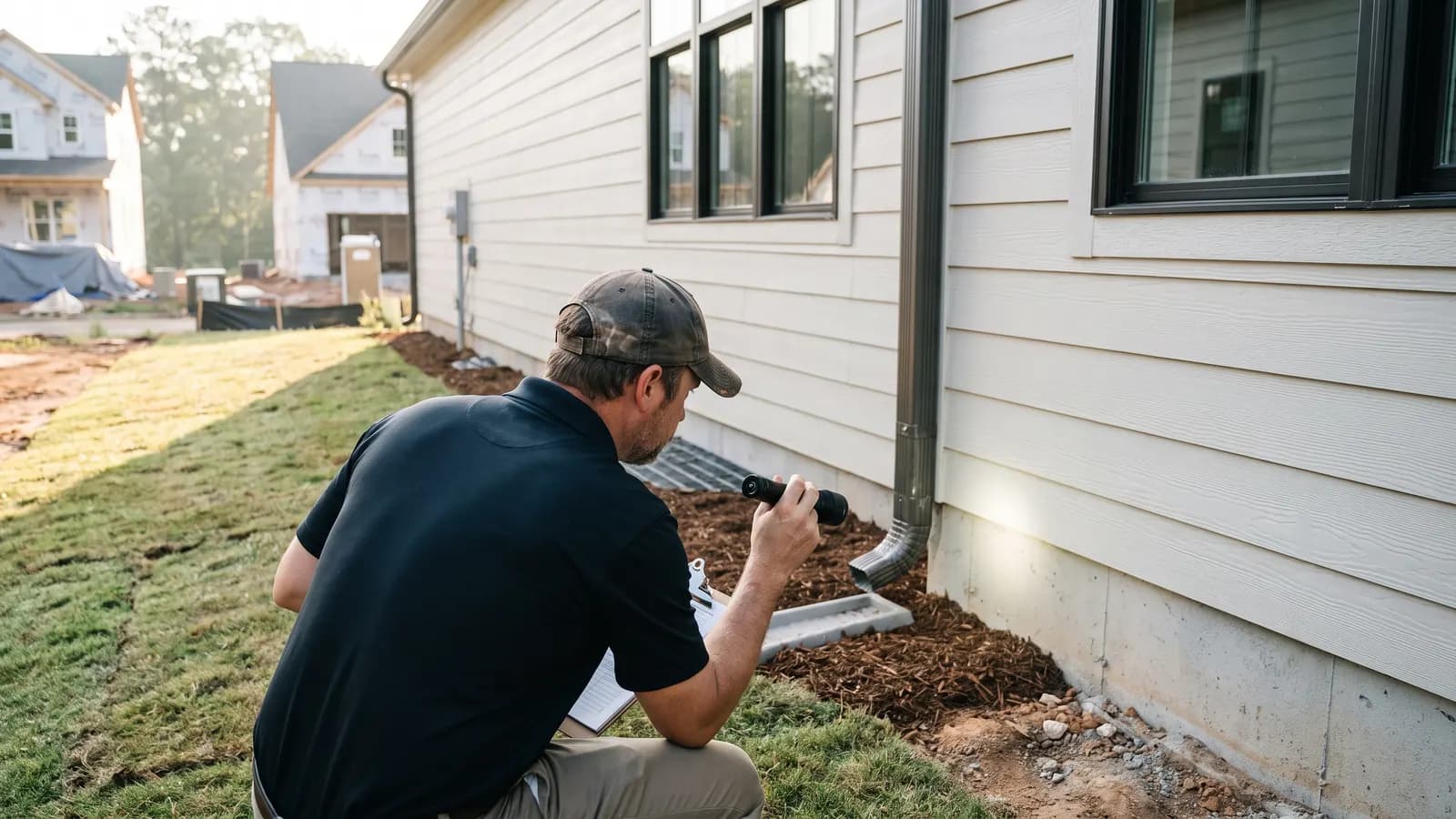
A new-construction inspector looks for installation errors and incomplete work rather than wear: missing or reversed flashing, nail plates absent where pipes cross studs, ducts disconnected or crushed, drains without slope, exhaust fans that end in the attic, insulation gaps, windows without proper sealing, reversed polarity and open grounds at outlets, water heater relief valves without a discharge line, grading toward the house, and a long list of finish items. The report is photos with locations, in the order a punch list uses.
The best inspectors for this work do new construction regularly and know the common failures for the type of house and the local trades. They also know what is normal for a house that has not been lived in, which keeps the report focused. Ask whether they will attend the walkthrough with you; some will, and a walkthrough with an inspector at your elbow is a different event from one without.
How do you choose an inspector for a new build?
Choose an inspector who does new-construction and phase inspections regularly, will show you a sample report, carries the tools for the attic, the roof, and the outlets, and is independent of the builder and the sales office. HUD's form suggests asking a prospective inspector for their Standards of Practice or a sample report, and finding an inspector through references from friends, real estate professionals, local licensing authorities, and organizations that qualify and test inspectors. Ask specifically about pre-drywall work; not every inspector does it.
Ask what the report will look like and whether items are sorted by severity. Ask whether they will separate defects from maintenance advice, because a builder's warranty staff will act on the first list and ignore the second. Ask about additional tests. HUD's form notes that the EPA and the Surgeon General recommend that all houses be tested for radon and suggests asking the inspector whether other tests are relevant; the radon test is one you can also run yourself after moving in. And ask about scheduling flexibility, because the pre-drywall window can move with a day's notice. How to choose a home inspector covers the general questions; the new-build ones are these.
What do you do with the report?
Turn the report into action twice: once with the builder, and once in the record. With the builder, the pre-drywall report goes to the superintendent in writing before the drywall crew arrives, with a request for written confirmation of each fix; the pre-walkthrough report becomes the punch list, item by item; the 11-month report becomes the warranty list. In the record, every report is filed with its date and photos, because it is proof of the house's condition on that day.
How to read a home inspection report explains how to sort a report into safety, water, structure, and the rest. For a new build, the sort is between what the builder must fix now and what to watch. Keep the reports with the punch list and the warranty in one place; in Property Station, the Documents page takes an Inspection type, and the Document Vault holds the three reports next to the warranty document and the closing package, so a claim in year two can point at a photo from before the walls were closed. The same record is what a future buyer's inspector will be glad to see.
Common questions
Does the builder's own inspection count?
It counts for the builder. Production builders run quality checks, and some hire third-party inspectors of their own, but those people work for the builder and report to the builder. Ask for copies of any third-party reports; they are useful. They are not a substitute for someone who reports to you.
Does the county inspection replace a private inspection?
No. Municipal inspectors check code compliance at required stages and issue the certificate of occupancy when the house passes. They do not review workmanship, finishes, or whether the house matches your contract, and their time per house is short. A private inspector looks at what the code inspector does not.
When are the best times to inspect a new build?
Two visits matter most, with a third worth adding. Pre-drywall, when the framing, wiring, plumbing, and ducts are visible and correctable. Before the final walkthrough, so the report feeds the punch list. And near the end of the first year, before the workmanship tier of the builder warranty closes. A foundation-stage visit is a fourth if the schedule allows.
Can the builder refuse to let my inspector in?
Read your contract. Many builders allow independent inspections with notice and some conditions, such as scheduling through the superintendent and staying out of the way of trades; a few restrict access during construction. Ask before you sign the purchase agreement, and get the answer in writing. A builder that refuses any inspection is telling you something.
What should you do next?
If you are under contract, ask the builder in writing this week whether independent inspections are allowed, how much notice you will get before drywall, and where to send the report. Then book an inspector who does pre-drywall work, and read the pre-drywall checklist so you know what the report should cover before it arrives.