On this page
Choose a home inspector by asking four things before you book: for their Standards of Practice or a sample report, so you know what the inspection covers and what the report will look like; for their license or credentials, verified with the state where inspectors are licensed; whether you can attend the whole inspection; and which additional tests they recommend for this particular house. The HUD form on home inspections notes that an inspection happens only if you arrange one. The inspector you pick decides what you know about the house on closing day.
What does a home inspector actually do?
A home inspector evaluates the physical condition of the house on the day of the visit and writes a report you can act on. The HUD form For Your Protection: Get a Home Inspection says the purpose is to inform and educate you about the property before you make a financial commitment, and that a qualified inspector will evaluate the physical condition, estimate the remaining useful life of the major systems, equipment, structure, and finishes, and identify items that need repair or replacement.
The same form says FHA does not perform home inspections and that an appraisal, which estimates value for the lender, does not replace one; what an appraisal looks at is a different list.
The HUD form says a home inspection will only occur if you arrange for one, and that requesting it early may let you make the purchase contract contingent on its results. The order matters: pick the inspector before the contract deadlines start, not after.
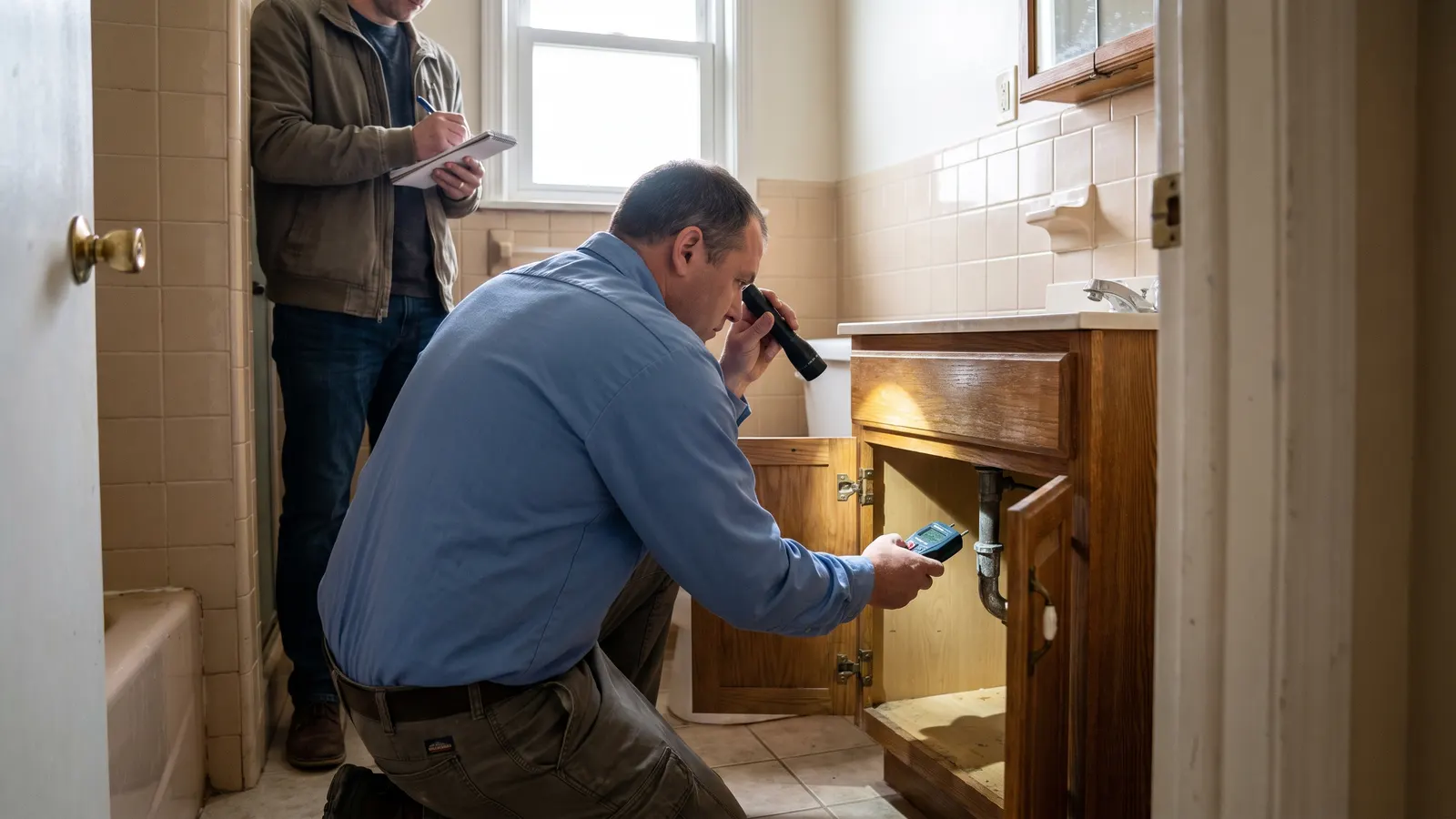
The inspection is visual and non-invasive. The inspector does not open walls, move the seller's furniture, or dismantle equipment, and the contract will say so. What you are buying is a trained pair of eyes, a set of tools (a moisture meter, an outlet tester, often a thermal camera), and a written record of what was accessible that day.
How do you find candidates?
The HUD form lists the places to look: references from friends, real estate professionals, local licensing authorities, and organizations that qualify and test inspectors. Use more than one of them. A name from your agent is a reasonable start, and a name from a friend who bought recently and was happy with the report is a better one, because the friend has no stake in the deal closing.
Building the shortlist
- Ask two people who bought in the last year which inspector they used and whether the report held up after they moved in
- Ask your agent for names, and ask what share of their clients use each one
- Check the state licensing board's lookup where inspectors are licensed; note the license number
- Look at each inspector's sample report online before calling
- Search the company name with "complaint"
In our experience the inspector an agent recommends is usually competent; the risk is not fraud but familiarity. An inspector who gets most of their work from one office has a reason to keep reports calm. One independent name on the shortlist is enough to notice the difference.
What should you ask before you book?
Ask every candidate the same questions and write the answers down, because the answers are the comparison. The HUD form's specific advice is to ask for the inspector's Standards of Practice or a sample report; the rest of the list below is ours, and each question has a reason behind it.
| Question | Why it matters |
|---|---|
| Can I see your Standards of Practice or a sample report? | Tells you what is covered, what is excluded, and how the report reads. HUD's recommendation. |
| Are you licensed or certified, and by whom? | Verify the number with the state where inspectors are licensed; where they are not, ask which organization tested them. |
| Do you carry errors and omissions and general liability insurance? | An inspector with no insurance has nothing behind the report. |
| Can I attend the whole inspection? | Yes is the only acceptable answer. |
| How long will you be on site for a house this size and age? | An inspection that is short for the house is one that skipped things. |
| What is not included? | Pools, septic, wells, chimneys, sprinklers, and detached structures are often excluded or extra. |
| Do you do repairs on houses you inspect? | A conflict of interest; many inspectors decline, and some states prohibit it. |
| When do I get the report, and in what format? | You need it inside the contract's inspection window with photos you can act on. |
| Which extra tests do you recommend for this house? | The answer shows whether they thought about your house or gave a stock reply. |
Compare the answers, not the prices. An inspection is a small share of the transaction and the cheapest one is usually the shortest one.
Which extra tests should you add?
The standard inspection does not include the tests that find the invisible problems, and the HUD form says to ask the inspector whether additional tests are relevant: mold, air or water quality, asbestos, lead paint, and pest infestations. The form also notes that the EPA and the Surgeon General recommend all houses be tested for radon. Which tests to add depends on the house's age, its water and waste systems, and the region.
- Radon. The CDC's radon testing page says testing is the only way to know a home's level and that the EPA recommends a qualified tester when buying or selling. Add it in any region; the result affects the price if it is high.
- Termites and wood-destroying organisms. The EPA's termite page says most people are unaware of termites until they see a swarm or find damage, and that firms offering termite services must be licensed by the state, so ask to see the license.
- Lead-based paint. The EPA's lead pamphlet says homes built before 1978 are likely to contain lead-based paint and advises having the home checked by a certified inspector or risk assessor before buying.
- Asbestos. For a home old enough to have it, the EPA's asbestos page says sampling should be done by a trained and accredited professional, not by you.
- Well and septic. A private well needs a water test at a state-certified laboratory, and a septic system needs its own inspection by a septic professional; the general inspector usually does neither.
- Sewer line. A camera inspection of the main drain is not on HUD's list, but in older homes and in neighborhoods with mature trees it is the test that most often finds the expensive surprise.
What about a new-construction home?
A new house needs an inspector as much as an old one, for different reasons: the inspection is the only independent look at work that the builder's own superintendent signed off. The useful visits are a pre-drywall inspection while the framing, plumbing, and wiring are still exposed, a final inspection before the walkthrough, and a visit near the end of the workmanship warranty.
The pre-drywall inspection post explains the first; whether to hire an inspector for a new build weighs the whole set. Choose an inspector who does new construction regularly and ask to see a sample report from one; a resale checklist misses framing and flashing problems that a new-build inspector looks for first.
What do you do with the report?
The report is the first page of the home record, and it is the document buyers reach for a year later when something fails. Read it the way the post on reading an inspection report describes, sorting safety, water, and structure from cosmetics. Then decide, item by item, whether the seller fixes it, you fix it, or it waits. Items that turn out to be unpermitted work belong on a separate list; the permit post explains why that matters at resale. For the items you take on, the handyman-or-contractor question sorts out who to call.
In Property Station, add the report on the Documents page with the Document Type "Inspection," and add each specialist's report (radon, termite, sewer) as its own document with the company named in the title. The inspector goes under Trusted Vendors, because the same person is the right call for the eleven-month warranty visit or the next purchase.
Common questions
Should I attend the inspection?
Yes, for as much of it as you can. You will see the problems in place, hear the inspector's explanation of which ones matter, and learn where the shutoffs, the panel, and the equipment are. An inspector who discourages attendance is a reason to choose a different inspector.
Can I rely on the seller's inspection report?
Read it, but do not rely on it. The seller's inspector worked for the seller, the report may be months old, and you have no contract with that inspector. Use it to tell your own inspector where to look harder.
Will the inspector find everything?
No. A home inspection is a visual, non-invasive look at what is accessible on the day, and the inspector's contract usually says so. Furniture, finished walls, snow on the roof, and a full attic all hide things. Ask what could not be inspected and why, and decide whether a specialist should look.
Is it a conflict for the inspector to also offer repairs?
Many inspectors decline repair work on homes they inspect for exactly that reason, and some states prohibit it. Ask directly. An inspector whose income depends on finding work for their own crew has a reason to overstate, and one who wants the agent's next referral has a reason to understate.
What should you do next?
Call three inspectors this week with the question table in front of you, and ask each for a sample report before you decide. Book the one whose report you could plan from, add the tests the house needs, and clear the whole morning to attend.