On this page
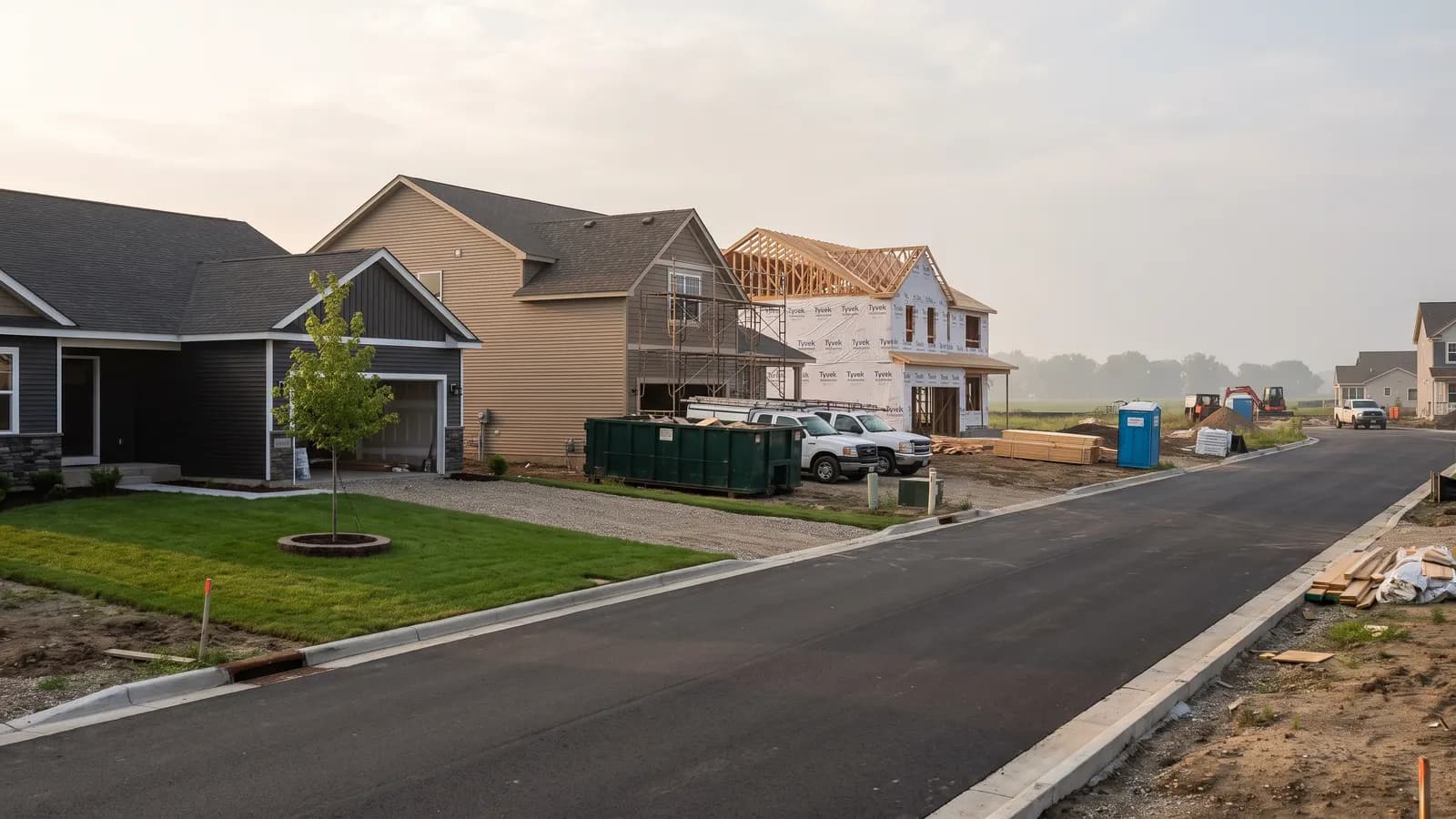
A production home is built from a builder's standard plans in a community, with finishes chosen from a set menu. A spec home (short for speculative) is built by a builder without a buyer and sold finished or nearly so. A custom home is designed and built for one buyer, often on the buyer's own lot. What changes for the owner is how much you choose, how changes are priced, what the warranty document says, who you call afterward, and how complete a record you receive at closing.
The building science is the same in all three. The paperwork, the relationships, and the record are not, and those are what you live with for the next decade.
What is the difference between spec, custom, and production homes?
The difference is who decided what gets built, and when. In a production home the builder decided the plan and you pick from their options before a cutoff. In a spec home the builder decided everything and you buy the result. In a custom home you decide the plan, the finishes, and most of the details, usually with an architect or designer, and the builder prices what you decided. Each arrangement moves risk and work between you and the builder.
| Production | Spec | Custom | |
|---|---|---|---|
| Who chose the plan | Builder, from a catalog | Builder | You, with a designer or architect |
| Selections | From the builder's menu, before cutoffs | Already made | Nearly everything is a decision |
| Construction you can watch | Yes, from lot prep to walkthrough | No, it is built or nearly built | Yes, all of it |
| Change orders | Priced from a list, until the cutoff | Rare; negotiate at contract | Frequent; the main budget risk |
| Warranty | The builder's standard document | Usually the same document | Whatever the build contract says |
| Who you call | Sales, superintendent, then warranty department | Sales agent, then warranty department | The builder or firm owner directly |
| Record at closing | A standard package, thin on lot detail | Whatever the builder kept | The most complete, if you gather it |
What changes about selections and change orders?
Selections and change orders are where the three types diverge most in the owner's daily experience. Production buyers choose from a design center with allowances and cutoff dates, and anything outside the menu is either unavailable or a priced change order. Spec buyers get what is there; a request to swap a finish is a negotiation at contract, not a process. Custom buyers make hundreds of decisions, each with an allowance behind it, and the gap between allowance and actual is where the budget moves.
Whichever type you are buying, the rule is the same: nothing changes without paper. Change orders explained covers what that paper should say and why a verbal yes from the superintendent is not enough.
What changes about the warranty?
The warranty changes in source and in shape. A production or spec builder usually issues one standard warranty document across every home they sell, with defined windows, performance standards, exclusions, and a claim procedure, and a department that administers it. A custom builder's warranty is whatever the build contract says: sometimes a written workmanship warranty with a third-party structural policy behind it, sometimes a paragraph, sometimes nothing beyond what state law implies. In every case, the contract is the only source.
Spec homes have one wrinkle worth checking: when the warranty clock starts. Some documents start it at closing, others at the date of substantial completion or the certificate of occupancy, which for a spec home that sat finished for months can be well before you moved in. Read the definitions section for the start date before you plan your inspections.
How to read a builder warranty walks through the document section by section, and the warranty timeline turns its windows into inspection dates. For a custom home with a thin warranty section, the same reading tells you what to ask the builder to add before you sign.
What changes about who you call?
Who you call changes with the size of the organization. A production builder has roles: a sales agent for the contract, a design consultant for selections, a superintendent for the site, a closing coordinator, and a warranty coordinator or customer care team afterward, often behind a portal. A spec buyer meets fewer of them, usually the sales agent and then the warranty team. A custom buyer often deals with one person throughout, the builder or the firm's owner, who may also be the superintendent.
The practical difference shows up after closing. With a production builder, the person who built the house is on the next phase and your request goes to a department that has never seen your lot; the record you send with the request is what they know. With a custom builder, the person who built it answers the phone, which is faster while they are in business and a problem if they are not. Either way, what happens to a warranty claim once it is submitted is worth knowing before you need to send one.
What changes about the record you receive?
The record changes most of all. A production buyer receives a standard closing package with the warranty document, manuals, and often a thin set of lot-specific details, but can build their own record by watching construction. A spec buyer was not there for construction and receives only what the builder kept, so the questions to ask are for construction photos, the permit and inspection history, and the finish schedule. A custom buyer can receive the most complete record of the three (plans, specifications, the subcontractor list, every change order) but only if they gather it as they go.
Whatever arrives, file it by type the week you close. In Property Station, the Documents page takes each item with a type (Contract, Permit, Inspection, Warranty, Closing, Receipt, and others), an optional file up to 50 MB, and an expiry date for the ones that have one, so the warranty document shows up on the Warranties list with its end date instead of in a box in the garage. The construction stages guide is the map for what a production or custom buyer can capture along the way, and for a spec buyer it is the list of what to ask the builder for.
Common questions
Is a spec home lower quality than a custom home?
Not by definition. A spec home is built to the builder's standard plans and finishes, the same as the production homes around it, and usually carries the same warranty. What you lose is the chance to watch it being built and to choose. Have it inspected before closing the same way you would a resale home, and ask the builder for the construction photos and inspection records.
Does a custom home come with a builder warranty?
Only if the build contract says so. Many custom builders provide a written workmanship warranty and some buy a third-party structural warranty, but there is no standard document. Read the warranty section of the contract before signing, and if there is none, ask for one in writing.
Can I still change things in a production home after signing?
Usually, up to a cutoff for each category (structural options first, then electrical, then finishes), and each change goes on a priced change order. After the cutoff the answer is often no, because the materials are ordered and the trades are scheduled. Ask for the cutoff dates at contract and put them on your calendar.
Which type is fastest to close?
A finished spec home closes fastest because it is already built. A production home follows the builder's schedule for the phase, and a custom home takes longest because design and permitting come before construction starts. The tradeoff is choice: the fastest option is the one with the least of it.
What should you do next?
Find the warranty section of your contract today and read the start date and the windows, whichever type of home you are buying. Then make the list of what you will ask for at closing, based on how much of the construction you will see: photos and inspection records for a spec home, marked-up plans and change orders for a custom one, the finish schedule and equipment labels for any of them. Store each item in the Document Vault as it arrives, not after.