On this page
A heat recovery ventilator (HRV) or energy recovery ventilator (ERV) is the box that gives a tight new house fresh air without throwing away the heat it took to warm or cool the old air. Both pull outdoor air in and push indoor air out through a core where the two streams pass each other and exchange heat; an ERV also exchanges moisture. Leave it running at the setting the installer chose, clean its filters and core on the manual's schedule, keep the outdoor hoods clear, and get it commissioned if nobody did.
This post explains what the unit does, the difference between the two types, how to run it, what to clean, and when to call the installer.
What is an HRV or ERV, and why does a new home have one?
An HRV or ERV is a balanced ventilation system: a fan box with two airstreams, one bringing outdoor air in and one carrying indoor air out, joined by a heat-exchange core so the incoming air picks up most of the outgoing air's heat. A new home has one because the house is too tight to rely on leaks for fresh air, and an exhaust-only fan would waste conditioned air. The Building America Solution Center's guide to whole-house ventilation puts it this way: heat recovery ventilators bring in outdoor air and exhaust indoor air through a heat exchanger.
In a tight house the ventilator is doing the job the gaps in an old house did badly and by accident. Indoor air quality in a tight new home covers the bigger picture of fans, moisture, and the gases to test for; this post is about the one machine.
What is the difference between an HRV and an ERV?
The difference is moisture. An HRV moves heat between the two airstreams and nothing else; an ERV moves heat and some of the water vapor too. The BASC guide puts it in one line: HRVs transfer sensible heat only, and ERVs also transfer moisture, which it calls latent heat. Everything else about the two, the ducts, the fans, the filters, the controls, is the same.
HRV (heat recovery)
Moves heat only. In winter the outgoing warm air heats the incoming cold air, and the moisture in the indoor air leaves with it. That makes an HRV a mild dehumidifier in cold weather, which suits a house that gets too humid in winter. In summer it brings in outdoor humidity along with the fresh air.
ERV (energy recovery)
Moves heat and moisture. In winter it keeps some of the indoor moisture from leaving, so a dry house stays a little less dry. In summer it keeps some of the outdoor moisture from coming in, so the air conditioner has less to remove. It suits a house where indoor air runs dry in winter, or where summers are humid.
Which one your house has was the installer's or builder's choice, and it was usually made on climate: HRVs in cold, dry-winter regions where winter condensation is the problem, ERVs in humid regions where summer moisture is. Neither is wrong for your house by itself. If the house is too dry in winter with an HRV, or too damp in summer with an ERV, the balance and the run setting are the first things to check, not the type.
How should you run it?
Run the ventilator continuously at the low setting, use the boost when the bathrooms or the kitchen are in use, and do not switch it off for the season. The unit is sized to deliver a small, steady stream of outdoor air; turning it off leaves a tight house with no planned fresh air, and the first signs are condensation on the windows, lingering cooking smells, and the stuffy morning bedroom.
Most units have a wall control with a continuous setting, a boost or high setting, and sometimes a humidity setpoint, plus push-button timers in the bathrooms that call for boost for a set time. In winter the unit may pause in a defrost cycle when it is cold enough outside to frost the core; that is normal and it restarts on its own. In summer, if the house has an ERV and a humid climate, the unit is helping the air conditioner; the first summer in a new home has the humidity targets to check it against.
What maintenance does it need?
An ERV or HRV needs more maintenance than the rest of the ventilation in the house, and the BASC guide says so: maintenance requirements of HRVs and ERVs are often more rigorous than for other ventilation systems, and many require periodic cleaning or replacement of the heat exchange media, the filters, and other parts prone to collect dust and dirt. The manual for your unit gives the intervals and the method; what follows is the shape of the job.
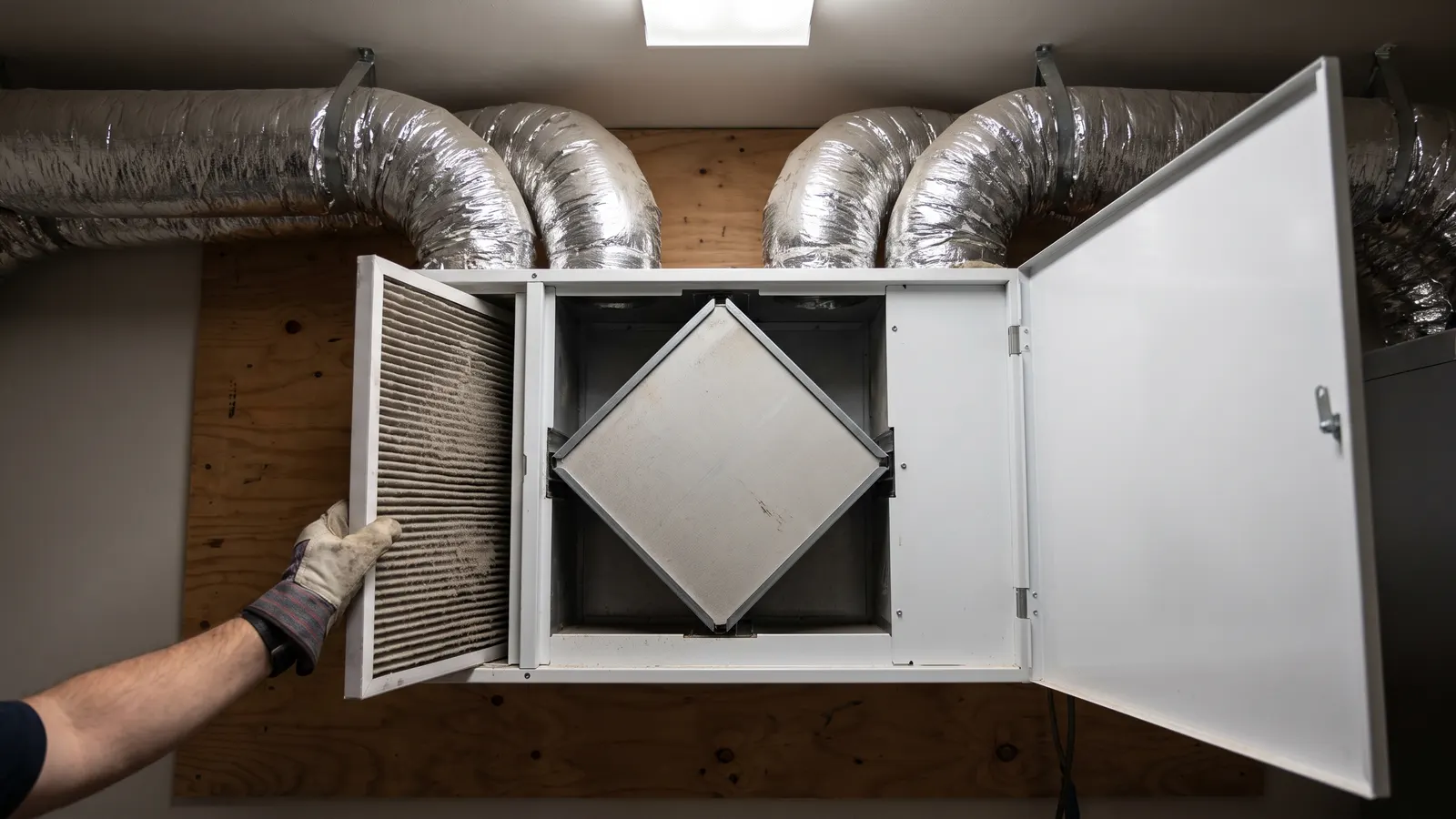
- FiltersSlide out the filters on both airstreams, vacuum or wash them as the manual says, dry, and replace. Construction dust loads them fast in year one.
- CoreRemove the heat-exchange core on the manual's schedule. Many cores are vacuumed or rinsed; some ERV cores must not be wetted. Follow the manual, not a video.
- Outdoor hoodsWalk outside and check the intake and exhaust hoods for leaves, grass clippings, trash, nests, and ice. The BASC guide says to check inlets periodically for exactly those.
- Grilles and housingVacuum the exhaust grilles in the bathrooms and the cabinet interior, and wipe the housing with a damp cloth.
- DrainConfirm the condensate drain line runs freely, especially before the first cold snap.
- RecordWrite the date, what was cleaned, and the filter part numbers on the unit's page, and set the next date.
The ventilator's filters are not the furnace filter; they are separate, smaller, and easy to forget, and both need a schedule. The bathroom exhaust grilles that feed the unit are cleaned the same way as a standalone bath fan. In Property Station the core and filter cleaning is one recurring task on the Maintenance page: "Add Task", the interval from the manual under "Frequency (months)", and the reminder arrives before it is due.
When should you call the installer or an HVAC contractor?
Call the installer for water on the floor, a unit that runs but moves no air at the grilles, frost that does not clear, a control that ignores its settings, or any sign that the system was never balanced. The BASC guide says new systems should be commissioned by a trained HVAC technician or energy rater, which means measuring the supply and exhaust airflows and adjusting them to match. A unit that was hung and ducted but never balanced can pull the house into a slight vacuum or pressure.
If you do not have a commissioning report, ask the builder for one while the workmanship window is open; it is a document the builder's HVAC subcontractor should be able to produce.
Work inside the unit beyond filters, core, and grilles is the contractor's. The fans, the motors, the defrost controls, and the ductwork balance are not homeowner tasks, and the manual will say where the line is for your model. Ductwork to the outdoors that was left disconnected, or an intake that draws from the attic, is a builder item; report it in writing.
What should you record?
Record the make and model, the filter and core part numbers, the settings on the wall control, the commissioning report if you have one, and every cleaning date. Put the manual in the home's documents. The ventilator is the piece of equipment most likely to be a mystery to the next owner, the next HVAC technician, and you in three years, so the record is the explanation.
The same unit that keeps the air fresh is also the fastest way to clear a new house of construction smells; why a new home smells and what to do about off-gassing explains how to use it for that. Put the cleaning on the maintenance schedule next to the furnace filter, and the two jobs become one afternoon a season.
Common questions
Should the ERV or HRV run all the time?
Usually yes, at the low continuous setting the installer chose, with a boost when the bathrooms or kitchen are in use. A tight house that has its ventilator switched off has no planned fresh air at all. If running it makes the house feel dry in winter or damp in summer, ask the installer to check the balance and the setting rather than turning it off.
Is the ERV filter the same as the furnace filter?
No. The ERV or HRV has its own filters, usually one on each airstream, and they are smaller and often washable. The furnace or air handler filter is a separate job on a separate schedule. Both need attention in a new house, and the ventilator's filters are the ones most owners do not know exist.
My HRV has water dripping from it in winter. Is that normal?
An HRV produces condensate in cold weather because warm moist indoor air cools as it passes the core, and it should have a drain line to carry that water away. Water on the floor means the drain is blocked, kinked, or was never connected. An ERV usually makes much less condensate. Either way, a puddle is a call to the installer, and inside the warranty window it is a builder item.
Can I add an ERV to an older house that does not have one?
Yes, and it is a contractor job: the unit needs supply and exhaust ducts to the outdoors, ducts to the living space or a connection to the furnace return, a drain, and balancing once installed. The BASC guide says new systems should be commissioned by a trained HVAC technician or energy rater. Get the commissioning report and keep it.
What should you do next?
Find the unit, find its wall control, and confirm it is running at the continuous setting. Then open the filter door, look at what is in there, and put the cleaning interval from the manual on the schedule. If nobody can find a commissioning report, ask the builder for one this week.