On this page
Aging in place means staying in your own home as you get older, and the home changes that make it possible are a short list: one entry with no steps, a bedroom and a full bathroom on the main floor, a shower you walk into with grab bars on solid blocking, lever handles instead of knobs, and more light everywhere. Plan them now and fold them into remodels you would do anyway. Done that way they cost a fraction of what the same changes cost after a fall, when they are done under pressure and out of order.
This post is for the owner who plans to stay, and for the adult child helping a parent plan. It covers which changes matter, when to do them, how the house's upkeep changes, and what to keep on file.
Which changes matter most?
The changes that matter most are the ones that remove a step, a reach, or a grip: a no-step entry, a main-floor bedroom and bath, a curbless or low-threshold shower with a seat and grab bars, a comfort-height toilet, lever door and faucet handles, wider doorways where a walker or chair will go, handrails on both sides of every stair, and light at every transition. Everything else (smart devices, appliance placement, cabinet pulls) is useful but secondary.
| Change | What it removes | Best time to do it |
|---|---|---|
| No-step entry (a graded walk, a ramp, or a lift at one door) | The step that stops a walker, a wheelchair, and a delivery | With any porch, driveway, or landscaping work |
| Bedroom and full bath on the main floor | The stairs, every day, twice | With an addition or a room conversion |
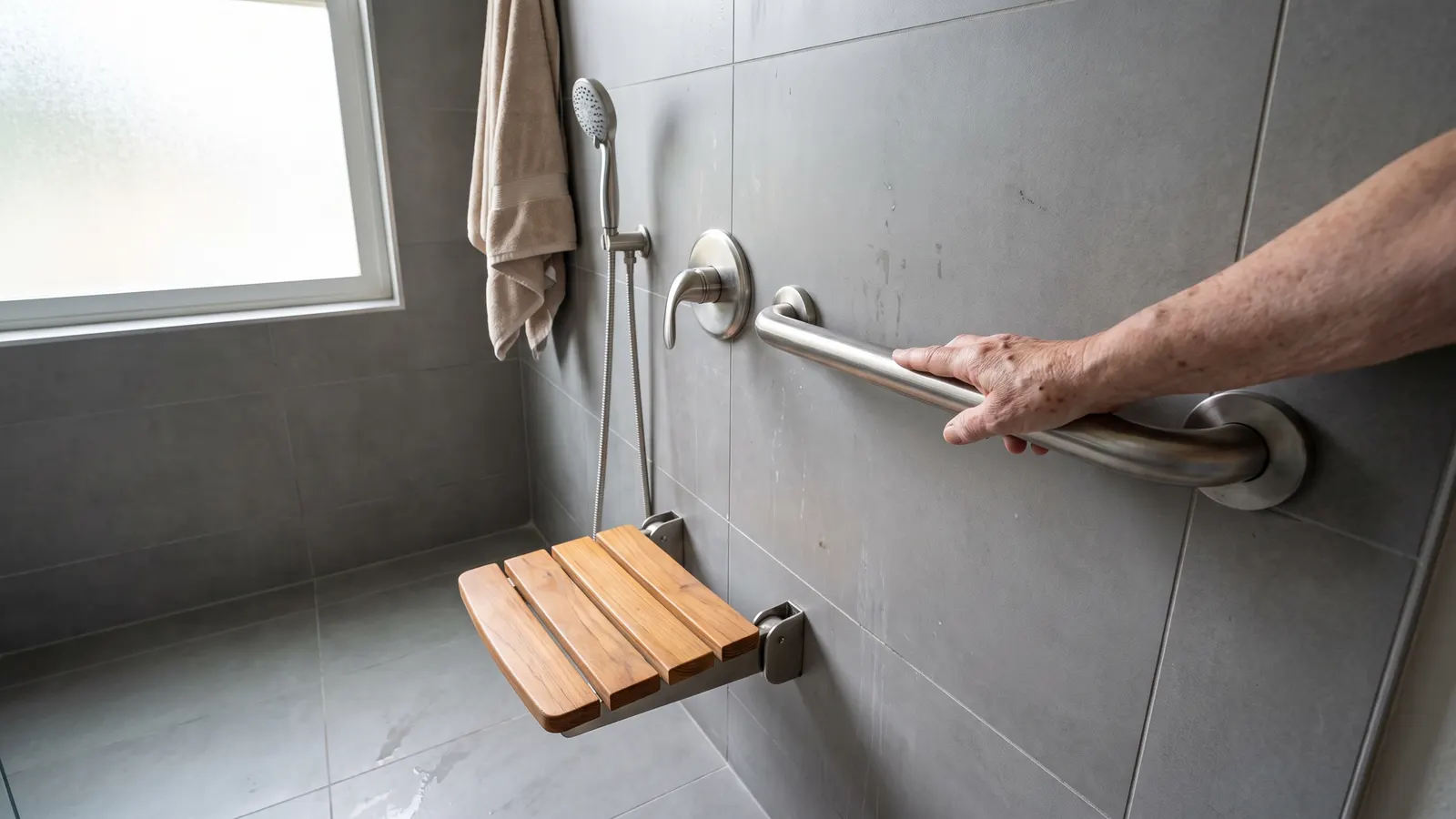
| Curbless shower with a seat, handheld head, and grab bars | The tub edge and the balance test | With any bathroom remodel |
| Blocking in the walls for grab bars | The need to open the wall later | Any time a bathroom wall is open |
| Comfort-height toilet | The deep squat | Any toilet replacement |
| Lever handles on doors and faucets | Grip and wrist strength | Any weekend |
| Doorways widened, or offset hinges fitted | The pinch point for a walker or chair | With a remodel; offset hinges alone are a small job |
| Handrails both sides of stairs, secured to studs | The one-handed stair | Any weekend |
| Lighting: brighter, at switches, motion lights on paths | Falls in the dark | Any weekend, and with any electrical work |
| Non-slip flooring, no thresholds between rooms | Trips and slips | With any flooring replacement |
The table is a planning aid, not a code list. A house with a first-floor bath and no stairs to the entry already has most of it.
What should you do now, before you need any of it?
Do the things now that are cheap while a wall is open and expensive later: have grab bar blocking added in any bathroom that gets remodeled, choose a curbless shower over a tub if you are replacing one anyway, pick lever handles when you replace hardware, and add a no-step path when the driveway or the porch gets rebuilt. The rule is to add the aging-in-place version of whatever you are already doing, which usually changes the cost by a little and the outcome by a lot.
When you plan any remodel, ask the contractor for the price of the accessible version of each choice alongside the standard one: the curbless shower, the wider door, the blocking, the raised outlets. Decide with both numbers in front of you. Planning the renovation once, with the whole house in mind, keeps the aging-in-place work from becoming a second remodel.
The small jobs need no remodel at all. Lever handles, a handheld shower, a comfort-height toilet, brighter bulbs at the stairs, handrails on the second side of the staircase, and a keypad lock at the entry are each an afternoon. The keypad lock and motion lighting also happen to be the first items in a security setup, so the two lists can be done together.
How does home maintenance change?
The house needs the same maintenance it always did, so what changes is who does the parts that involve a ladder, a crawl space, or a heavy lift. Plan that handoff before it is forced: find a handyperson or a service for the gutters, the roof check, the high filters, and the smoke alarm batteries, and put those tasks on a schedule with the vendor's name attached, so nobody is on a ladder at seventy-five because the gutters were full.
Tasks to hand off first
- Gutters, downspouts, and the yearly roof look
- Anything in the attic or the crawl space
- Smoke and CO alarm batteries and replacements on high ceilings
- Filters in a ceiling return or above a ladder's comfortable reach
- Exterior painting, window washing, and holiday lights
- Snow, ice, and heavy yard work
Ladders are where the plan breaks down, because a job that was easy last year feels the same this year right up until it does not. The ladder rules are worth reading once, and then the honest move is to hand most ladder work to someone else. The tasks at eye level (the monthly detector test, the filter behind a hall grille, the water heater drain) stay yours.
Who should do the work, and what should you keep?
Structural changes, plumbing moves, new circuits, and anything that needs a permit go to licensed contractors, and a ramp or an entry regrade often needs a permit too, so ask before the work starts. For the assessment itself, an occupational therapist who does home visits or a contractor with aging-in-place training can walk the house with you and rank the changes by how you actually move through it. Then keep the paperwork, because the next person to need it may not be you.
What to keep on file:
- The assessment report and the list of changes it recommended, done and not done
- Photos of the grab bar blocking before the drywall closed, with measurements from the floor and the corner
- Permits and final inspections for the ramp, the bath, and any electrical work
- The contractor's contract, receipts, and warranty terms, following the usual contractor checklist
- The manuals for the lift, the walk-in shower valve, the keypad lock, and any device with a battery
- The vendor list for the tasks you handed off, with what each one does and when
Property Station keeps these in the Document Vault with a type (Permit, Receipt, Warranty) and an expiry date where one applies, and the room-by-room photos live under Room Inventory, so the blocking photo is findable when a bar finally goes in ten years from now.
The record matters for a second reason: if the house is sold, the ramp, the widened doors, and the main-floor suite are features a buyer with the same needs will pay attention to, and a permit and a photo are the proof that they were done properly.
Common questions
What is the single most useful change?
A bathroom you can use without stepping over a tub edge, with grab bars on solid blocking, on the same floor as a bedroom. Falls in the bathroom are the injury people describe most, and the bathroom is also the room a remodel touches anyway, so the changes cost least there.
Do grab bars need special installation?
Yes. A grab bar has to be screwed into wood blocking inside the wall or into a stud, not into drywall or tile alone. If a wall is open for any reason, have blocking added around the toilet and in the shower and photograph it before the drywall goes up, even if the bars come years later.
Can I do this without a full remodel?
Much of it. Lever handles, a handheld shower, a comfort-height toilet, brighter bulbs, handrails on both sides of the stairs, a raised outlet or two, and a keypad lock are all small jobs. The big ones (a no-step entry, a curbless shower, wider doorways) are worth folding into the next remodel rather than doing alone.
Who can assess what my house needs?
An occupational therapist who does home assessments, a contractor with aging-in-place training, or both. Ask your doctor or the local agency on aging for a referral. The assessment looks at how you actually move through the house, which is more useful than a generic list.
What should you do next?
Walk from the car to the bed and from the bed to the toilet, and count the steps, the knobs, and the dark spots on the way. Fix the knobs and the light this month. Then write the big changes into the plan for the next remodel, and decide now which ladder jobs get handed off this year rather than after the first close call.